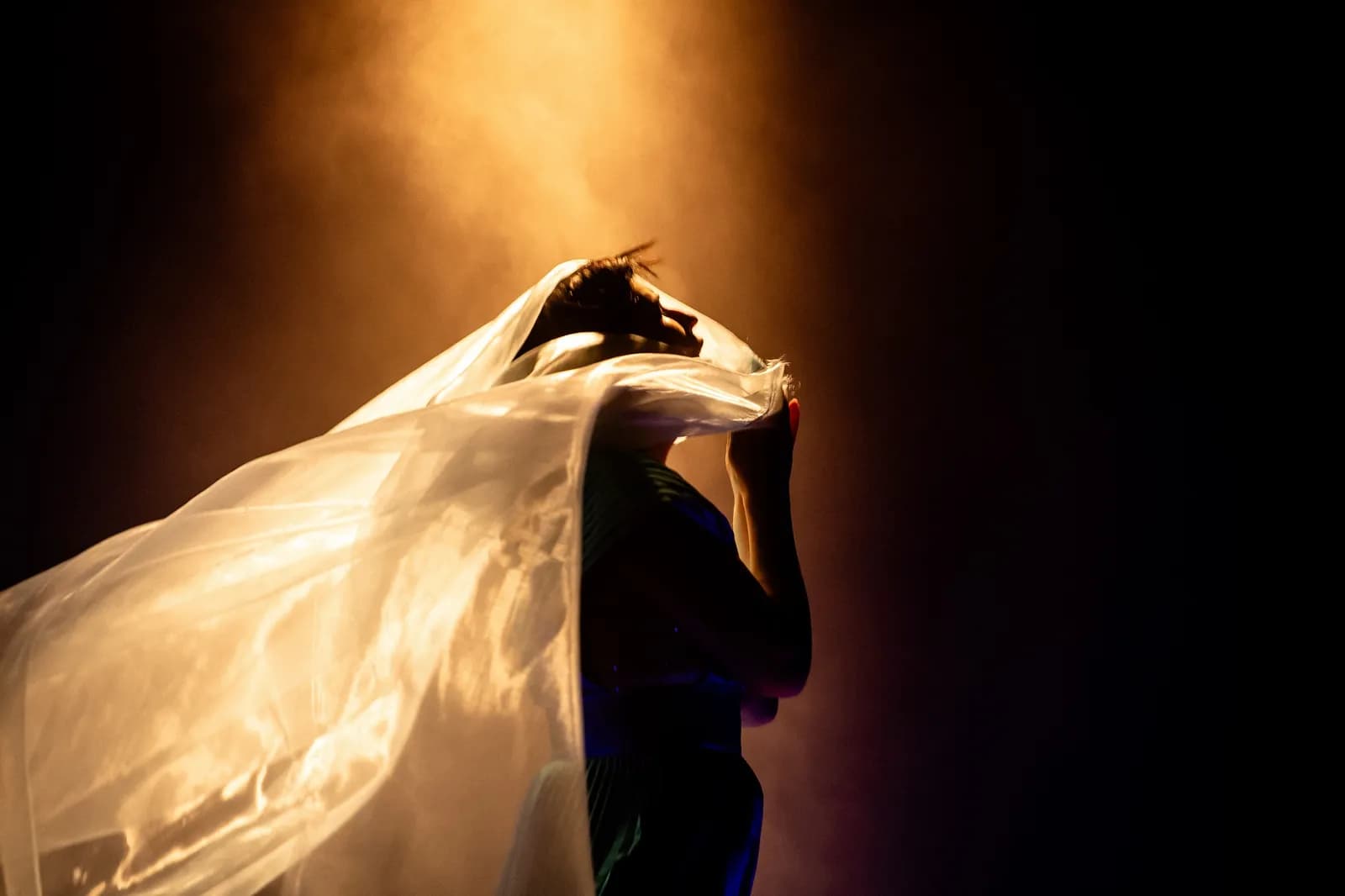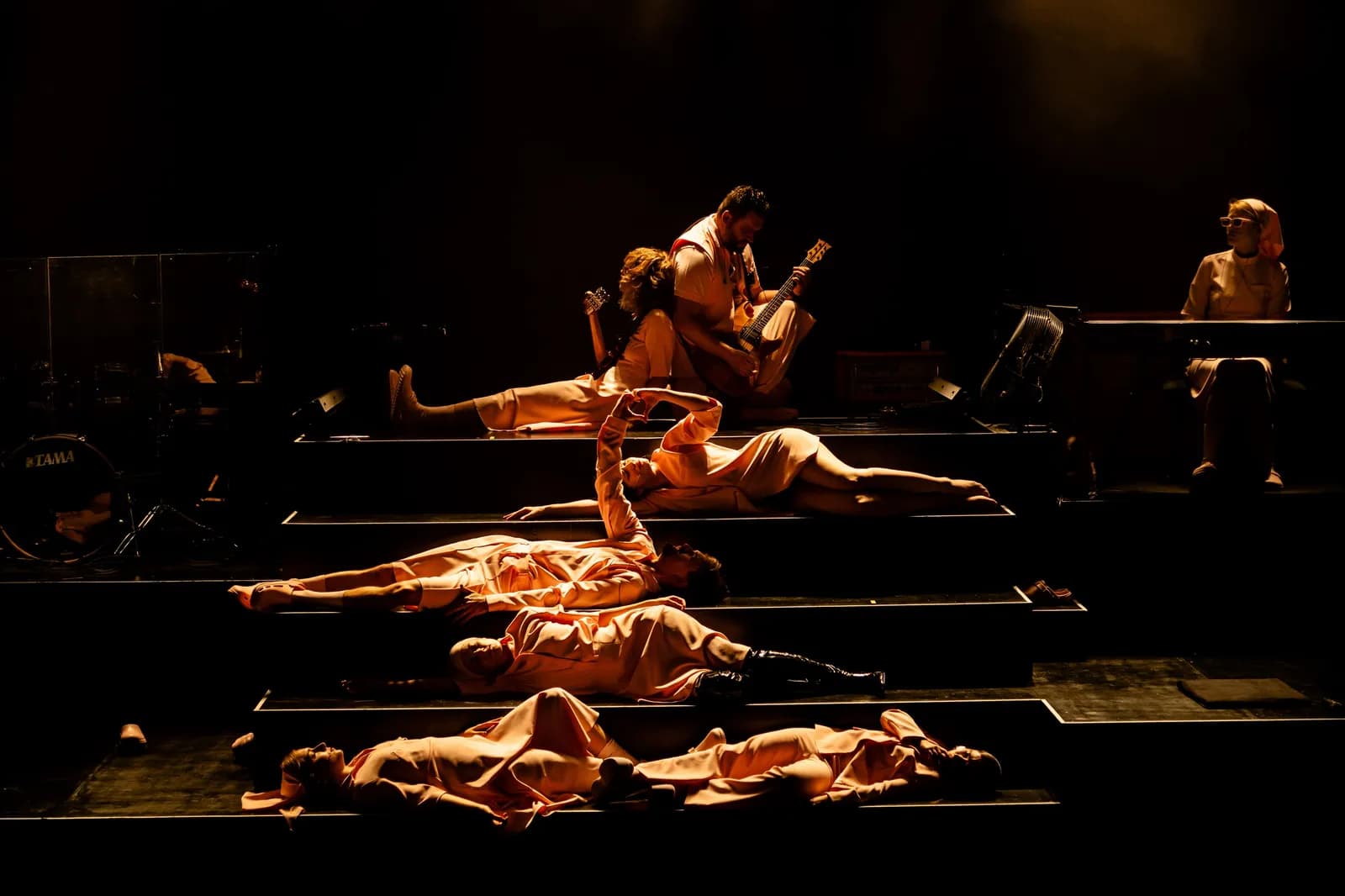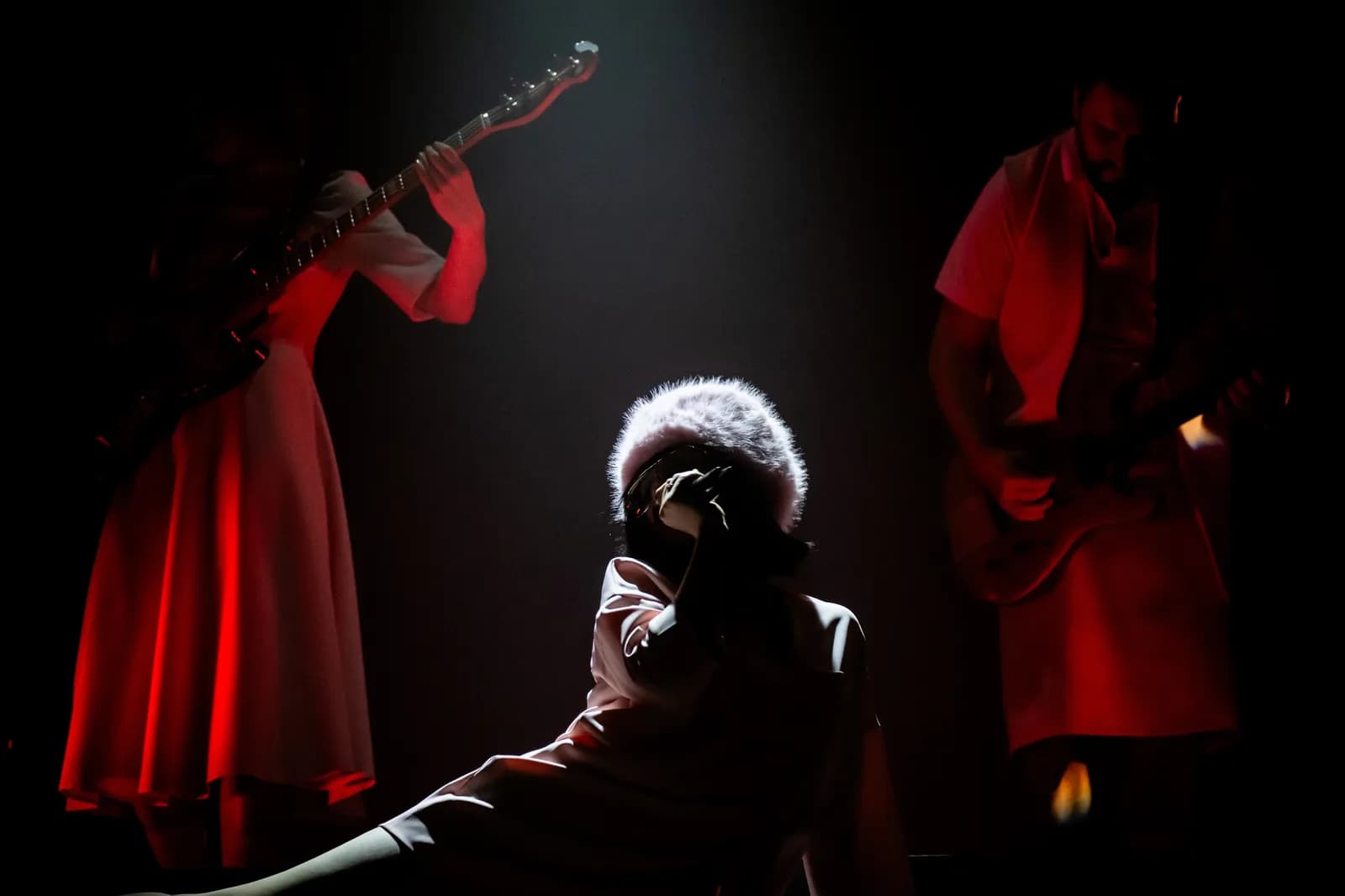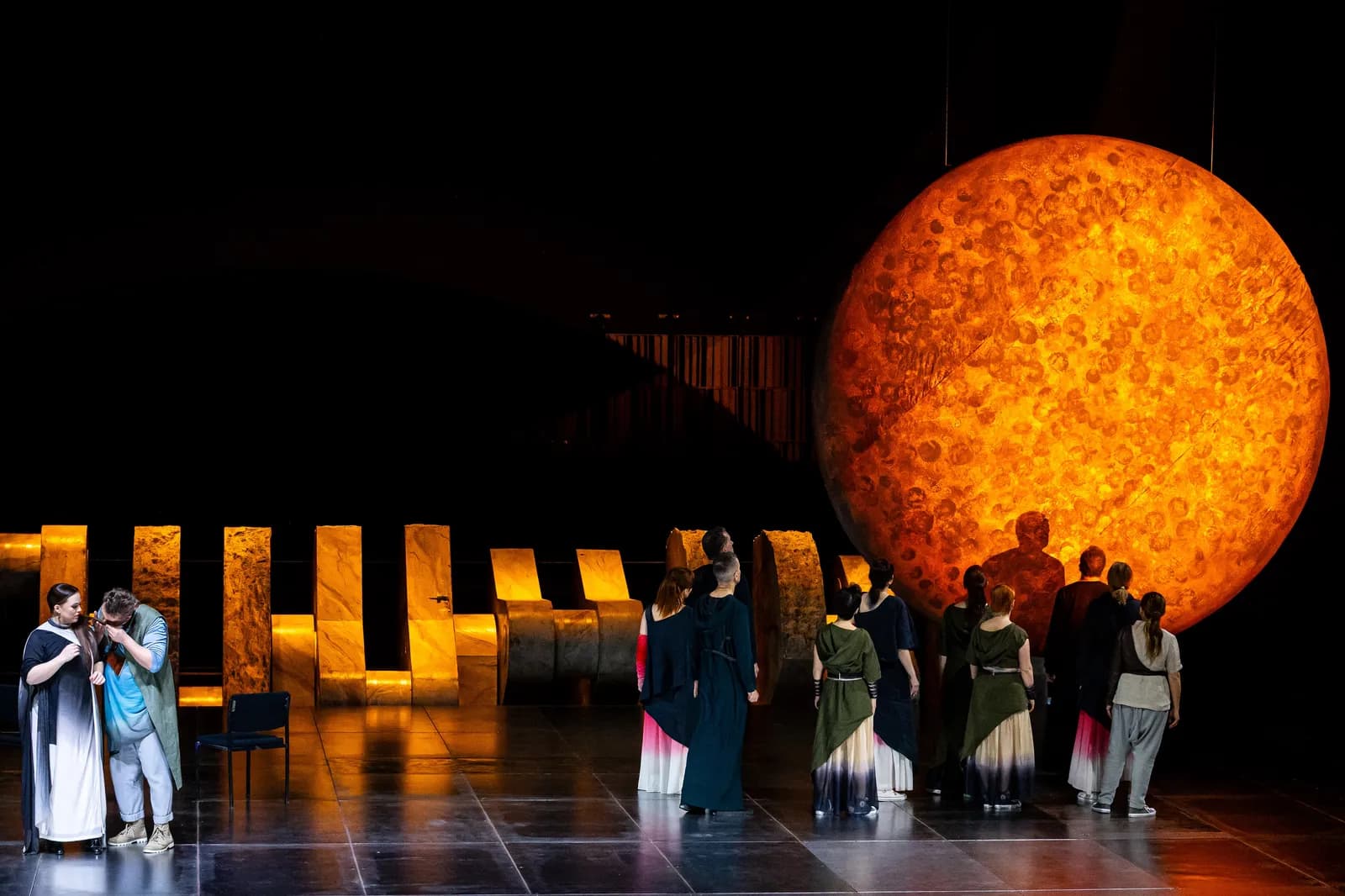
Opera has never been entirely separate from the world around it, but some artists are particularly determined to bring contemporary realities into the heart of the form. Ukrainian collective Opera Aperta is among them, using experimental performance to challenge established ideas about opera and explore the relationship between art, politics and society.
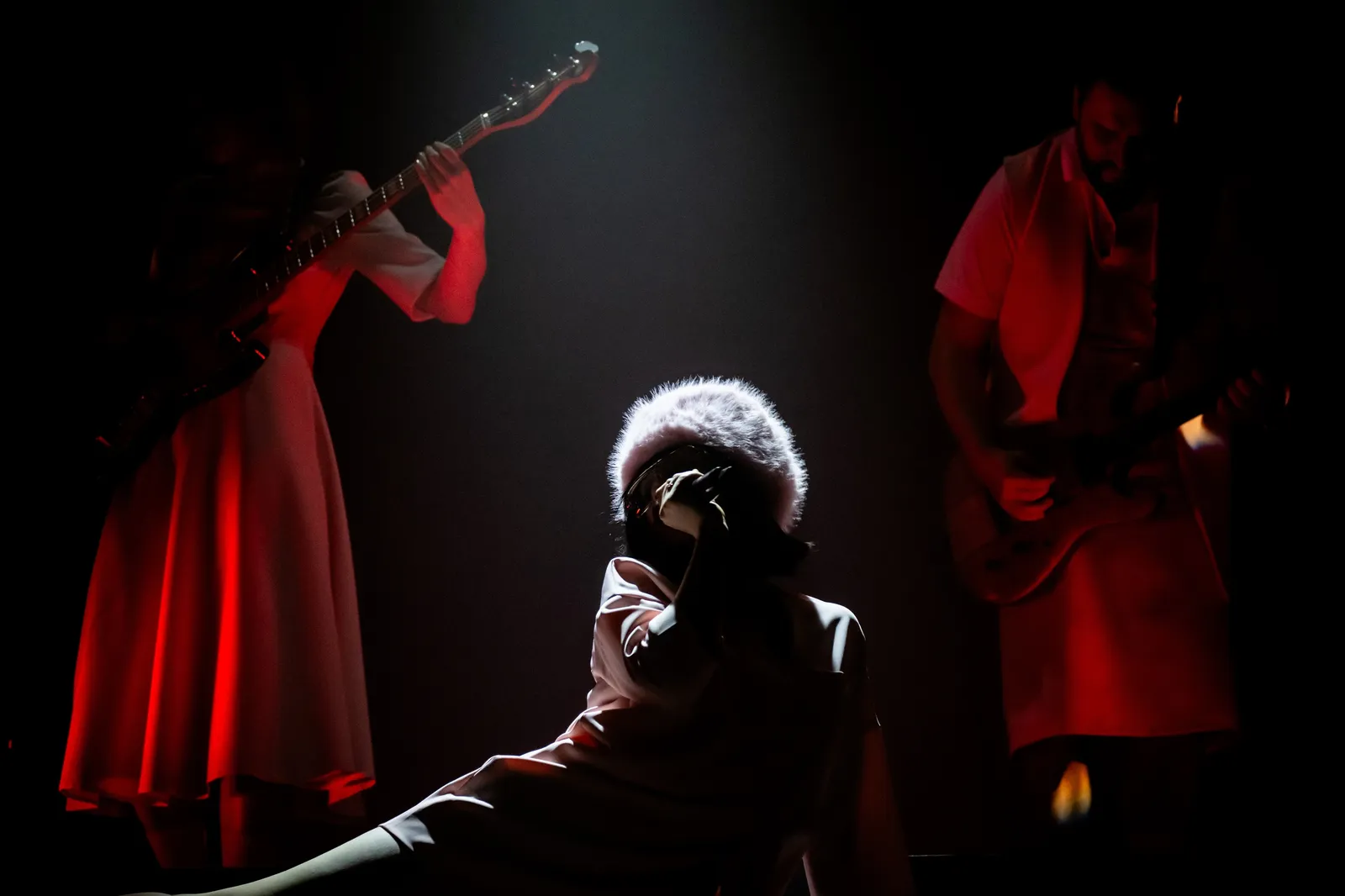
On 14th December, the collective arrives at Teatr Wielki in Poznań with Vox humana. Singspiel, a production that places the human voice at the centre of an ambitious exploration of war, identity and artistic expression.
Founded in 2020 by composers and artists Roman Grygoriv and Illia Razumeiko, Opera Aperta has developed a distinctive approach to contemporary music theatre. Its work moves between opera, performance art and experimental music, questioning the conventions of traditional opera while remaining closely engaged with the political and cultural realities of the present.
The collective has presented its productions on European stages, including in Vienna, Rotterdam and Berlin. Its Poznań appearance follows a performance at Warsaw's Nowy Teatr, bringing its latest work to another important Polish cultural centre.
The human voice as an act of resistance
At the heart of Vox humana. Singspiel is a deceptively simple question: what can the human voice communicate when ordinary language is no longer enough?
The production approaches the voice as both a musical instrument and a record of human experience. It can carry memory, emotion and vulnerability, but it can also become an expression of resistance, protest and solidarity.
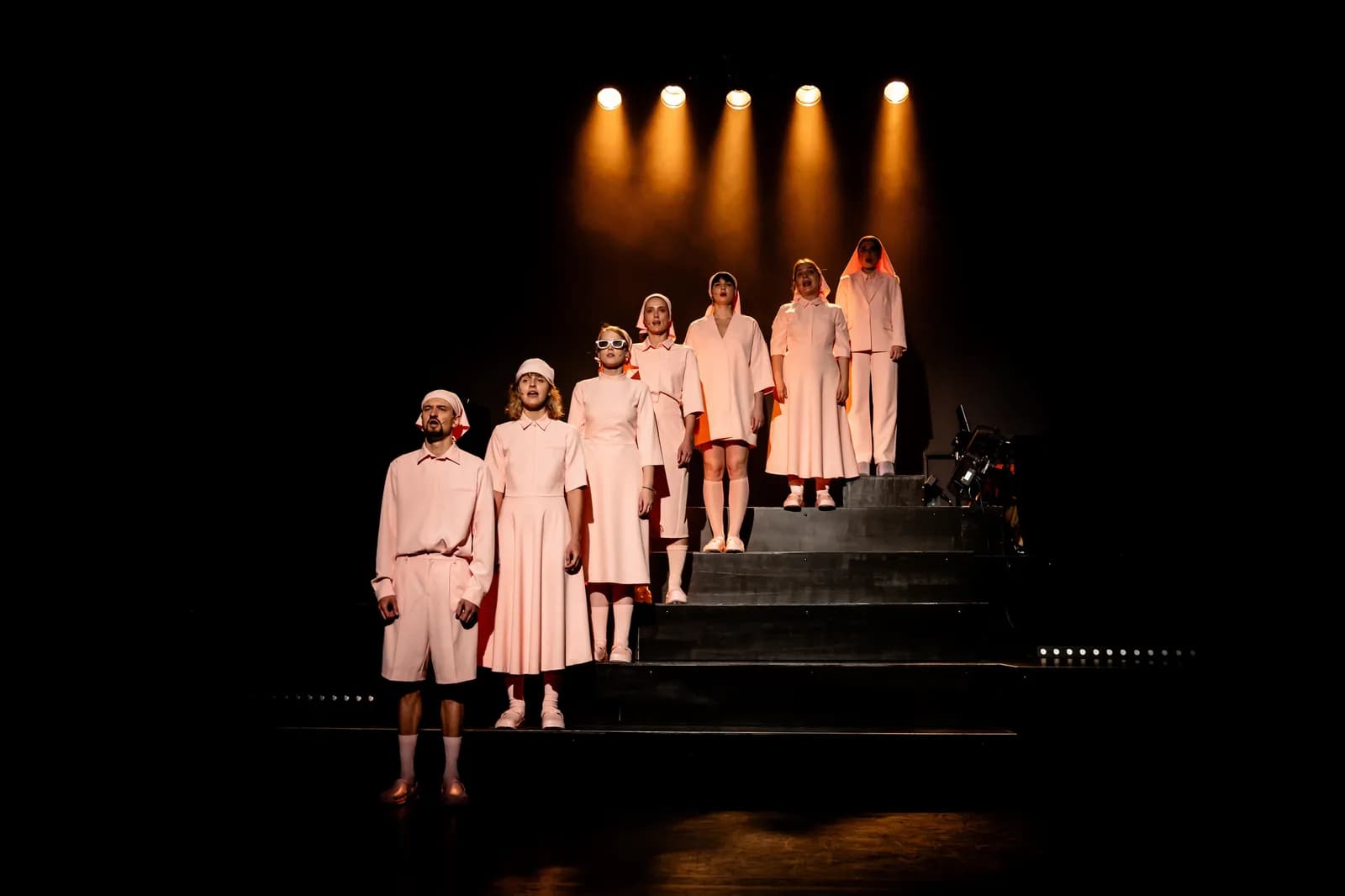
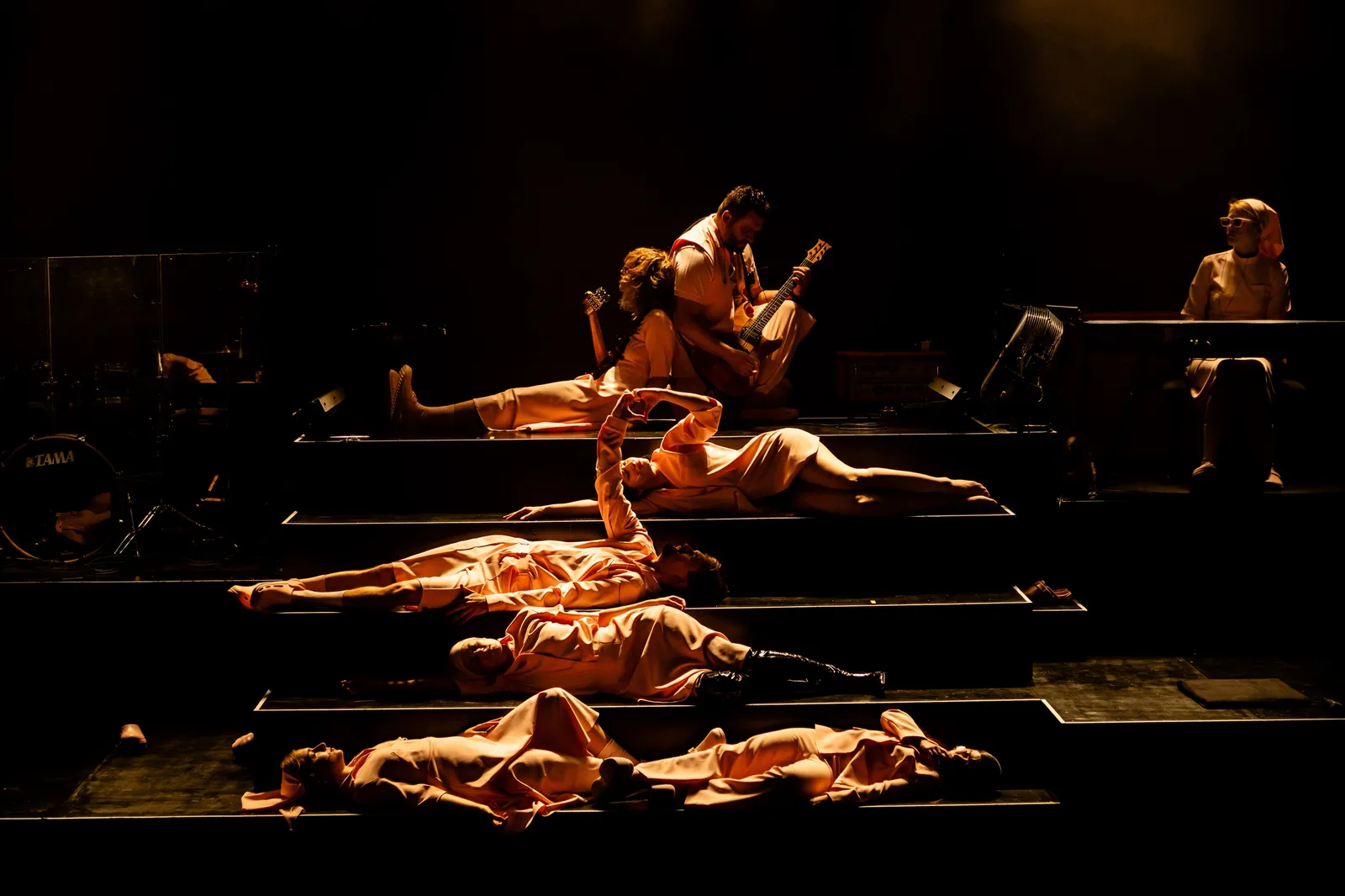
The soundscape reflects this complexity. Experimental vocal techniques meet heavy metal, Ukrainian folk songs, techno ritual, pop performance and post-documentary theatre. Rather than following a conventional operatic storyline, the production brings these different forms together in what its creators describe as a rhizomatic theatre structure.
The result is an unconventional performance in which contrasting musical languages and theatrical approaches coexist. Singing, shouting, whispering and other forms of vocal expression become ways of responding to experiences that are difficult to put into words.
War is an important presence throughout the work, but Vox humana is not simply an account of conflict. It also considers the responsibility of artists in times of political violence and asks whether the stage can remain a space for freedom, dialogue and human connection.
An evolving artistic project
Opera Aperta's work is rooted in a longer collaboration between Grygoriv and Razumeiko, whose artistic partnership began in 2007.
Before establishing the collective, the two artists were closely involved with NOVA OPERA, where they worked as composers, dramaturgs, performers and artistic directors between 2015 and 2020. Together with director Vlad Troitsky, they developed a trilogy of biblical operas: Iyov (2015), Babylon (2016) and Ark (2017).
Their wider portfolio includes projects that bring together music, literature and experimental theatre, including Impossibilities, created in collaboration with writer Taras Prokhasko, and Wozzeck, a trap opera developed with poet Yurii Izdryk.
The collective's ambitions extend beyond individual productions. Its longer-term vision includes establishing a contemporary opera theatre in Kyiv, conceived as a multidisciplinary platform for contemporary and Baroque opera, dance theatre and experimental performance.
The story behind Vox humana also has a distinctly European dimension. In summer 2026, Ukrainian artists arrived in Berlin's Neukölln district to begin a new theatrical season. Their response to Germany's political and military support for Ukraine took the form of an unconventional artistic proposition: they would offer the country their voices and prepare it to win Eurovision 2027 through a political hyperpop project.
This deliberately provocative premise became the starting point for a performance exploring the intersections of popular culture, war, history and the role of art in times of crisis.
Vox humana. Singspiel premiered in Berlin on 17th September 2026. Its arrival in Poznań offers local audiences an opportunity to encounter a contemporary Ukrainian artistic perspective that refuses to separate experimentation from the realities shaping the lives of its creators.
For Teatr Wielki, the performance also brings a different understanding of what opera can look and sound like. Rather than relying on familiar structures and expectations, Opera Aperta uses the stage as a place to question, challenge and listen.
At its centre remains the human voice: fragile, expressive and capable of carrying experiences that extend far beyond the individual.
Event information
Vox humana. Singspiel
Venue: Teatr Wielki im. Stanisława Moniuszki w Poznaniu
Date: Monday, 14th December 2026
Time: 20:00
Creative team: Text, theatre theory and spatial concept by Illia Razumeiko; musical direction and composition by Roman Grygoriv; dramaturgy by Marichka Shtyrbulova and Denis Depta; electronic music by Valeriia Vynogradova; costumes by Kateryna Markush; pictures and editing: Liubov Ploskonosova, Sophia Gera; sound editing: Olha Goncharenko, production director: Cara Freitag, production: Olia Diatel.
The performance features Oleksandr Chyshii, Kateryna Hordiienko, Karolina Muzychenko, Sofiia Pavlichenko, Yuliia Vitraniuk, Marichka Shtyrbulova, Roman Grygoriv, Valeriia Vynogradova and Illia Razumeiko.