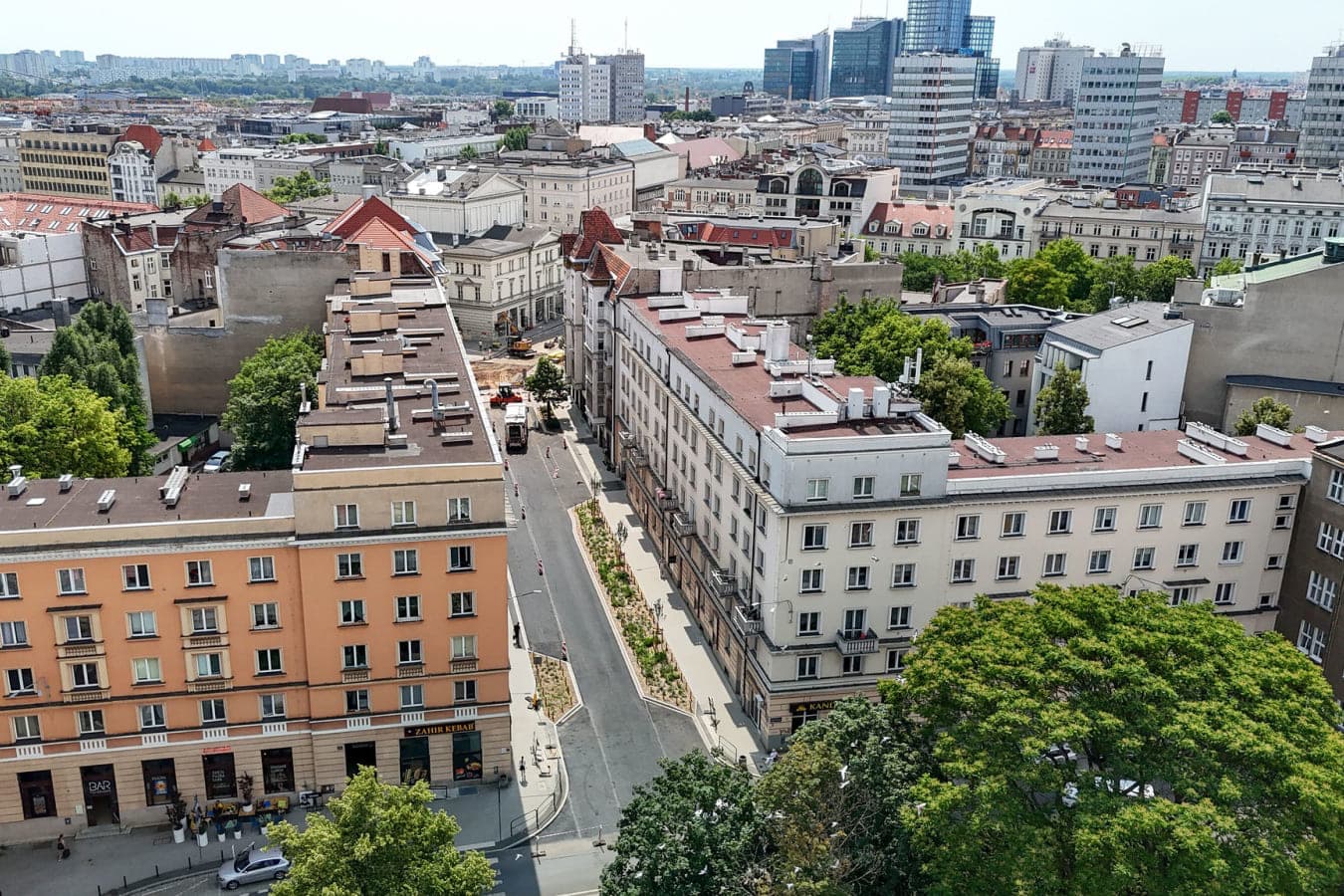
Poznań city centre is becoming greener as new trees, shrubs and more than 200m² of green space are added along ul. 3 Maja and ul. Ratajczaka as part of the Programme Centre redevelopment.
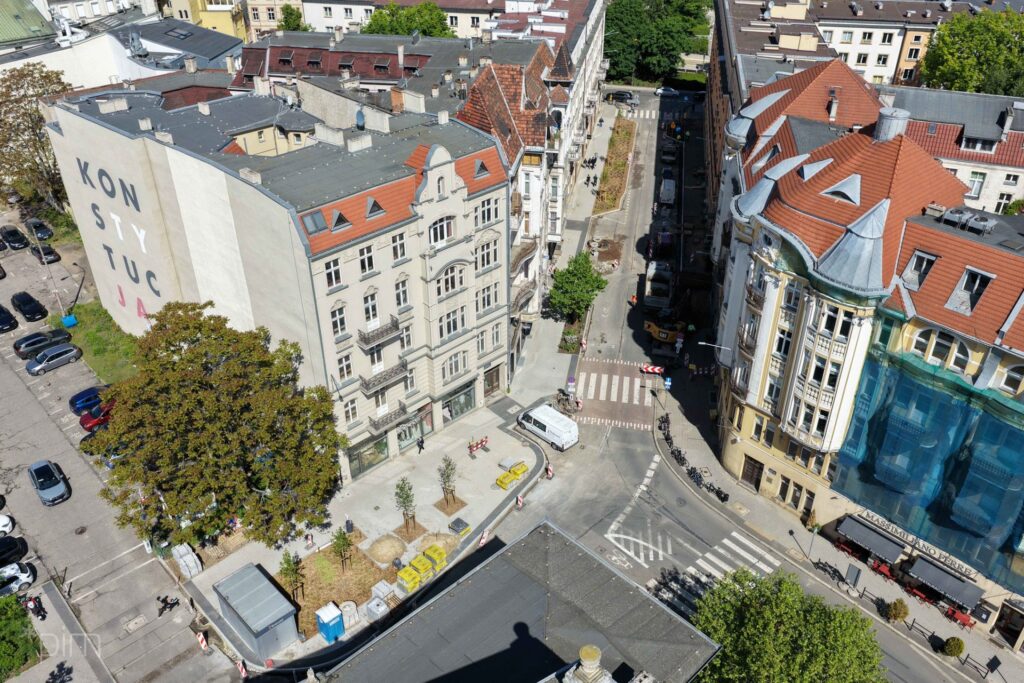
The transformation of central Poznań continues to gather pace, with residents already seeing one of the most noticeable benefits long before construction comes to an end. Along the 3 Maja Street and part of Ratajczaka Street near Arkadia, new trees, shrubs and flowering plants have appeared as previously paved areas have been converted into green spaces.
The ongoing project, delivered by Poznań Municipal Investments (Poznańskie Inwestycje Miejskie, PIM), is about far more than resurfacing roads. It represents another step in the city’s long-term Programme Centre initiative, which aims to create a more attractive, sustainable and pedestrian-friendly heart of Poznań.
Although motorists and pedestrians are still navigating construction works, the emerging landscape offers a glimpse of how the city centre is gradually becoming greener and more welcoming.
More Greenery in the Heart of Poznań
Perhaps the most visible outcome of the project so far is the increase in urban planting.
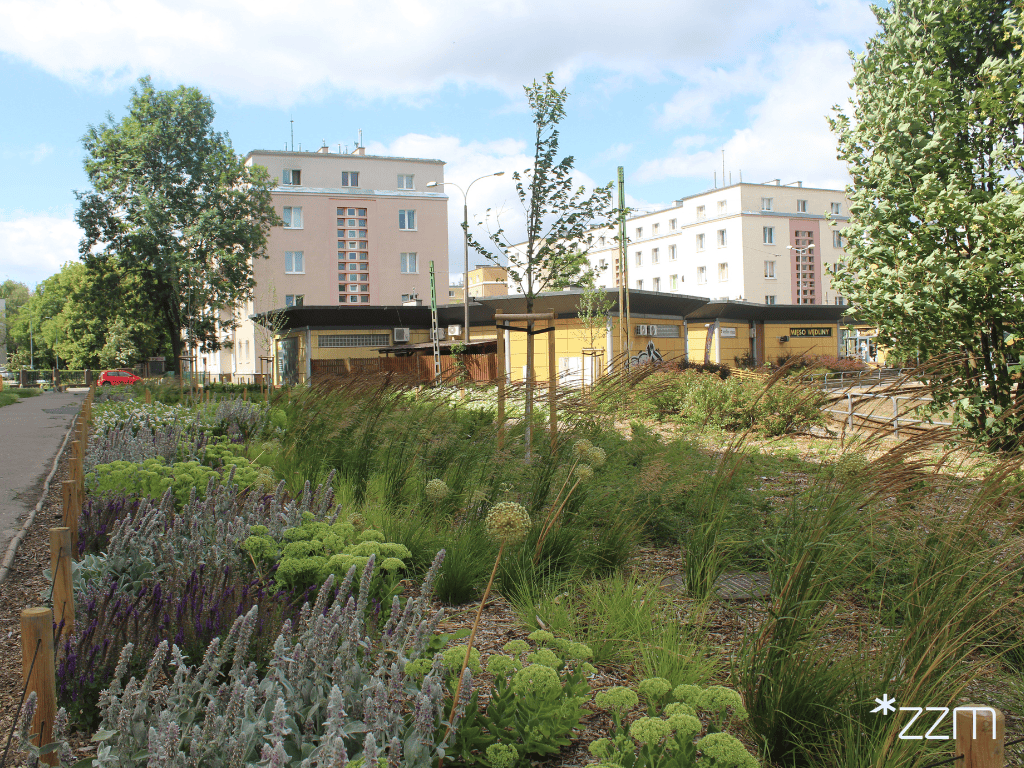
By removing sections of unnecessary paving, contractors have created more than 200 square metres of new biologically active green space. The newly landscaped areas now feature:
- Seven new trees
- Shrubs
- Perennial plants
- Spring flowering bulbs
These additions are expected to improve not only the appearance of the streets but also the local environment.
Increasing vegetation in dense urban areas helps reduce the heat island effect during summer, improves rainwater absorption, supports biodiversity and creates a more pleasant environment for residents, tourists and people working in the city centre.
The latest planting also continues the gradual greening of central Poznań, complementing improvements already completed on neighbouring streets through the Programme Centre initiative.
Streets Designed for People
While road resurfacing remains an important part of the investment, the project reflects a broader shift in how public spaces are designed.
Modern city centre developments increasingly prioritise pedestrians, accessibility and environmental quality alongside vehicle traffic. Wider, more attractive pavements, improved planting and carefully designed public spaces encourage people to spend more time in the area while making everyday journeys more comfortable.
Once complete, ul. 3 Maja and the section of ul. Ratajczaka near Arkadia will provide:
- Refurbished road surfaces
- Renewed pavements
- Additional trees and planting
- Improved drainage
- A more visually appealing streetscape
Together, these improvements are intended to create a space that feels both functional and inviting.
Construction Progress Continues
Work is currently concentrated around the junction of ul. 3 Maja, ul. Ratajczaka and Plac Wolności.
Construction teams are completing the structural layers beneath the new carriageway, while the road surface on much of ul. 3 Maja has already been laid. Pavement works are also nearing completion.
According to Tomasz Płóciniczak, Vice President of Poznańskie Inwestycje Miejskie, the investment is expected to be completed no later than September, after which residents will benefit from a modernised and more comfortable public space.
Historic Stone Finds a New Purpose
The reconstruction has also revealed a small piece of Poznań’s history.
During the removal of the old asphalt surface, workers uncovered sections of historic granite setts hidden beneath modern road layers. Rather than discarding the best preserved stones, they have been carefully reused as part of the kerbside drainage channels.
This approach allows elements of the city’s historic streetscape to remain visible while incorporating them into modern infrastructure, combining heritage with practical urban design.
Why the Project Took Longer Than Expected
Although the investment was originally scheduled to finish by the end of June, unexpected discoveries beneath the road surface required significant additional work.
Initial surveys suggested that the historic stone foundation beneath the asphalt extended consistently across the entire carriageway, providing a stable base for the new surface. However, once construction began, engineers discovered that many sections had previously been replaced with loose aggregate rather than solid stone.
Building directly on such an uneven foundation would have increased the likelihood of premature damage to the new road.
Instead, the decision was made to remove the unstable layers entirely and construct a new reinforced foundation capable of supporting the street for many years to come.
While this inevitably extended the construction programme, it is expected to provide a far more durable result and reduce the need for future repairs.
A Long-Term Investment in the City Centre
The project illustrates how urban regeneration increasingly involves more than simply replacing ageing infrastructure.
Across Europe, city centres are adapting to changing environmental challenges by introducing more planting, reducing unnecessary hard surfaces and creating public spaces that better balance transport, heritage and sustainability.
Poznań’s latest investment reflects that wider trend.
The additional trees and landscaped areas will mature over time, gradually providing greater shade, supporting wildlife and improving the overall character of one of the city’s busiest central districts.
For residents, office workers, students and visitors alike, these improvements represent a meaningful enhancement to everyday life in the city centre.
As construction moves towards its planned completion in September, the transformation of ul. 3 Maja and ul. Ratajczaka is already demonstrating how relatively modest changes, such as replacing paving with planting, can have a lasting impact on the quality of urban space.
Why This Matters for Poznań
Projects such as this are helping to redefine the future of central Poznań.
Rather than focusing solely on roads and transport infrastructure, the city is investing in greener streets that combine practical improvements with environmental benefits and public comfort. The addition of new trees, improved pavements, and carefully planned landscaping contributes to a city centre that is not only easier to move around but also more enjoyable to experience.
As the Programme Centre continues to evolve, residents can expect to see further examples of how thoughtful urban design is reshaping Poznań for future generations.
Click here for more latest news from Poznań!