Discover Poznań’s historic tourist lines this weekend, including evening Line 200 journeys, Sunday’s famous Jelcz ‘Ogórek’, and important traffic changes around Rondo Starołęka.
There are few better ways to experience Poznań in summer than aboard one of the city’s beautifully preserved historic trams and buses. This weekend, residents and visitors alike will have another opportunity to travel back in time as MPK Poznań’s popular tourist lines return with an impressive collection of heritage vehicles, including evening services and the much-loved Jelcz “Ogórek”.
Alongside the nostalgic journeys, motorists should also prepare for temporary traffic changes around Rondo Starołęka as tram infrastructure modernisation continues.
Whether you are a transport enthusiast, photographer, family looking for an unusual day out or simply curious about Poznań’s transport heritage, there is plenty to enjoy.
Historic Trams Return to Poznań’s Streets
Saturday, 11 July, will see tourist Tram Line 20 operated by a pair of classic 13N tramcars. Their appearance is made possible thanks to cooperation with Warsaw’s public transport operator, giving passengers the opportunity to experience one of Poland’s most recognisable post-war tram designs.
On Sunday, 12 July, Tourist Tram Line 0 will feature a historic N+ND tram set on loan from Kraków’s municipal transport operator, continuing the long-standing cooperation between Polish cities to preserve transport heritage.
These heritage services combine sightseeing with living history, offering passengers a chance to see Poznań from a different perspective while travelling aboard vehicles that once formed the backbone of everyday public transport.
Classic Buses Across the City
MPK Poznań has assembled an impressive collection of heritage buses for the weekend.
Saturday on Line 100
Passengers may travel aboard:
- MAN
- Ikarus 280
- Jelcz PR110
- Ikarus 260
Sunday on Line 100
The planned vehicles include:
- Ikarus 260
- Neoplan N4020
- Jelcz PR110
- DAF
One particularly notable vehicle is the 1994 Neoplan N4020, recognised as Poland’s first low-floor city bus. It continues to appear on Poznań’s tourist routes thanks to cooperation between MPK Poznań and Solaris Bus & Coach.
Meanwhile, Line 102, which connects Poznań Główny with the Museum of Armoured Weapons, will also operate using classic buses throughout the weekend.
Evening Line 200 Returns
One of the highlights of the weekend comes on Saturday evening, when the special Line 200 returns.
Instead of daytime sightseeing, passengers can experience Poznań after sunset aboard two historic buses:
- DAF
- Jelcz M11
Services depart from Stare Zoo (Gajowa Street) at:
- 20:00
- 21:00
- 22:00
The evening setting offers a completely different atmosphere as historic vehicles travel through illuminated city streets.
Sunday’s Star Attraction: The Legendary “Ogórek”
Sunday also brings the return of one of Poland’s most beloved historic buses.
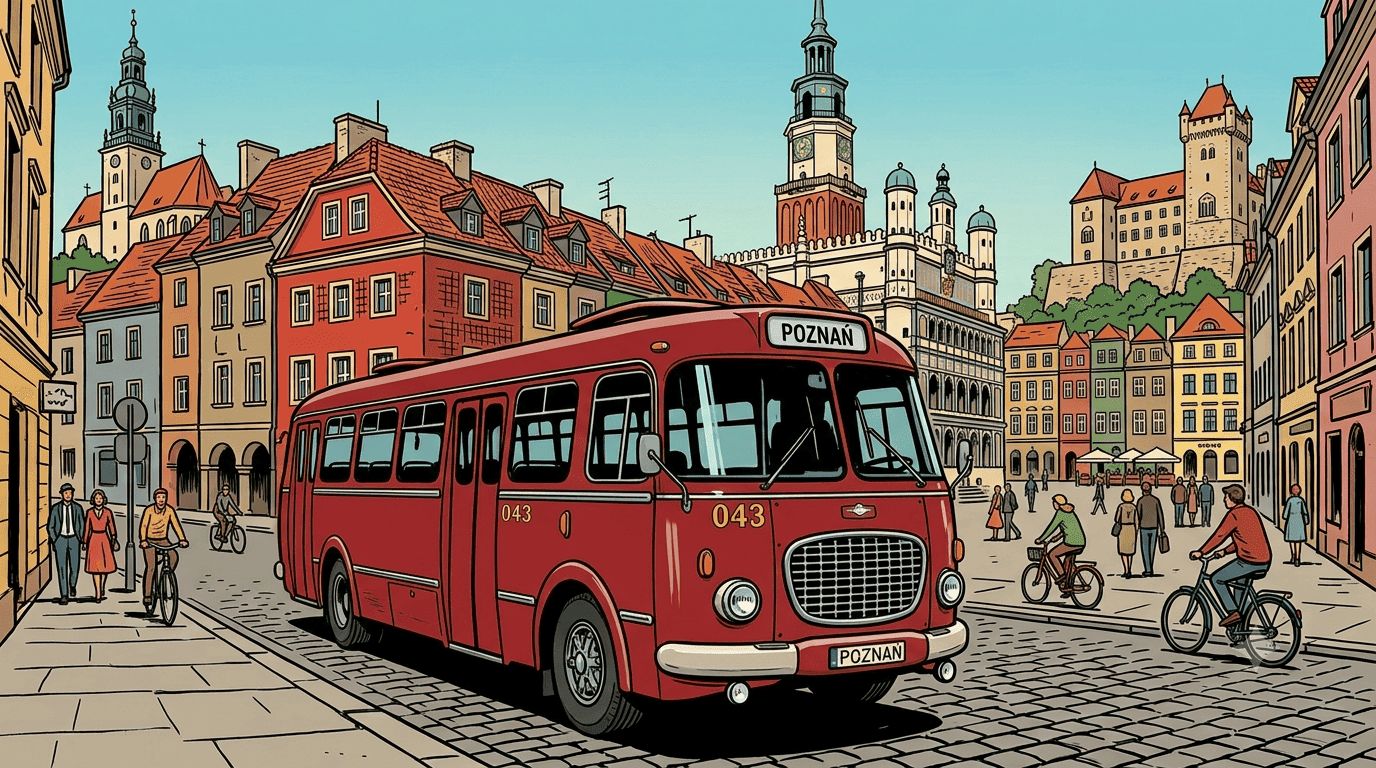
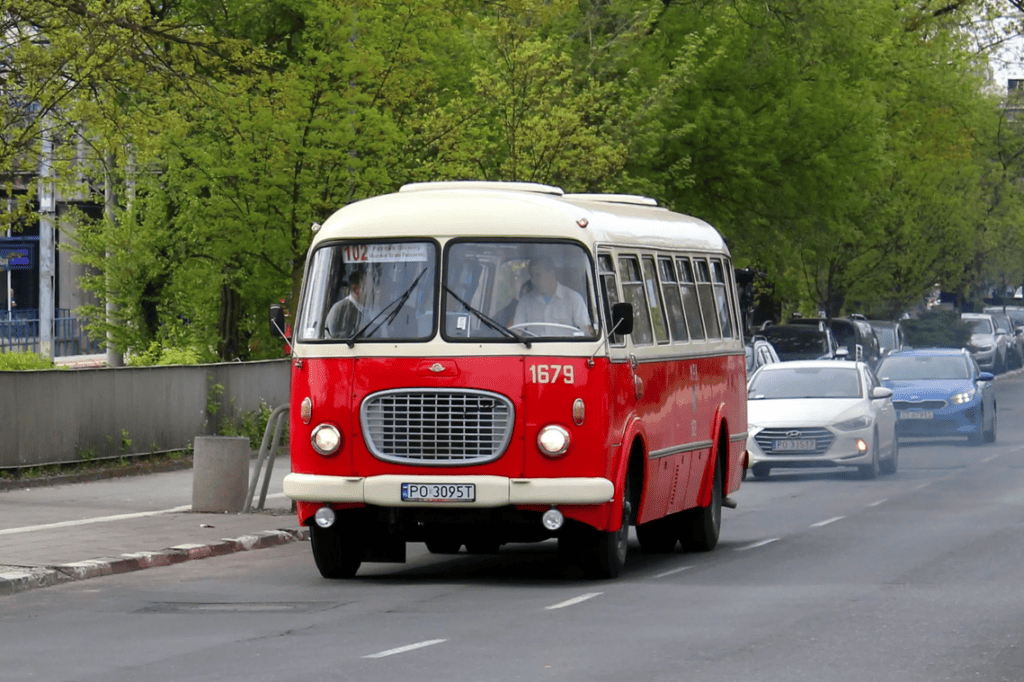
Special Line A will be operated by the legendary Jelcz “Ogórek”, one of the most recognisable buses ever to serve Polish cities.
For many passengers, it is more than simply a bus. It is a moving piece of nostalgia that evokes memories of everyday life throughout the 1960s, 70s and 80s.
As always, MPK notes that, in exceptional circumstances, individual heritage vehicles may need to be substituted.
Why Is It Called the “Ogórek”?
The nickname “Ogórek” refers to the Jelcz 043, a bus produced from the late 1950s under licence from the Czech manufacturer Karosa. Its rounded, elongated shape reminded passengers of a cucumber, giving rise to the affectionate nickname that has endured for generations.
The Jelcz 043 became one of the symbols of post-war public transport in Poland, serving cities, towns and long-distance routes for decades. Today, restored examples are treasured by museums and heritage operators, with Sunday’s appearance in Poznań offering a rare opportunity to travel aboard one of these historic vehicles.
Spotlight on the Jelcz PR110
While it is not an “Ogórek”, the Jelcz PR110 deserves attention in its own right.
Introduced during the mid-1970s, the PR110 represented a major leap forward for Polish urban transport. Built under licence from French manufacturer Berliet, it featured three passenger doors, a rear-mounted engine and a larger passenger capacity than its predecessor. Around 12,000 examples were produced between 1975 and 1992, making it one of the defining city buses of the late Communist period.
Although early versions suffered reliability issues under Poland’s demanding operating conditions, the PR110 became a familiar sight in cities across the country, including Poznań. Today, preserved examples are highly valued by transport museums and heritage operators.
Seeing both the PR110 and the much older “Ogórek” operating during the same weekend offers a fascinating comparison between two generations of Polish bus design.
Temporary Traffic Changes Around Rondo Starołęka
Away from the tourist routes, significant changes are planned for motorists as work on the tram track renewal along Zamenhofa Street continues.
From the night of July 10 until July 12, drivers travelling from Żegrze towards Wilda will not be able to continue straight across Rondo Starołęka. Instead, they will need to continue towards Rondo Rataje before making a U-turn using the newly reopened crossing near Krucza Street.
The reopening of the crossing at Zamenhofa and Krucza also means:
- Left turns into Krucza Street from the Rataje direction are possible again.
- Traffic along Zamenhofa Street remains open in both directions.
- Traffic leaving Krucza towards Rondo Starołęka must continue using the signed diversion until 12 July
Further changes are planned from 13 July, when all turning movements at the Zamenhofa and Krucza junction are expected to reopen, although some restrictions may remain while work continues. Partial reopening at Rondo Starołęka is also expected, with temporary lane narrowing still in place.
Drivers are advised to follow temporary signage throughout the works.
Why It Matters
Poznań’s tourist transport lines have become one of the city’s most distinctive summer traditions. They not only preserve important pieces of Poland’s engineering history but also allow younger generations to experience vehicles that many parents and grandparents travelled on every day.
Combined with ongoing investment in modern tram infrastructure, the weekend perfectly illustrates how Poznań balances preserving its transport heritage while continuing to improve the city’s public transport network for the future.
Click here for more latest news and things to do in Poznań!