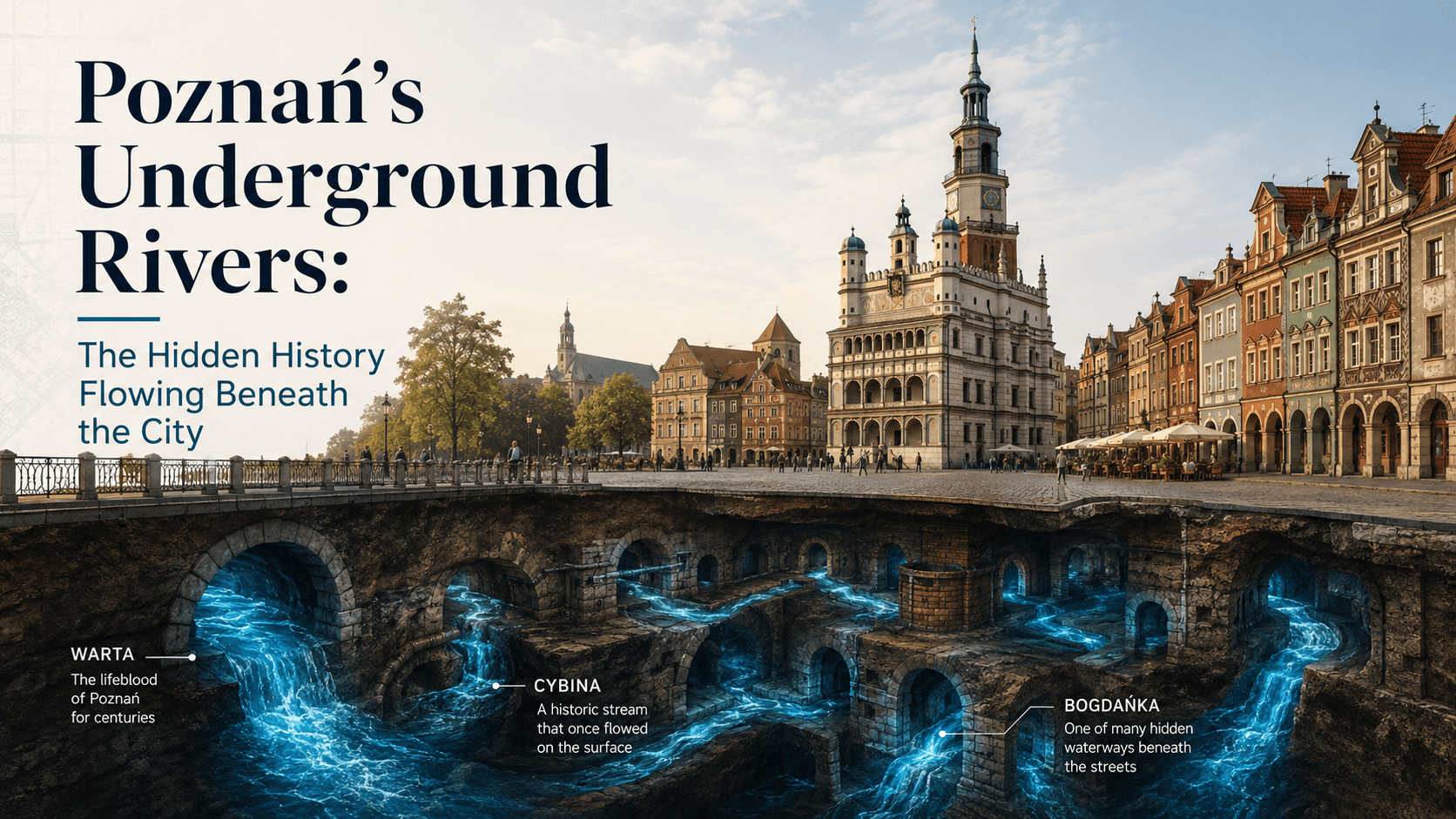
Poznań’s underground rivers are easy to miss because much of the city’s older water network now runs below streets, parks and buildings. The Bogdanka, Wierzbak and Seganka show how Poznań changed its landscape for flood control and construction, and why some residents and planners now want parts of that network brought back to the surface.
A City Built Around Water
Poznań is usually associated with the Warta, but the city once had a wider system of rivers, streams and defensive moats. Poznań’s underground rivers are the surviving, redirected or buried parts of that system. Historical waterways included the Bogdanka, Wierzbak and Seganka, as well as the Mała Warta and Struga Karmelicka. Some disappeared, while others entered underground channels as the city expanded.
The Warta’s Altered Course
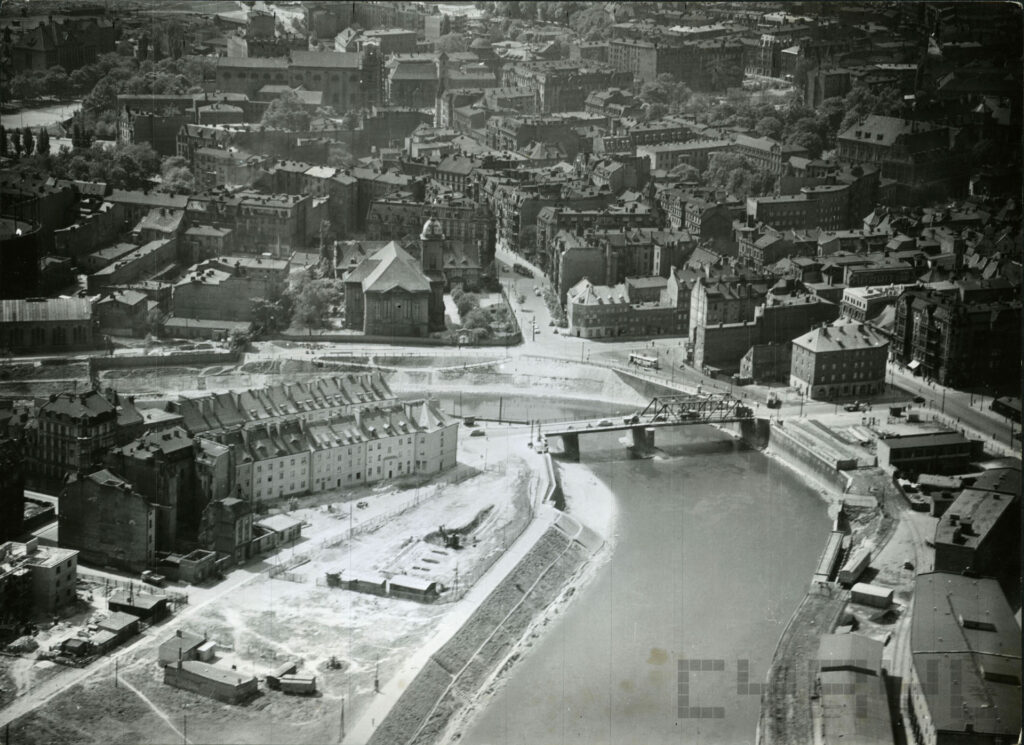
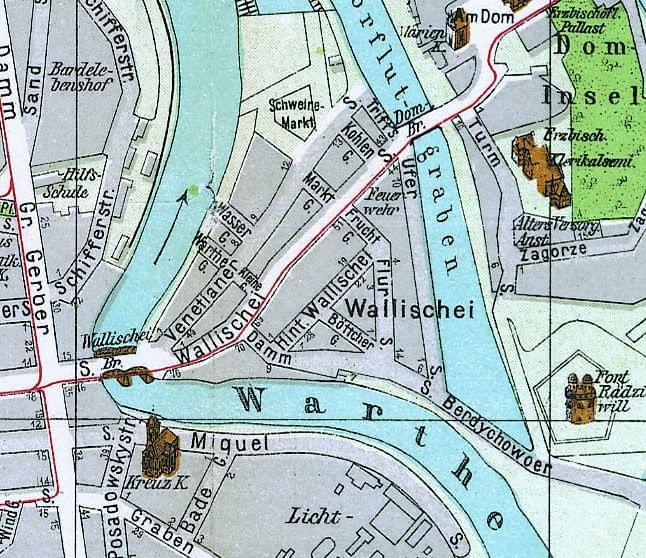
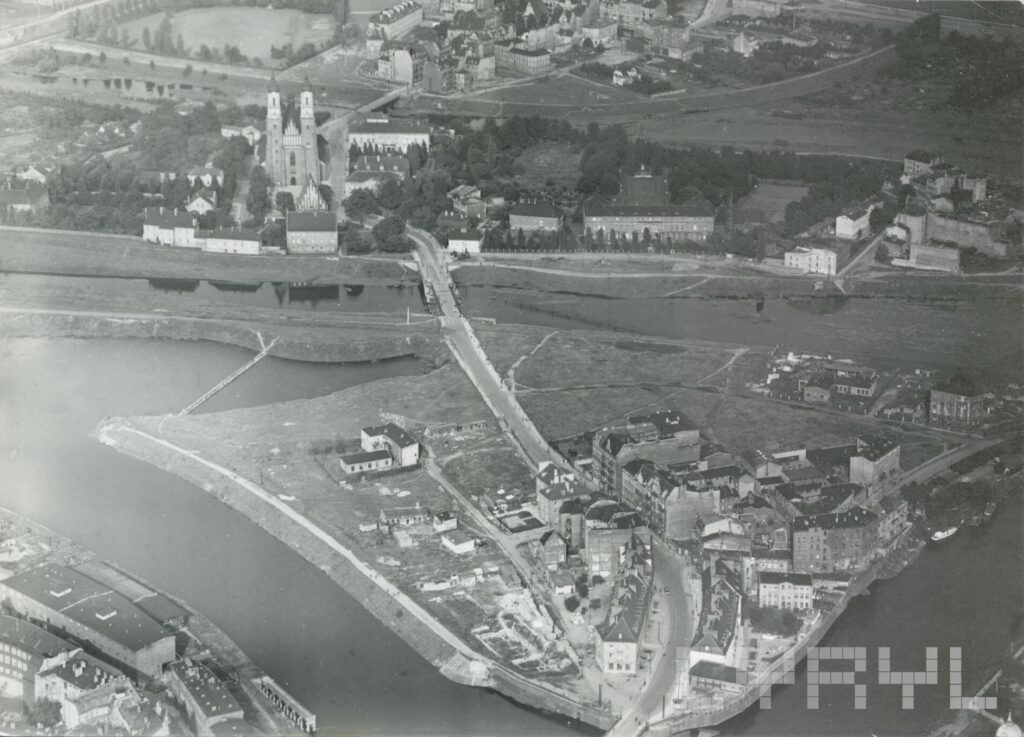
The biggest transformation involved the Warta itself, and Poznań’s underground rivers belong to this wider history of reshaping local waterways. The Warta once curved between the Old Town and Chwaliszewo, creating a riverside area sometimes called “Poznań Venice.” The old Chwaliszewo bend was filled mainly between 1964 and 1966, while work on the new channel and its reinforced banks continued into the late 1960s. These changes improved flood protection but moved the main river channel farther from the historic center.
The Visible and Hidden Bogdanka
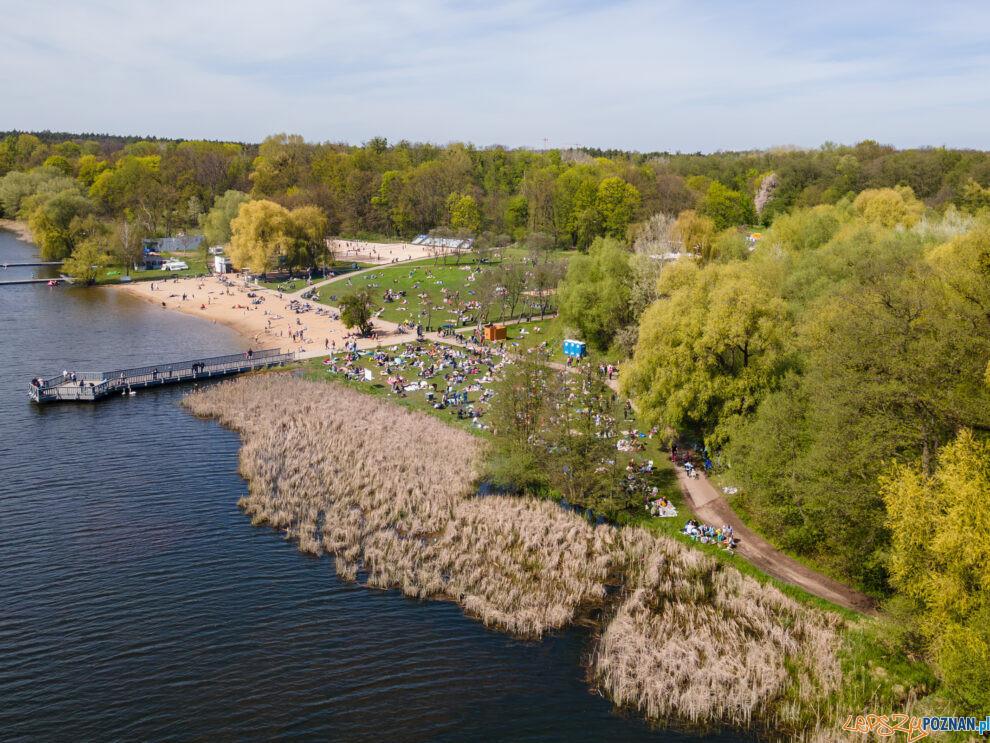
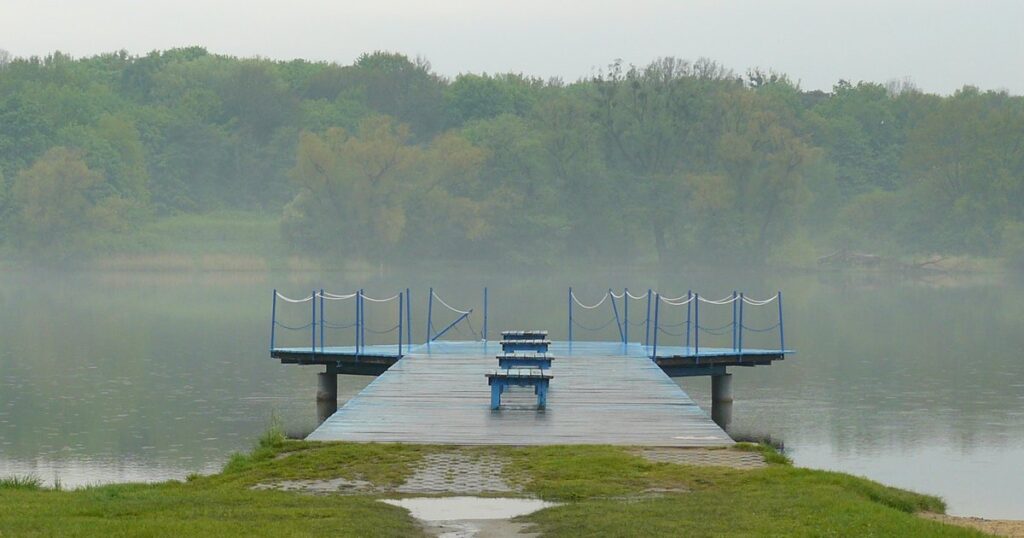
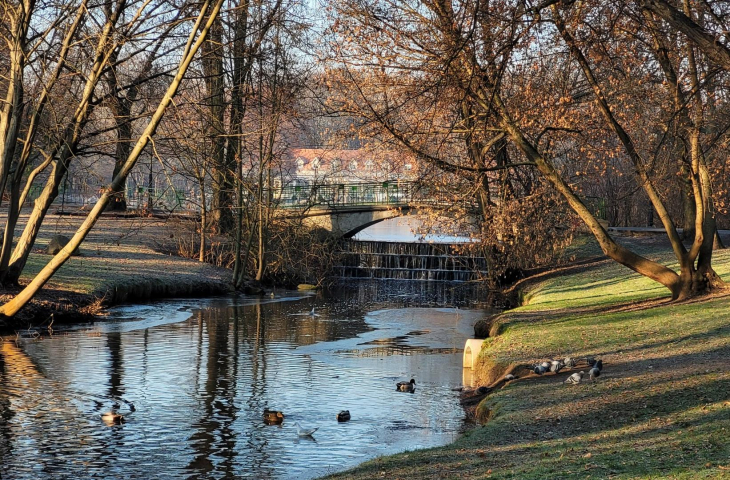
The Bogdanka is one of the clearest examples of how Poznań’s underground rivers can be partly visible and partly hidden. It flows through the western green wedge and enters Lake Rusałka, which was created in 1943 by damming the river. The reservoir was built during the German occupation using the forced labour of Jewish prisoners, giving the site a difficult history that is not always obvious to visitors. Farther east, parts of the Bogdanka are hidden underground, while the river once supplied water to Poznań’s medieval defensive moats.
The Wierzbak Beneath the City
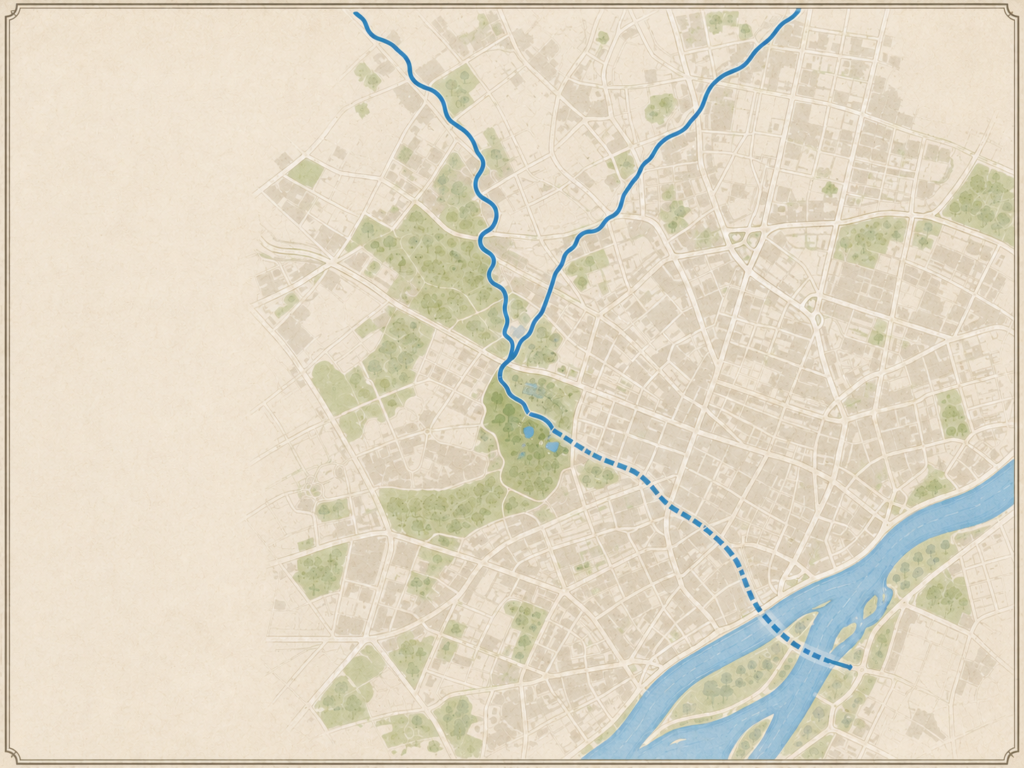
The Wierzbak adds another layer to the story of Poznań’s hidden waterways. Historically, the stream flowed through the northwestern part of the city, roughly parallel to the Bogdanka. Today, the waters of the Wierzbak and Bogdanka are connected in the Sołacz area. Below Sołacz, they share the same watercourse, continuing from Wodziczki Park through an underground channel to the Warta River. The street name Nad Wierzbakiem still preserves the memory of the stream, even where its water is no longer visible.
The Completely Hidden Seganka
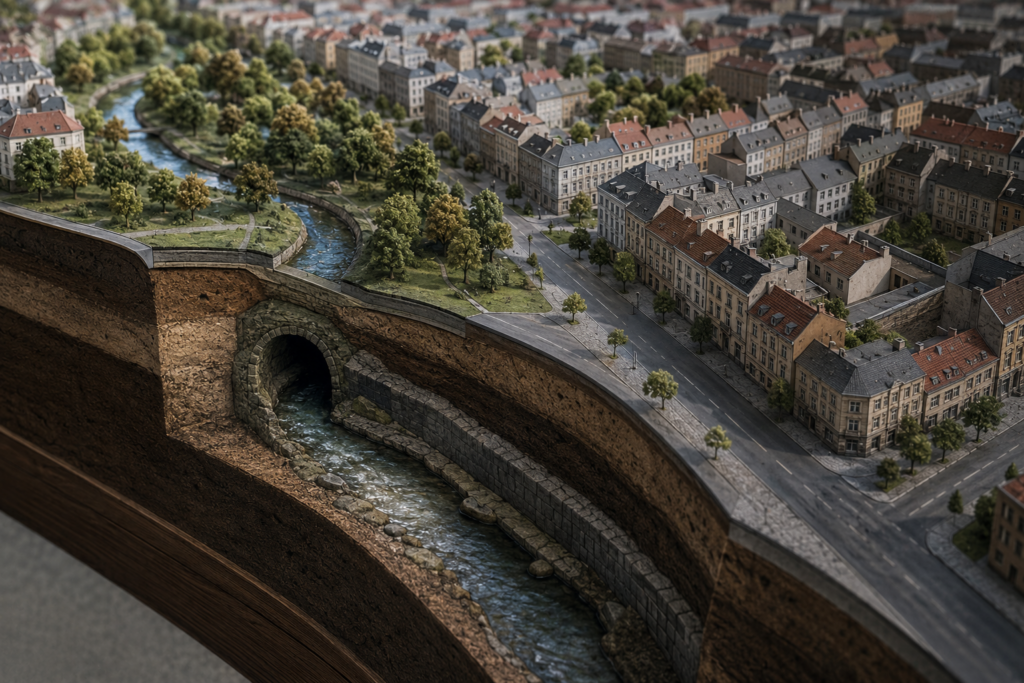
The Seganka is one of the most thoroughly concealed waterways in Poznań. Historically, the stream flowed through the former oval village of Jeżyce, now a densely developed inner-city district, before continuing toward the Bogdanka. Recent research on Poznań’s historical water system describes the Seganka as entirely hidden underground today. Unlike the Bogdanka, it has no clearly visible open section that residents can trace through the city. Its former course is therefore reconstructed primarily from historical maps, surviving place names, and urban research.
Why the Waterways Disappeared
Poznań’s underground rivers reflect several stages of development, including street construction, dense housing, flood-protection works and underground infrastructure. Placing a stream in a channel could free land for buildings and make water easier to control. The long-term result, however, was the loss of visible water, ecological corridors and part of the city’s historical landscape.
Explore More: The Mysteries of Ostrów Tumski
Where Restoration May Be Possible
Current research suggests that some sections of Poznań’s underground rivers could be restored, although not every old route is practical. A 2025 study using historical maps, current land-use and planning documents found that uncovering the Bogdanka between Lake Rusałka, Golęcin, and Sołacz is feasible. It also identified potential for parts of the shared Bogdanka–Wierzbak channel below Sołacz and the upper Wierzbak. Dense development makes the old city-center route much harder to reconstruct.
The Free the Bogdanka Competition
The idea has also entered public discussion, and Poznań’s underground rivers were central to the student architecture competition “Uwolnić Bogdankę,” or “Free the Bogdanka.” The competition asked participants to prepare concepts for the western green wedge between Lake Rusałka and Sołacz Park. A total of 58 entries were submitted, and the results were announced on 1 February 2024. The proposals examined different ways of redesigning the area around the Bogdanka.
The Benefits and Practical Limits
Restoring Poznań’s underground rivers would not mean rebuilding the past exactly. Stream daylighting can improve stormwater management, create public green space and support urban habitats, but it requires enough land and coordination with roads, utilities and property owners. Where reopening a channel is impossible, planners can still mark an old route with greenery, shallow water features, paving or information signs.
What the Hidden Network Means Today
Poznań’s underground rivers show that the city’s water history is not limited to the Warta. The Bogdanka and Wierzbak still flow through open and underground sections, while the Seganka remains concealed. Their routes help explain the shape of streets and green spaces and why river restoration is now part of local debate. The practical question is which sections can add real environmental and public value.