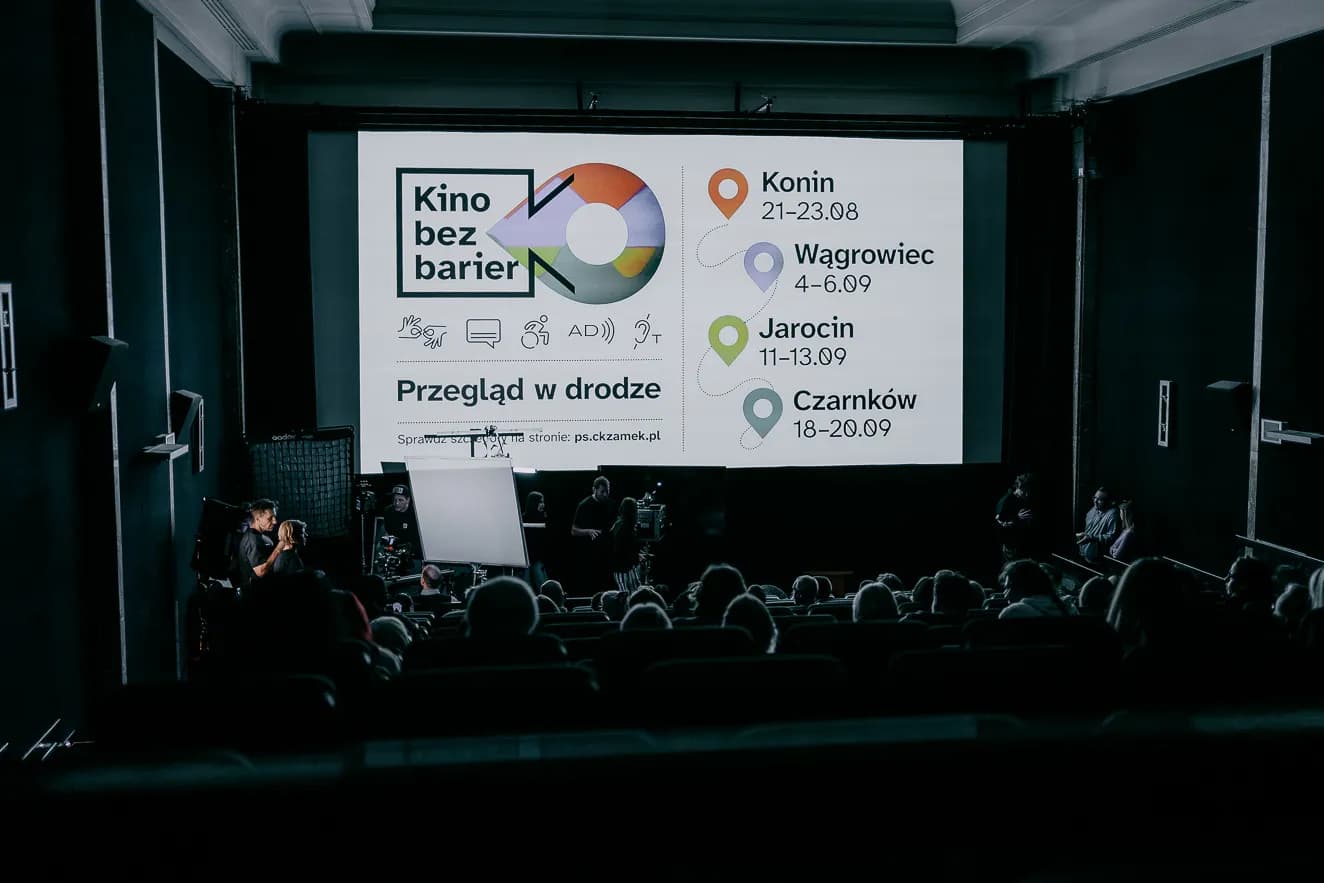
A new campaign film produced by Poznań’s Centrum Kultury ZAMEK will reach cinema audiences across Poland this December, drawing attention to the importance of making film screenings accessible to everyone.
Titled What Are You Looking for at the Cinema? (Czego szukasz w kinie?), the spot will have its nationwide premiere on 3rd December 2026, marking the International Day of Persons with Disabilities. It is part of Kino bez barier (Cinema Without Barriers), an initiative run by CK ZAMEK that works to make cinema more inclusive for people with different accessibility needs.
The spot will be screened in cinemas in several Polish cities, including Poznań, Gdynia, Szczecin, Konin and Jarocin, as well as across the Multikino chain. Its official premiere will take place at Kino Pałacowe, inside Poznań’s ZAMEK Cultural Centre, with members of the creative team in attendance.
Finding a place for everyone in the cinema
The spot starts with a simple question. What are you looking for at the cinema? The immediate answer might be a particular row or seat, but the question also points towards the different experiences people hope to find once the lights go down.
For some, cinema is about emotion and identification with characters. Others come for entertainment, a different perspective on the world or simply a break from everyday life. The campaign uses these varied expectations to explore another important point: audiences also have different needs when it comes to watching a film and going to the cinema.
There is also a thoughtful play on words here. In Polish, spot refers to a short promotional film, while in English it can also mean a place or position. The message is that accessibility should allow everyone to find their place in the cinema.
“Each of us comes to the cinema looking for something different, but we all want the same thing: to feel that this place is for us too. Accessibility is not an extra addition to a screening, but a condition for everyone to feel at home here,”
says Joanna Stankiewicz, project leader of Kino bez barier.
A cast bringing different experiences together
The film follows several people preparing to attend a cinema screening. Rather than relying entirely on actors, the production also features members of the actual Kino bez barier audience, including Piotr, a blind cinema-goer.
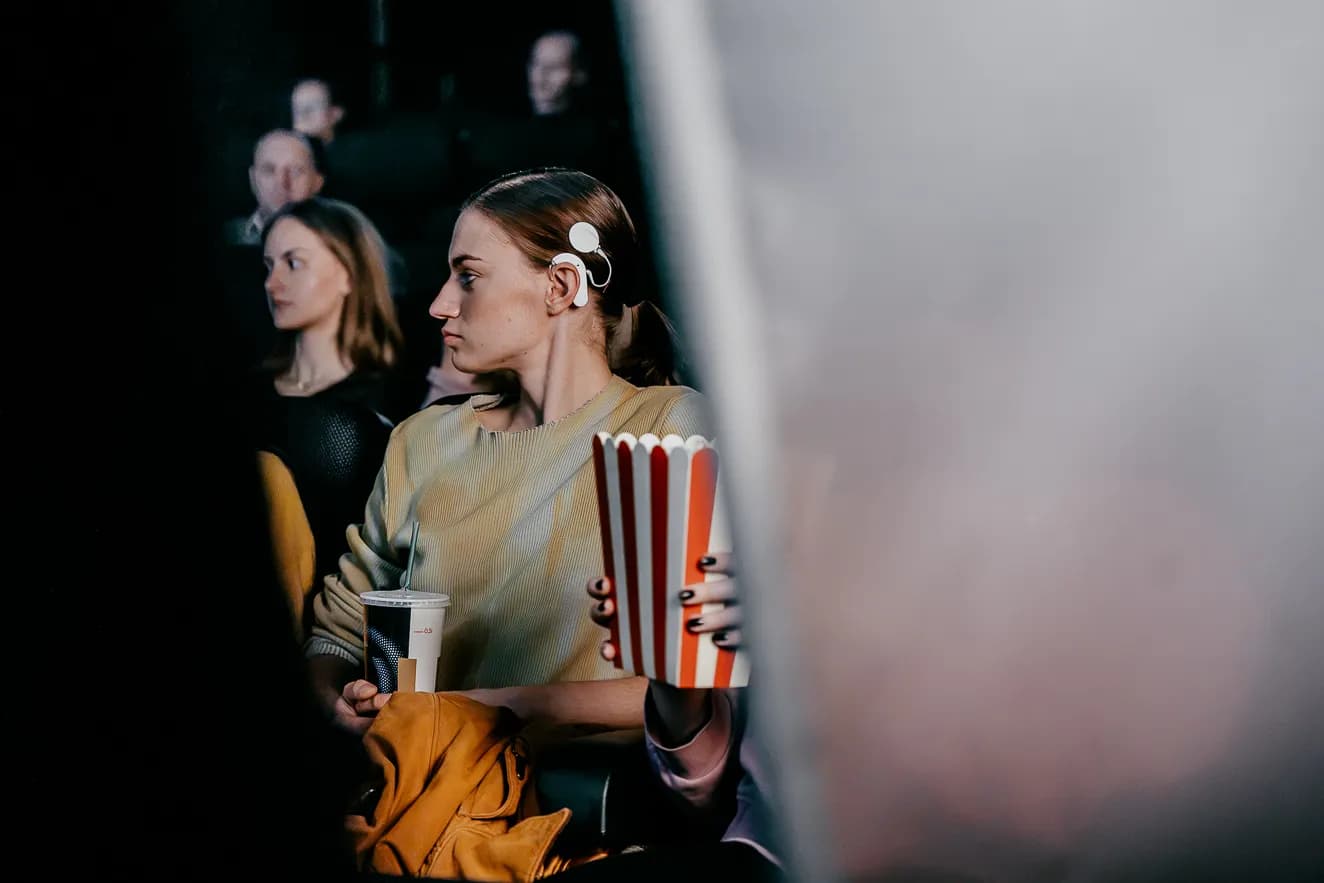
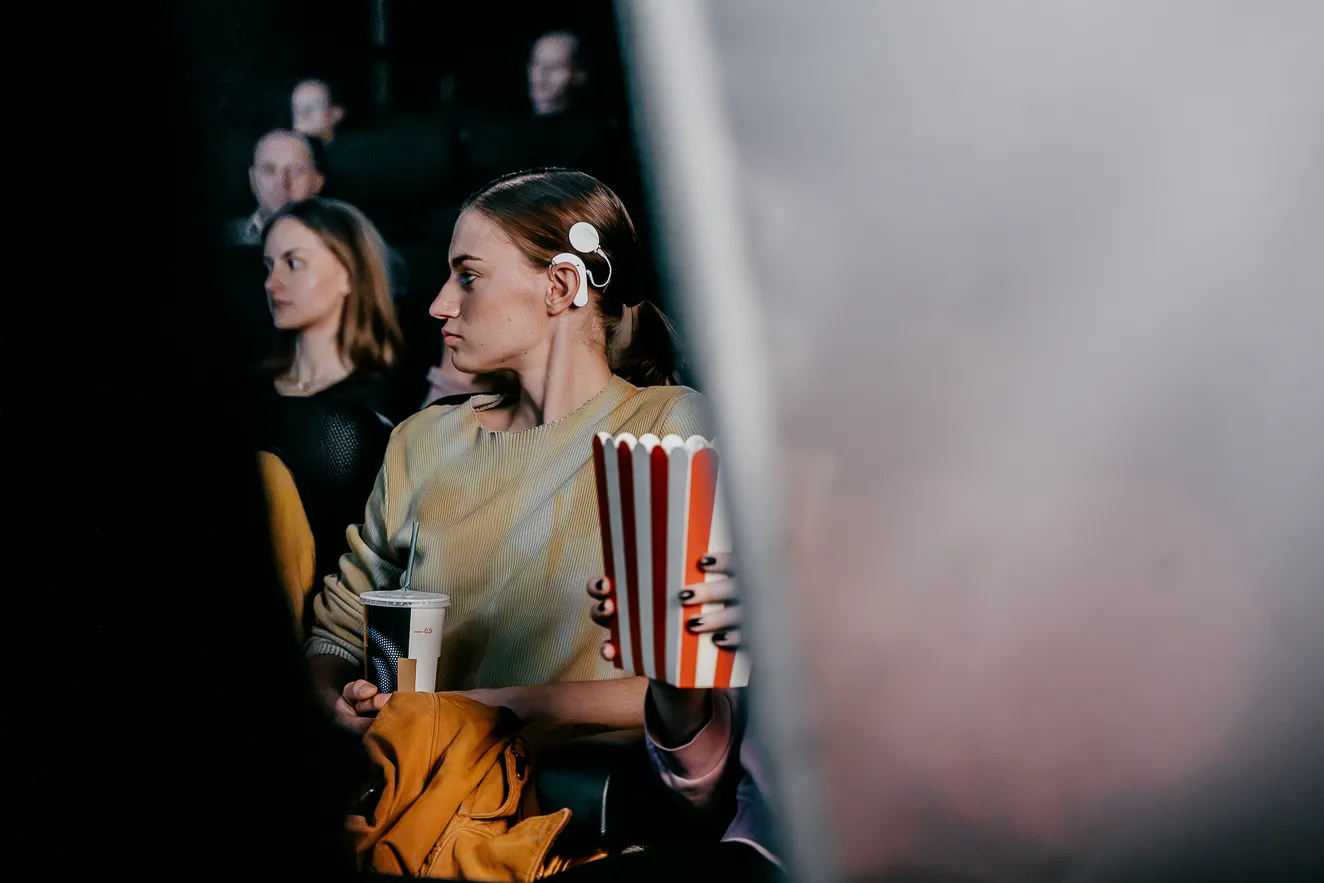
The leading roles are played by two familiar faces from Poland’s online creative community. Weronika Pawelec, a model and former Top Model contestant, is also a judge at the Miss & Mister Deaf Poland and Deaf Universe competitions. She uses two cochlear implants.
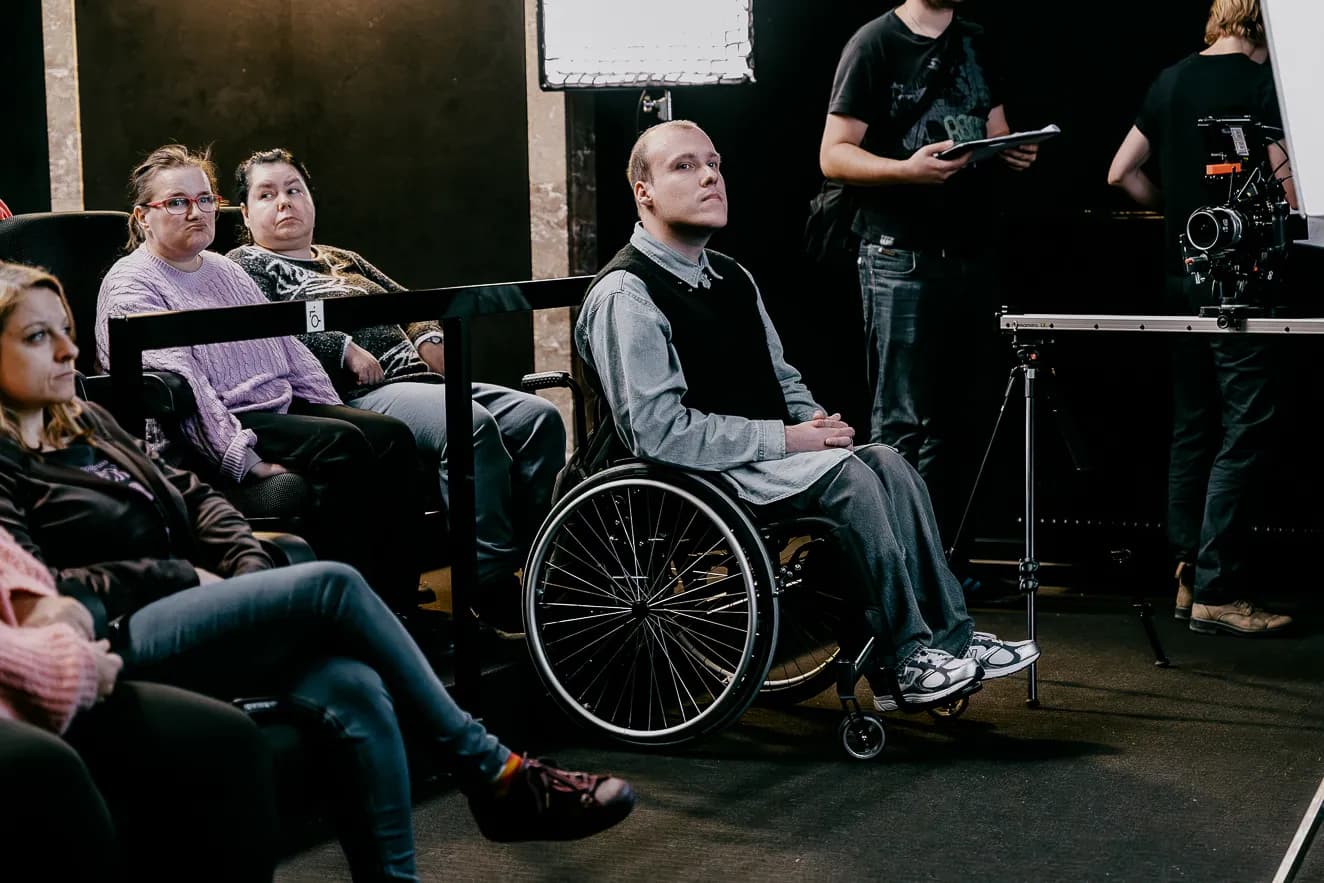
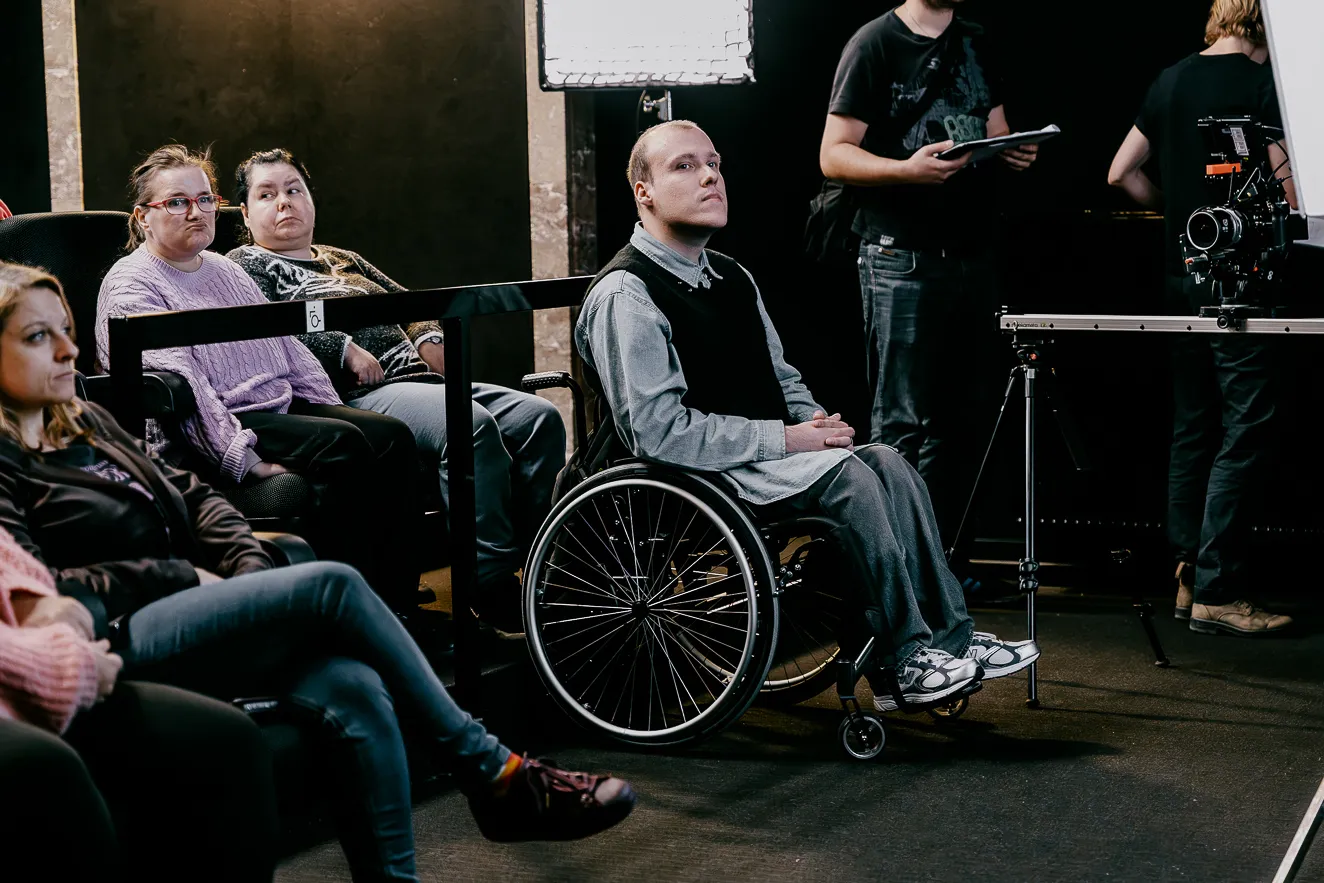
Joining her is Poznań-based fashion blogger Norbert Tumidaj, who uses a wheelchair. He runs the fashion profile and podcast @poetyka_ubran and has also appeared as a speaker at events including Impact'25.
The film was directed by Poznań-born Katarzyna Pajzderska-Kin. Its screenplay was developed in collaboration with Lynn Kucharczyk, co-writer of Life for Beginners (Życie dla początkujących), which won at the 18th Mastercard OFF CAMERA International Festival of Independent Cinema and was selected for the Main Competition at the 50th Polish Film Festival in Gdynia.
Accessibility built into the film itself
An important aspect of the project is that accessibility was considered during production, rather than added as an afterthought.
The short film uses accessible filming techniques, with a narrator describing the visual action on screen. This means blind and partially sighted viewers can follow what is happening, including details that might otherwise only be communicated through images.
The narration is provided by Polish actress Magdalena Różczka, known internationally for her role as Tatiana in the Netflix series The Mothers of Penguins (Matki pingwinów), who is also involved in initiatives supporting people with disabilities.
The full version runs for two minutes and ten seconds and will be available in Polish and English. Both language versions will include audio description and subtitles for Deaf and hard-of-hearing audiences (SDH), with Polish Sign Language (PJM) interpretation also available.
A shorter, 30-second version featuring Polish Sign Language interpretation will also be played cinemas after 4th December.
Cinema without barriers in Poznań
The campaign builds on work that is already taking place at Kino Pałacowe in ZAMEK. Its Kino bez barier programme offers regular accessible screenings every week, with sessions on Tuesdays at 11:00 and Thursdays at 18:00 in Cinema Hall 1.
Screenings include audio description and Polish SDH subtitles. Thursday sessions also feature Polish Sign Language interpretation, which is available at selected Tuesday screenings.
Tickets for these screenings cost PLN 5. Practical assistance is available through the cinema's volunteer team, who can meet visitors at a nearby public transport stop, help them purchase tickets and accompany them to the screening room. Volunteers can also remain nearby during the film.
Assistance can be arranged by telephone or SMS on 607 609 320, or by emailing kinobezbarier@ckzamek.pl.
The programme illustrates how relatively straightforward adjustments, from accessible routes and facilities to appropriate film formats and personal assistance, can make cultural activities available to a wider audience.
A nationwide screening on 3rd December
The premiere will bring together cinemas from different parts of Poland. Alongside Kino Pałacowe in Poznań, participating venues include Gdyńskie Centrum Filmowe, Kino Oskard in Konin, Kino Echo in Jarocin, Kino Pionier 1907 in Szczecin, Kino pod Kopułą in Gostyń, Kino MDK in Wągrowiec, Kino Światowid in Czarnków, Kino Rialto in Poznań and Kino Śnieżka in Rabka-Zdrój. The film will also be shown throughout the Multikino network.
CK ZAMEK is encouraging other cinemas, film festivals and cultural organisations to join the initiative by screening the campaign before their own films and sharing it through their communication channels.
For Poznań, the project is an opportunity to bring attention to an accessibility initiative developed locally while extending its message to audiences across the country. It also highlights the role that cultural institutions can play in making participation in everyday cultural life more inclusive.
The full campaign film will be available in Polish and English, helping its message reach audiences beyond Poland as well.