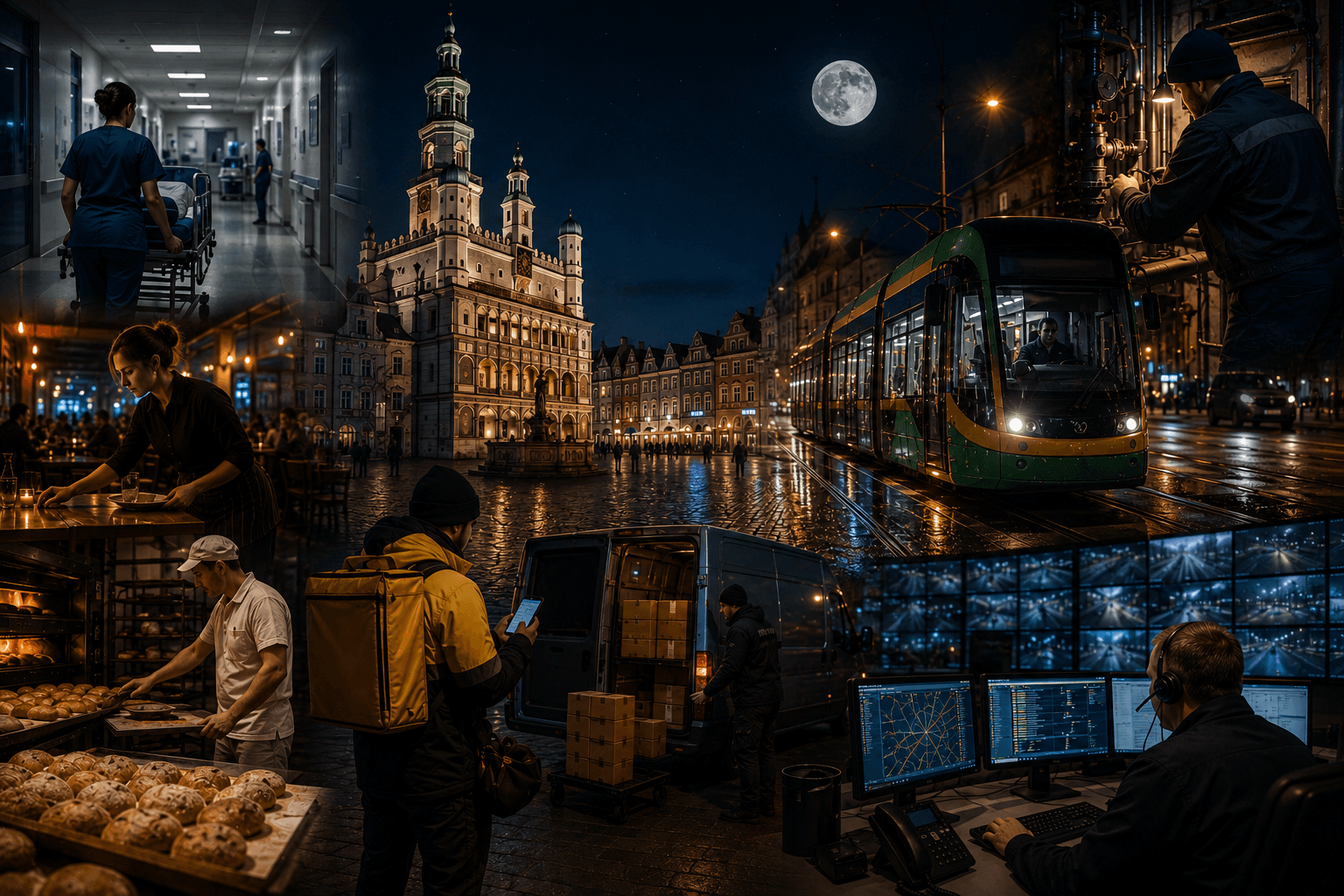
Between the final dinner orders and the first morning coffees, another Poznań goes to work. Who keeps Poznań running at night is not one department or profession, but a network of drivers, medical teams, cleaners, railway employees, bakers, couriers and security staff. Their working day begins when offices close, families head home and the city’s busiest streets gradually empty.
10:00 p.m.: The Evening Shift Takes Control
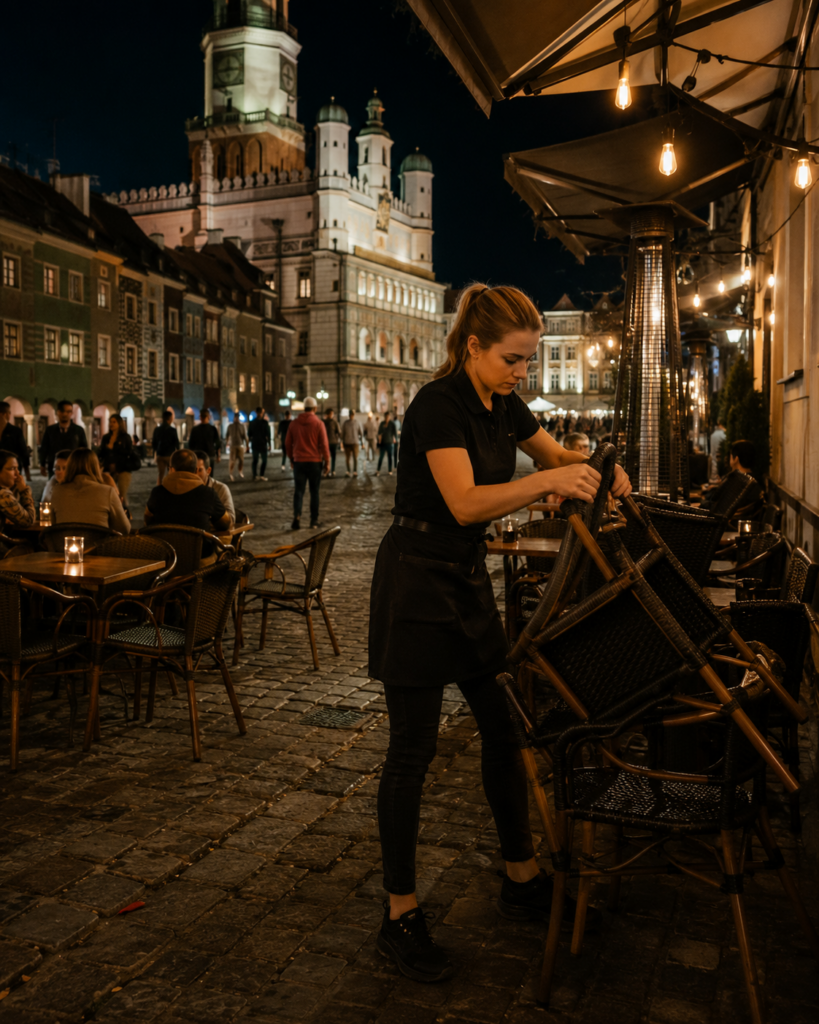
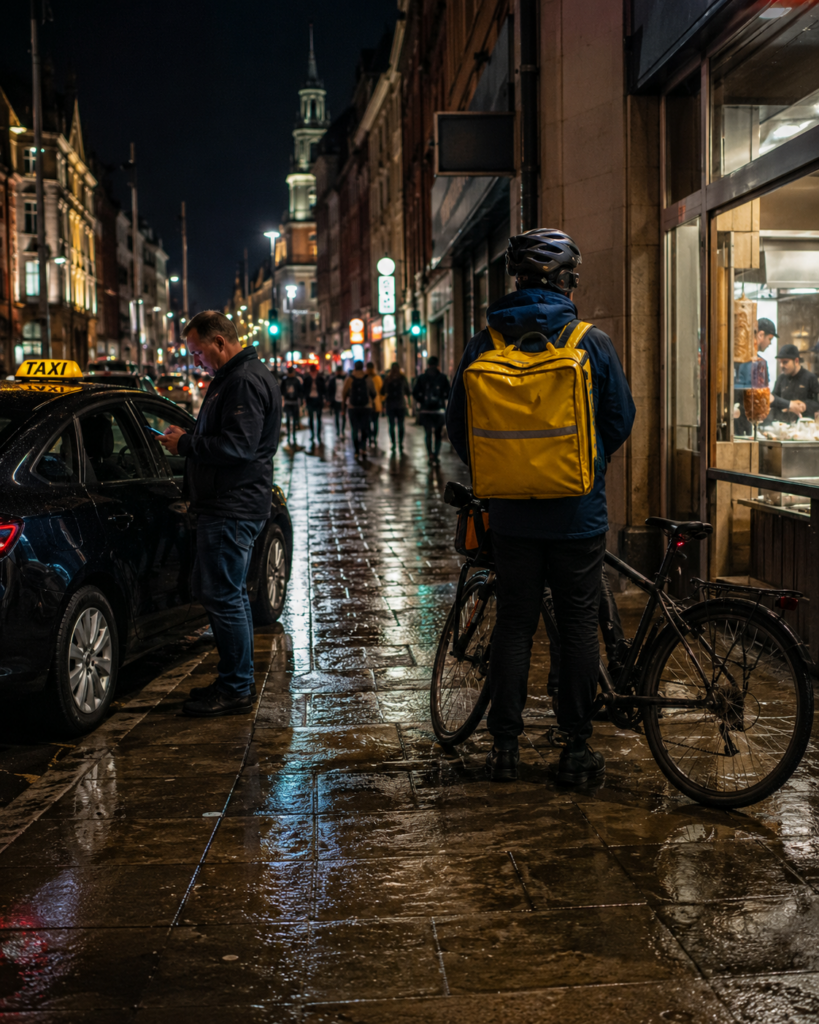
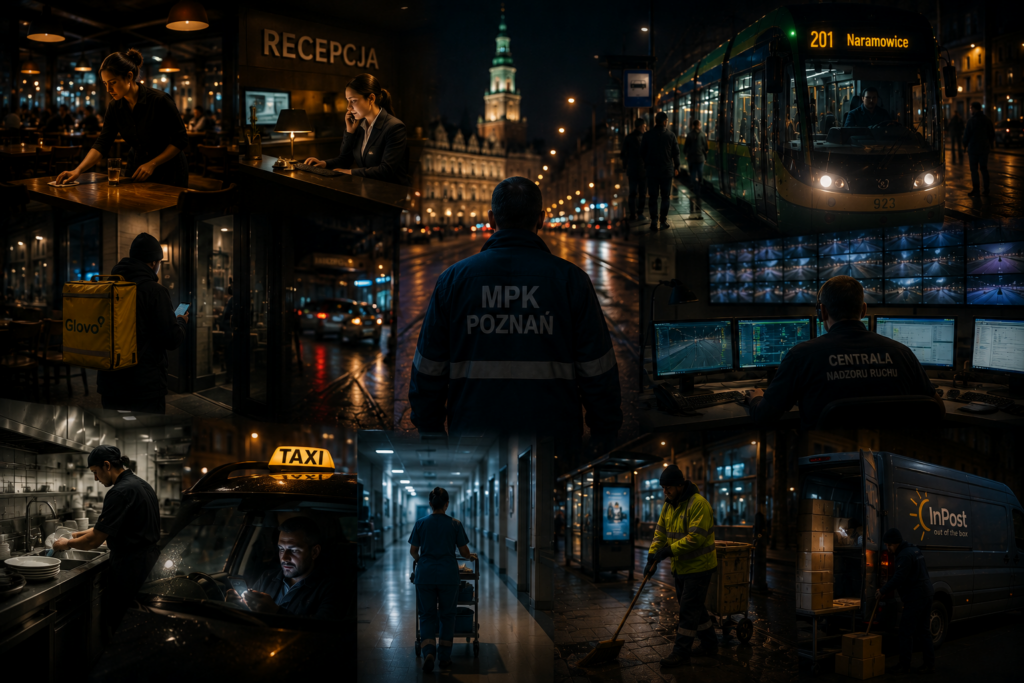
At 10:00 p.m., the centre is still lively. Restaurant employees clear tables around Stary Rynek, hotel receptionists welcome late arrivals, couriers wait outside kitchens and taxi drivers watch their phones for the next fare. This is the first answer to who keeps Poznań running at night: people whose busiest hours begin when most conventional workplaces are switching off.
For bar and restaurant staff, the difficult moment often comes near closing time. Customers may be tired, loud or unwilling to leave, while employees still face cleaning, cash reconciliation and a journey home. A hotel receptionist may spend a quiet hour answering emails, then suddenly handle a lost reservation, an intoxicated guest or a medical emergency. Night work demands patience because problems arrive without the full daytime team nearby.

Midnight: Public Transport Changes Rhythm
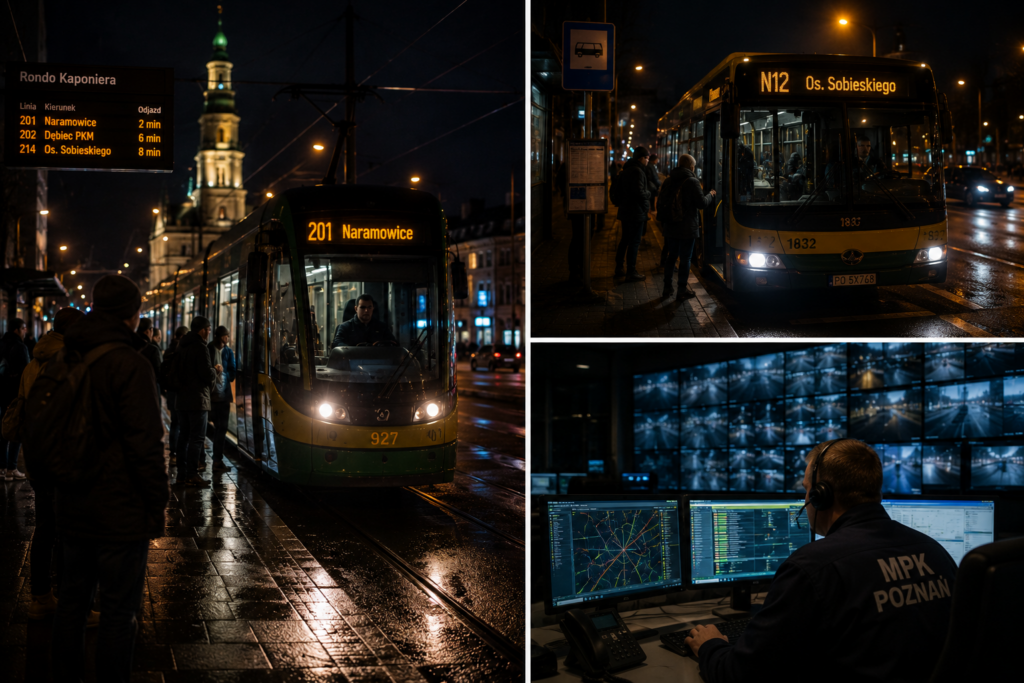
Around midnight, the daytime transport network gives way to night services. Poznań’s network includes night tram lines 201 and 202 and a wider group of night buses. Since January 2026, municipal night buses have operated every night with frequencies generally set at 30 or 60 minutes, giving shift workers and late-night passengers a more dependable way home.
Behind every vehicle are drivers, dispatchers and maintenance crews, making them central to who keeps Poznań running at night. MPK Poznań’s Central Traffic Control monitors vehicles and can quickly contact the appropriate services when accidents, blocked tracks or security threats disrupt the network. A driver must stay focused on dark roads, deal with passengers who may need help and keep to a timetable with little room for delay. Dispatchers, meanwhile, make rapid decisions that most passengers never notice.
2:00 a.m.: The City’s Safety Net
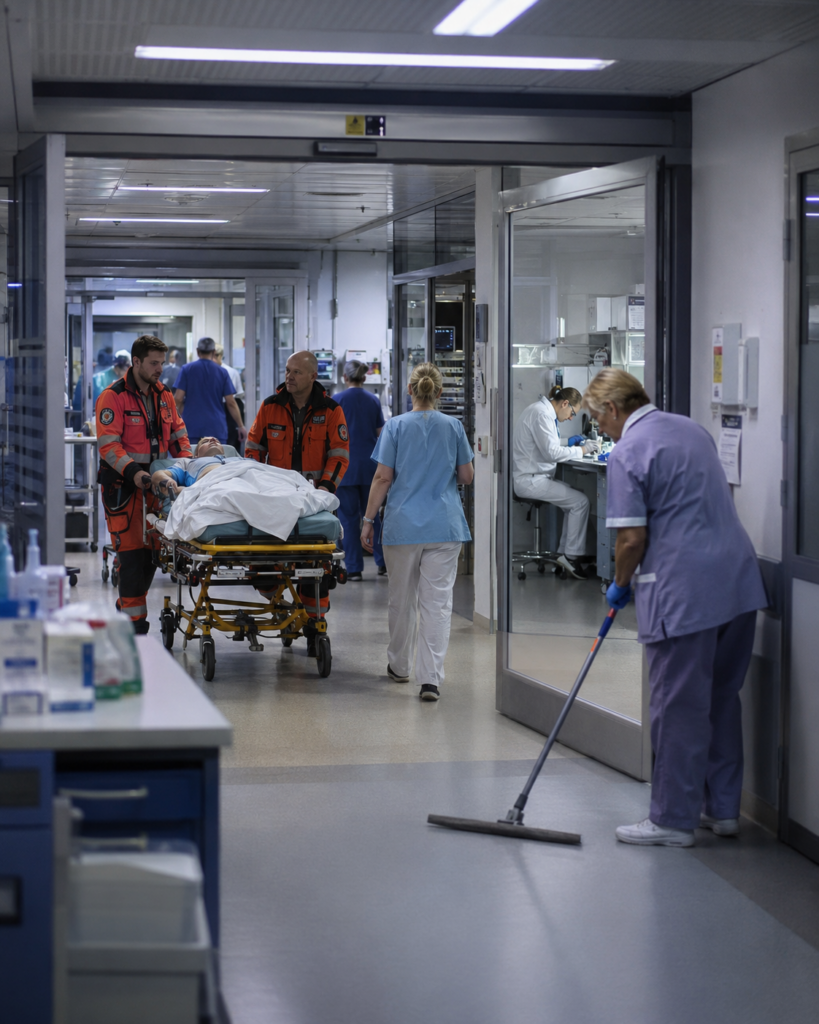
At 2:00 a.m., hospital corridors remain bright. Doctors, nurses, laboratory staff, paramedics and cleaners continue working while scheduled daytime procedures pause. Emergency patients do not arrive in a predictable order. A calm period can be followed by several urgent cases, forcing teams to prioritise quickly while communicating with ambulance crews, police officers and worried relatives.
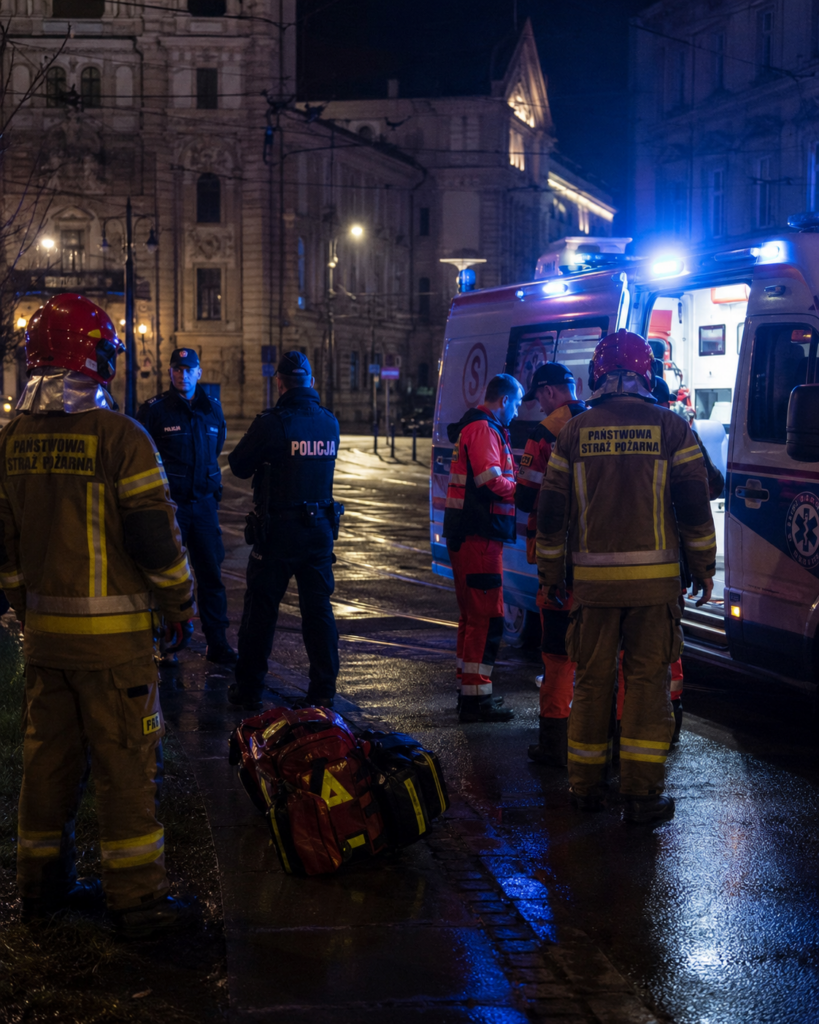
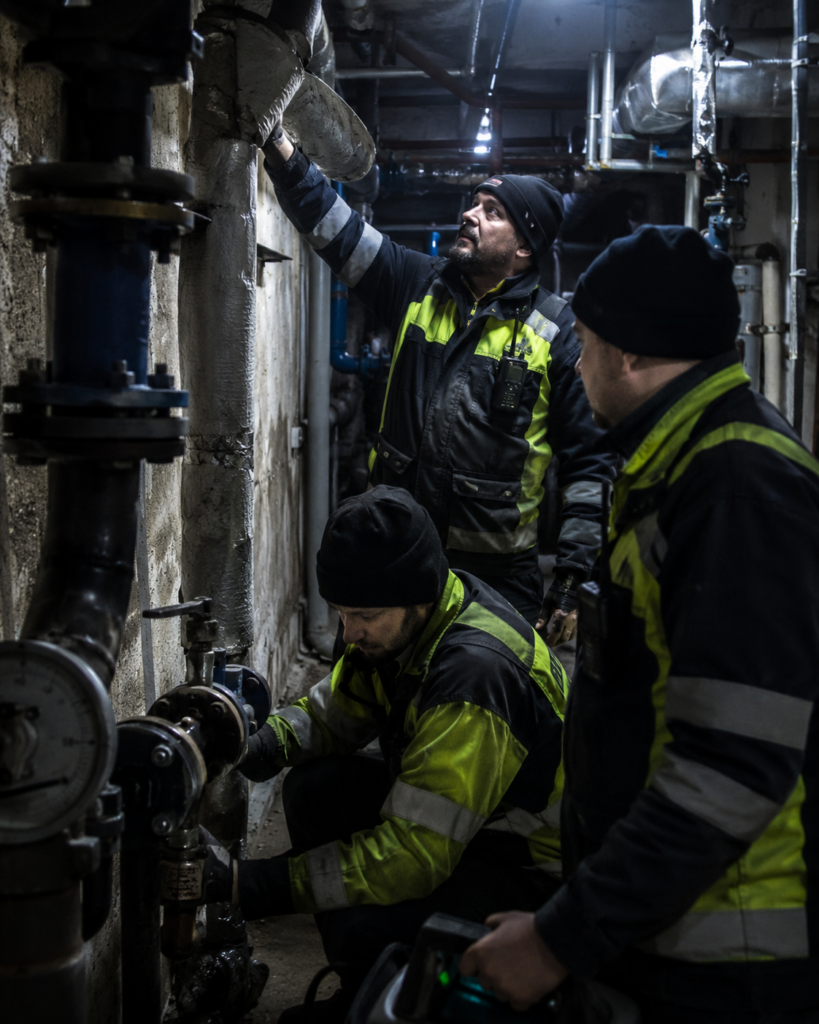
These workers provide the clearest example of who keeps Poznań running at night when something goes seriously wrong. Firefighters, police patrols and emergency dispatchers must also respond with limited information, often entering situations that are still developing. Technical emergency teams remain available too. MPGM Poznań, for example, operates a round-the-clock reporting point supported by shift workers from different technical fields. Their work may involve failures that residents only notice when heating, water or access to a building is interrupted
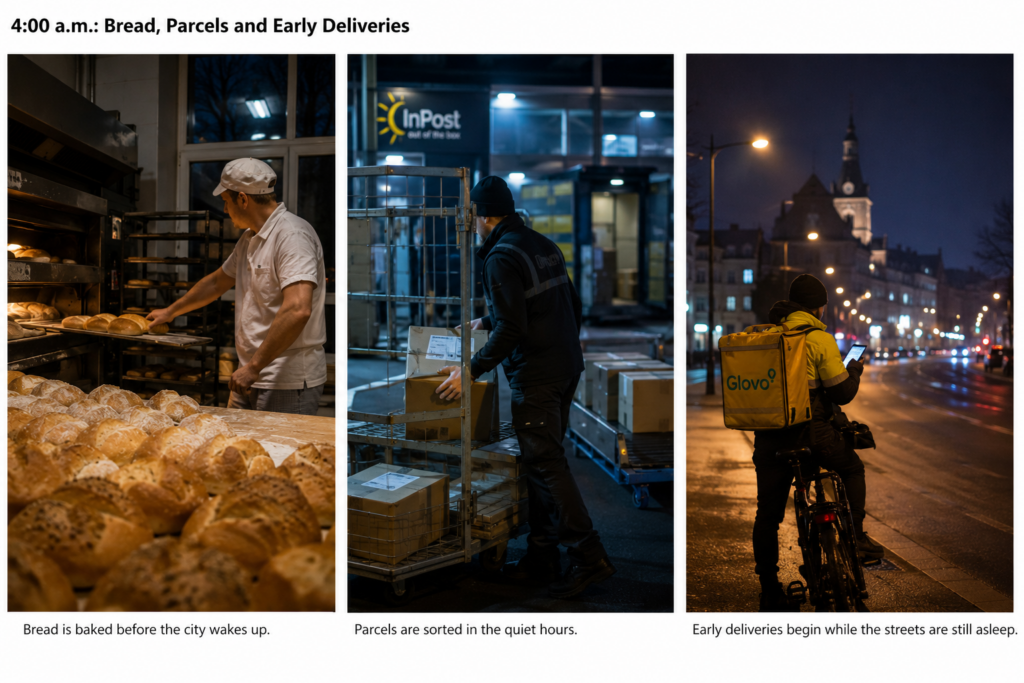
4:00 a.m.: Bread, Parcels and Early Deliveries
By 4:00 a.m., the entertainment district is quieter, but bakeries, warehouses and loading areas are active. Dough has to be prepared, shaped, baked and packed before customers arrive. Warehouse employees sort parcels and prepare deliveries for vans that will soon join the morning traffic. Street-cleaning teams begin dealing with litter left around transport stops, nightlife areas and major roads.
This part of who keeps Poznań running at night is physically demanding and highly scheduled. A delayed bakery batch affects shop deliveries. A warehouse bottleneck can disrupt hundreds of parcels. A missed cleaning route remains visible during the morning commute. Many of these jobs are also performed by migrant workers and international residents, who may be managing night schedules alongside language barriers, temporary contracts or long journeys from accommodation outside the centr.
The Personal Cost of Working Against the Clock
The hardest part of who keeps Poznań running at night is often not the work itself but the timetable surrounding it. Night employees sleep while neighbours renovate, children play and phones ring. They miss evening meals, weekend gatherings and ordinary time with partners. Research consistently links night-shift work with shorter or poorer-quality sleep and disruption to the body’s natural circadian rhythm.
Safety also changes after midnight. Empty stops can feel isolating, while intoxicated passengers, aggressive customers and poorly lit streets create risks for drivers, couriers and hospitality staff. Workers may appreciate quieter roads, but fewer people nearby also means less immediate support. Recognition and fair compensation therefore matter. Night workers are not simply doing daytime jobs at a different hour; they are managing fatigue, reduced staffing and greater social disruption.
Shortly After Sunrise: One Working Day Ends
As daylight reaches Poznań Główny, railway employees assist early passengers, cleaners prepare public areas and hotel staff hand responsibility to the morning shift. Night buses complete their routes while bakeries open their doors. The answer to who keeps Poznań running at night becomes visible only briefly, during this handover between two versions of the city.
When Poznań wakes up, thousands of people have already completed a full working day. Without them, passengers would be stranded, emergency calls would go unanswered, hospital care would slow, shelves would be empty and streets would carry the remains of the previous evening. Their names may not appear on buildings or maps, but every morning begins with the work they completed during the night.
@poznan7sec Poznań by night🌃 #poznan #poznanmiastodoznan #miastopoznań #poznań #miastopoznan ♬ it hurts, now that you're gone – i don't like mirrors