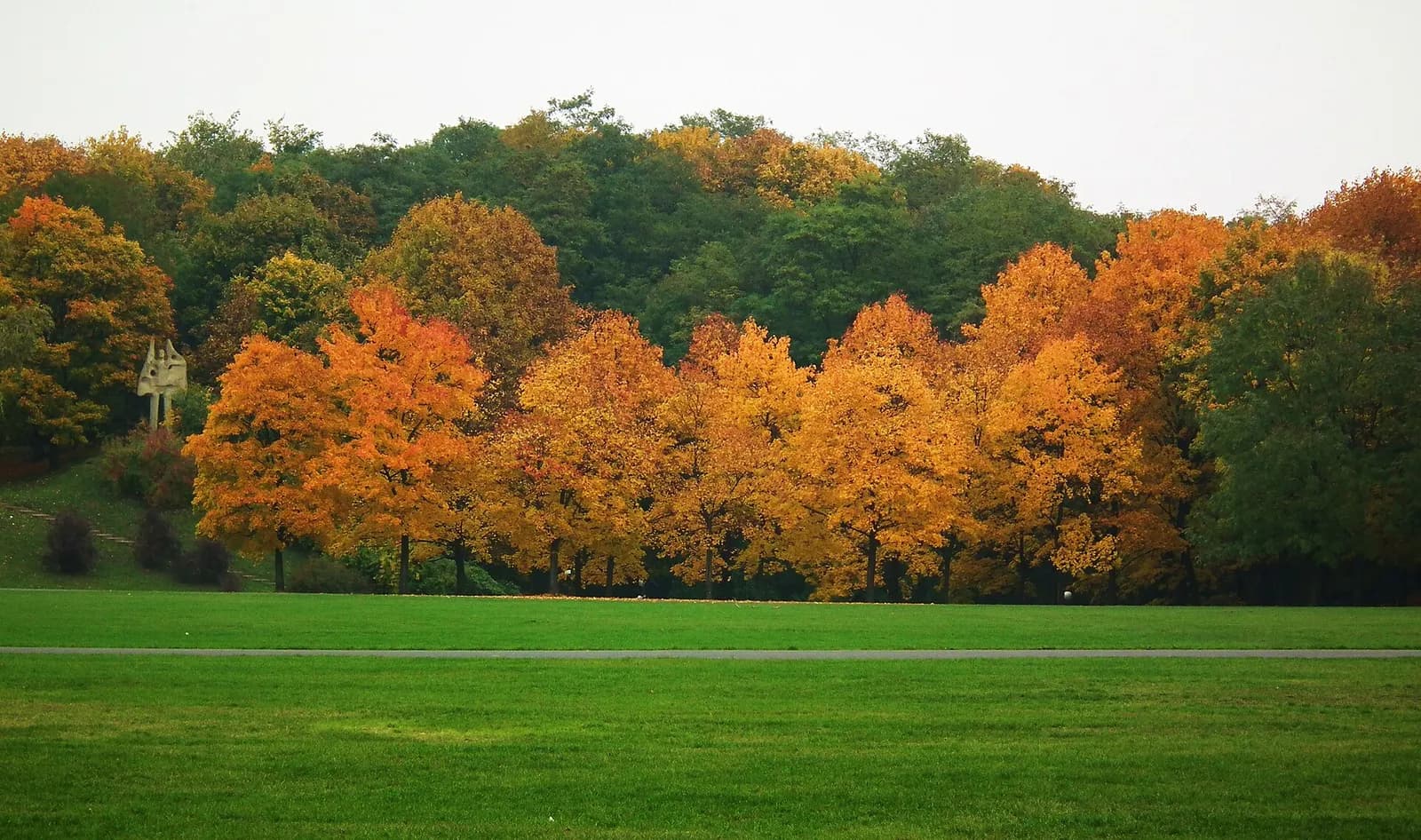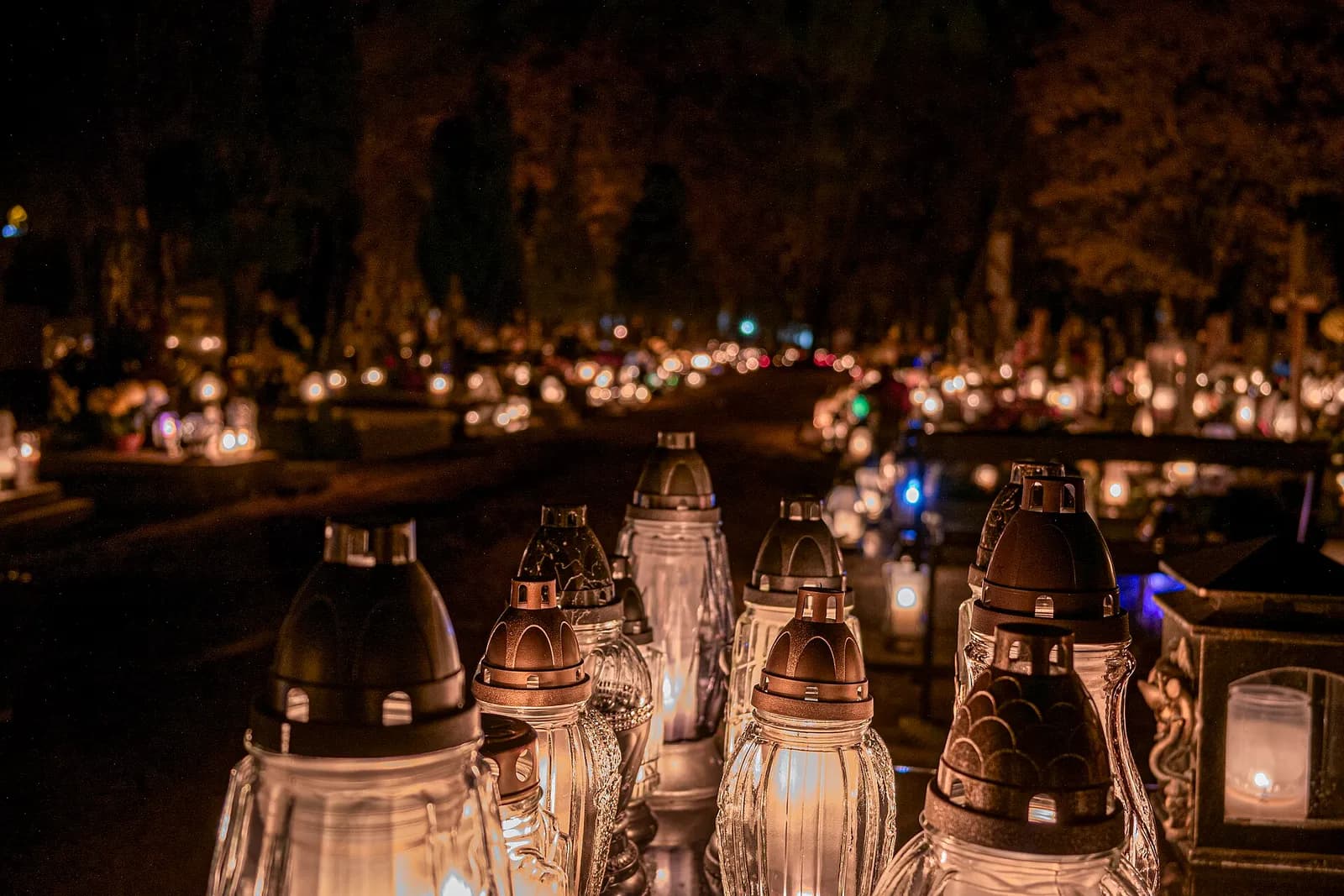
As the afternoon light fades on the 1st of November, the cemeteries of Poznań begin to glow. Thousands of small flames flicker behind the red and amber glass of znicze, or remembrance candles, reflecting off polished headstones and illuminating wreaths of chrysanthemums. The air carries the scent of incense, autumn leaves and fresh flowers, while families move slowly between the graves, pausing to straighten a bouquet, light another candle or stand quietly beside the names of people they remember. For those encountering it for the first time, the scene is striking. But for many Poles, it is a familiar part of the year, a tradition woven into family life and the changing seasons.
Known in Polish as Wszystkich Świętych, All Saints’ Day is observed on the 1st of November and is one of the most significant dates in the country’s religious and cultural calendar. Although it has its roots in Catholic tradition, its presence extends well beyond church services. Across Poland, people travel to their hometowns, visit family graves and take part in a shared ritual of remembrance that connects generations.
For international residents and visitors in Poznań, understanding the customs offers a glimpse into a quieter but deeply rooted side of Polish life.
What does All Saints’ Day mean?
In the Catholic calendar, All Saints’ Day honours all saints, including those who have not been formally recognised by the Church. The following day, 2nd November, is All Souls’ Day, known in Polish as Dzień Zaduszny, when prayers are traditionally offered for the dead.
The two days have distinct religious meanings, but in everyday Polish life their customs overlap. Families often visit cemeteries on both dates, and many make the journey in the days leading up to 1st November to prepare graves before the holiday itself.
All Saints’ Day is a public holiday in Poland, so schools, offices and many businesses close. For families whose relatives are buried in different towns, it can mean travelling across the country to spend time together and visit the graves of parents, grandparents and other loved ones.
Not everyone observes the religious aspects of the holiday, but cemetery visits remain an important cultural tradition for many people. The day provides an annual opportunity to care for family graves, remember those who have died and reconnect with relatives who may live far away.
Before the candles: the older tradition of Dziady
Long before today’s candlelit cemetery visits became familiar across Poland, Slavic communities had their own rituals for remembering the dead. Known as Dziady, these traditional rites were based on the belief that the spirits of deceased ancestors could return to the world of the living at certain times of the year.
The customs varied between regions, but historical accounts describe gatherings at which food and drink were offered to the dead, alongside rituals intended to honour the ancestors and maintain a connection between the living and those who had passed away. In some traditions, hospitality towards the dead was an important part of the observance.
The tradition has a lasting place in Polish culture through Dziady, the dramatic work by Romantic poet Adam Mickiewicz, which drew on folk beliefs about encounters between the living and the dead.
These older rites should not be confused with the Catholic observances of All Saints’ Day and All Souls’ Day. Over the centuries, Christian religious practices and local folk customs sometimes existed side by side and influenced one another, leaving a complex history of remembrance in Poland.
Today, the most familiar sight is the glow of znicze across cemetery paths, alongside fresh flowers and carefully tended graves. The older traditions offer a glimpse into the long history of how people have sought to honour their ancestors, even as the customs themselves have changed.
Preparing the graves
The preparations often begin several days before the holiday. In the run-up to 1st November, cemeteries become busy places as families arrive carrying brushes, cloths, buckets, flowers and bags of candles.
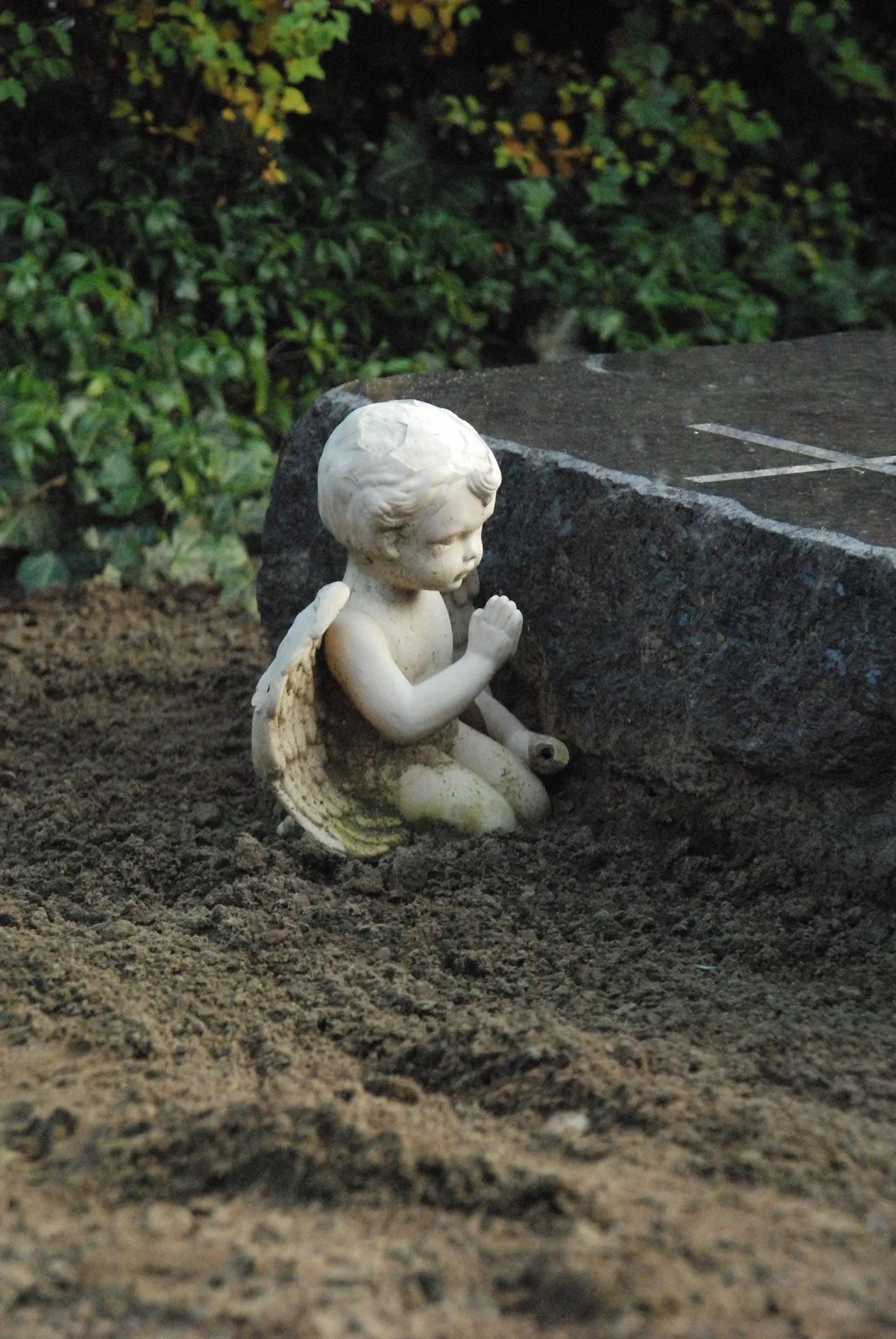
Gravestones are washed, fallen leaves are swept away and faded flowers or old decorations are removed. Weeds are cleared, the surrounding area is tidied and, where graves have earth-covered surfaces, the soil may be raked and smoothed in preparation for fresh decorations.
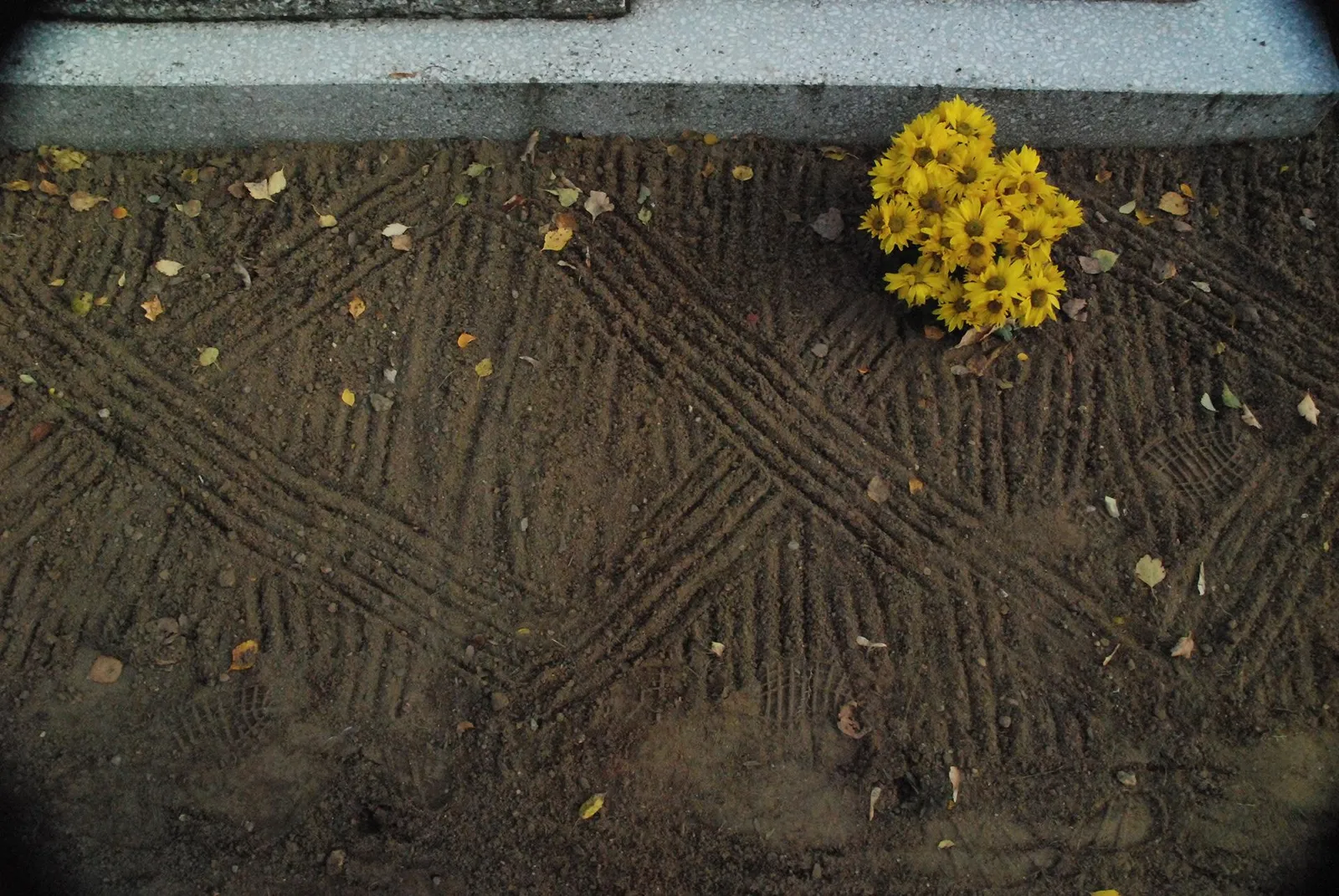
This practical work is an important part of the tradition. A visit is not simply a matter of arriving with flowers; it can involve considerable care and effort to make a grave look presentable. Family members often work together, with younger relatives helping older ones and children learning the routines from parents and grandparents.
Once the cleaning is finished, fresh flowers and wreaths are arranged on the grave. Chrysanthemums are particularly common, their autumn colours bringing touches of white, yellow, purple and bronze to the rows of headstones.
For many families, this annual act of care is a way of showing respect. It also keeps family history visible, ensuring that the names and resting places of previous generations are not forgotten.
Flowers, candles and the meaning of znicze
The most recognisable feature of the Polish observance is the znicz, a candle usually enclosed in a glass or plastic container designed to protect the flame outdoors. Some are simple red or white candles, while others have decorative shapes, coloured glass and lids. They are sold in supermarkets, flower shops, market stalls and temporary stands near cemeteries in the days before the holiday.
Lighting a znicz is a gesture of remembrance and, for many people, prayer. Candles are placed beside gravestones, around memorials and at the graves of people whose names may be unfamiliar to the visitor but whose stories remain important to their families.
Flowers complete the picture. Bouquets, wreaths and potted plants are arranged carefully around the headstone, sometimes alongside photographs, small ornaments or personal keepsakes.
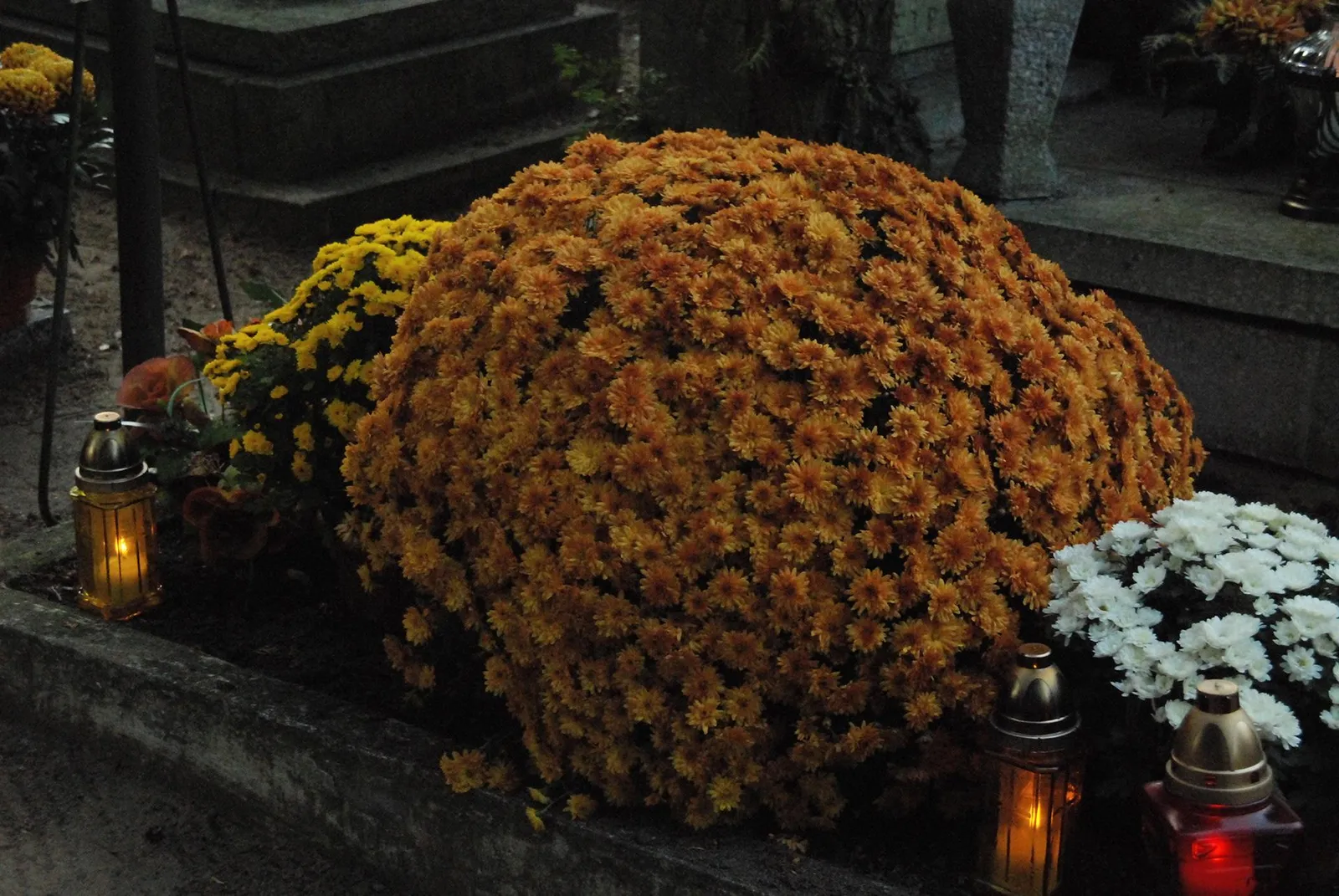
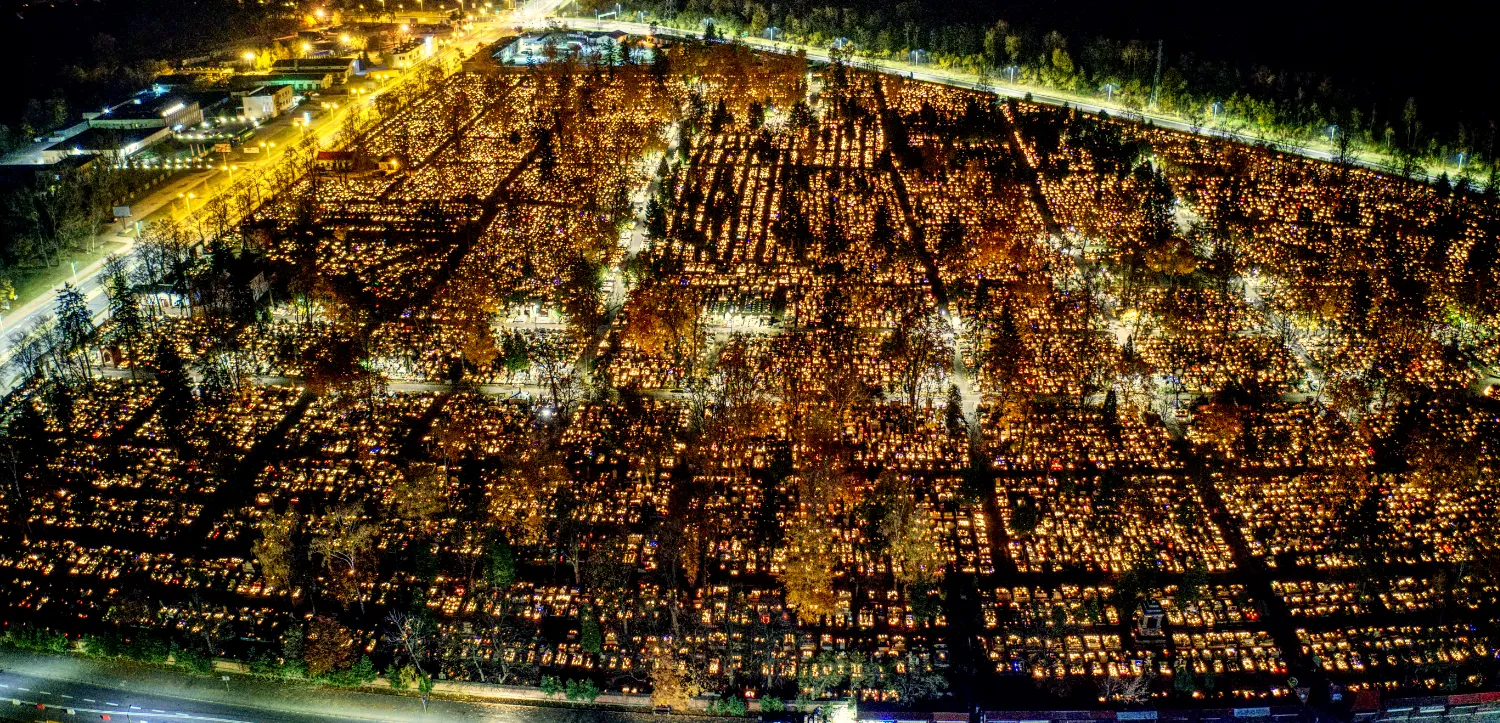
As evening approaches, the atmosphere changes. Individual candles become part of a much larger field of light, stretching along cemetery paths and between the trees. Even a modest grave can become surrounded by dozens of flames, placed there by different members of the family over the course of the day.
It is one of the most memorable sights of autumn in Poland, and one that is difficult to appreciate fully until experienced in person.
A day for family and remembrance
For many Poles, All Saints’ Day is as much a family occasion as a religious one. Relatives who may not see one another regularly gather to visit the graves of their shared family members. Some travel from other parts of Poland or from abroad, making the holiday an important date in the family calendar.
Visits can be quiet and reflective. People stand beside graves, say prayers, light candles or spend a few moments remembering someone they have lost. Others use the time to talk with relatives about family history, recalling stories that might otherwise fade with the passing years.
There is no single way to observe the day. Some families attend Mass before visiting the cemetery; others go directly to the graves. Some spend only a short time at each resting place, while others make a longer visit, particularly when several generations are buried in the same cemetery.
The mood is generally solemn, but it is not necessarily one of unrelieved sadness. For many people, the visit is also an expression of affection and gratitude, a chance to feel close to those who are no longer present.
The difference between All Saints’ Day and Halloween
For international residents, the proximity of Halloween and All Saints’ Day can cause some confusion. Halloween takes place on 31st October and is associated today with costumes, parties, sweets and seasonal entertainment. All Saints’ Day follows on 1st November and has a different emphasis in Poland.
Halloween events do take place in Polish cities, including Poznań, but the following day has its own established place in the national calendar. Its most visible customs centre on cemetery visits, flowers, candles and family remembrance rather than dressing up or celebrating the supernatural.
The two occasions have historical links through the Christian calendar, but their contemporary expressions are distinct. All Souls’ Day on 2nd November adds another layer, with its particular emphasis on prayer for the departed.
For someone new to Poland, it helps to understand that the first days of November are not simply a continuation of Halloween. They form a period of remembrance with their own religious history and family traditions.
Different customs within the same cemetery
Although many cemetery visits in Poland follow familiar patterns, not every family observes the occasion in exactly the same way. Local history, religious background and family customs all influence how people remember their dead.
Poznań’s Junikowo cemetery offers a distinctive example in its Roma community. Visitors may notice ornate family tombs, including elaborate, chapel-like monuments that stand out among the surrounding gravestones.
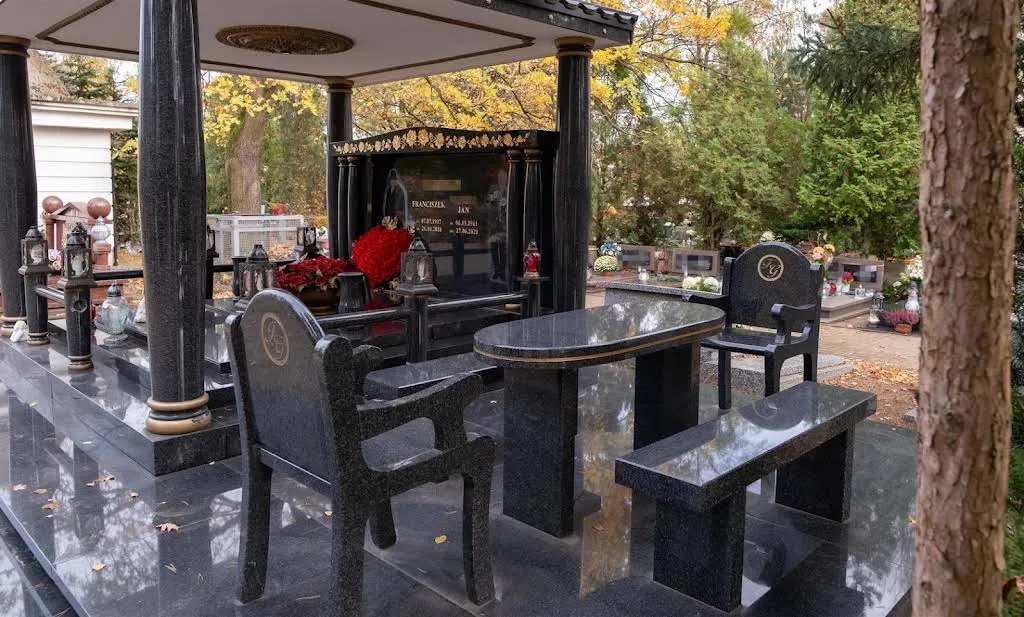
Some Roma families gather in large numbers at the graves of relatives around All Saints’ Day. Published accounts of Roma remembrance traditions in Poznań describe family gatherings that include sharing drinks in honour of deceased relatives. Such gatherings may be more social in appearance than the quieter visits other cemetery-goers are accustomed to, while remaining centred on family bonds and remembrance.
Roma communities are diverse, and customs vary between families. These gatherings should be understood as one expression of local Roma tradition, rather than a practice shared by every Roma family.
Their presence also illustrates how a cemetery can hold different expressions of remembrance side by side. The flowers, candles, family gatherings and distinctive monuments may vary, but each reflects the importance people attach to honouring those who came before them.
Experiencing All Saints’ Day as a visitor
For those unfamiliar with such customs, walking through a cemetery during the first days of November can be a moving introduction to Polish culture. However, it is also worth remembering that these are active places of mourning and family remembrance, rather than tourist attractions.
A few simple courtesies help visitors approach the occasion respectfully:
Keep voices low and avoid disturbing families who are praying or spending time at graves.
Ask permission before photographing identifiable people or private family memorials.
Follow cemetery rules and avoid touching flowers, candles or other decorations.
If lighting a candle at a memorial, do so safely and without disturbing other visitors.
There is no need to know every custom to appreciate the occasion. Observing quietly is often enough to understand the care that goes into it.
For Poznań residents, All Saints’ Day is a familiar annual ritual. For newcomers, it offers a chance to see how the city remembers its past, how families maintain their connections across generations and how a simple act, such as lighting a candle, can carry a great deal of meaning.
As the evening draws in and the last of daylight disappears, the flames continue to flicker across the cemeteries. One by one, families make their way home, leaving behind flowers, carefully tended graves and the small lights that will burn long after they have gone.
See more: Are You a Jesieniara? The Polish Trend That Celebrates Autumn