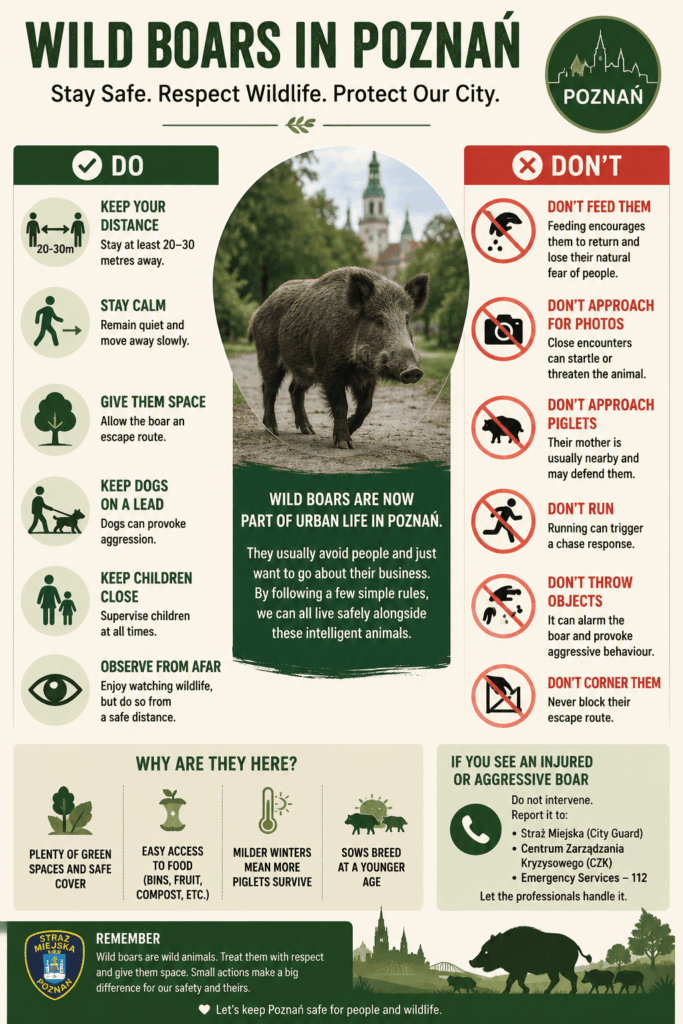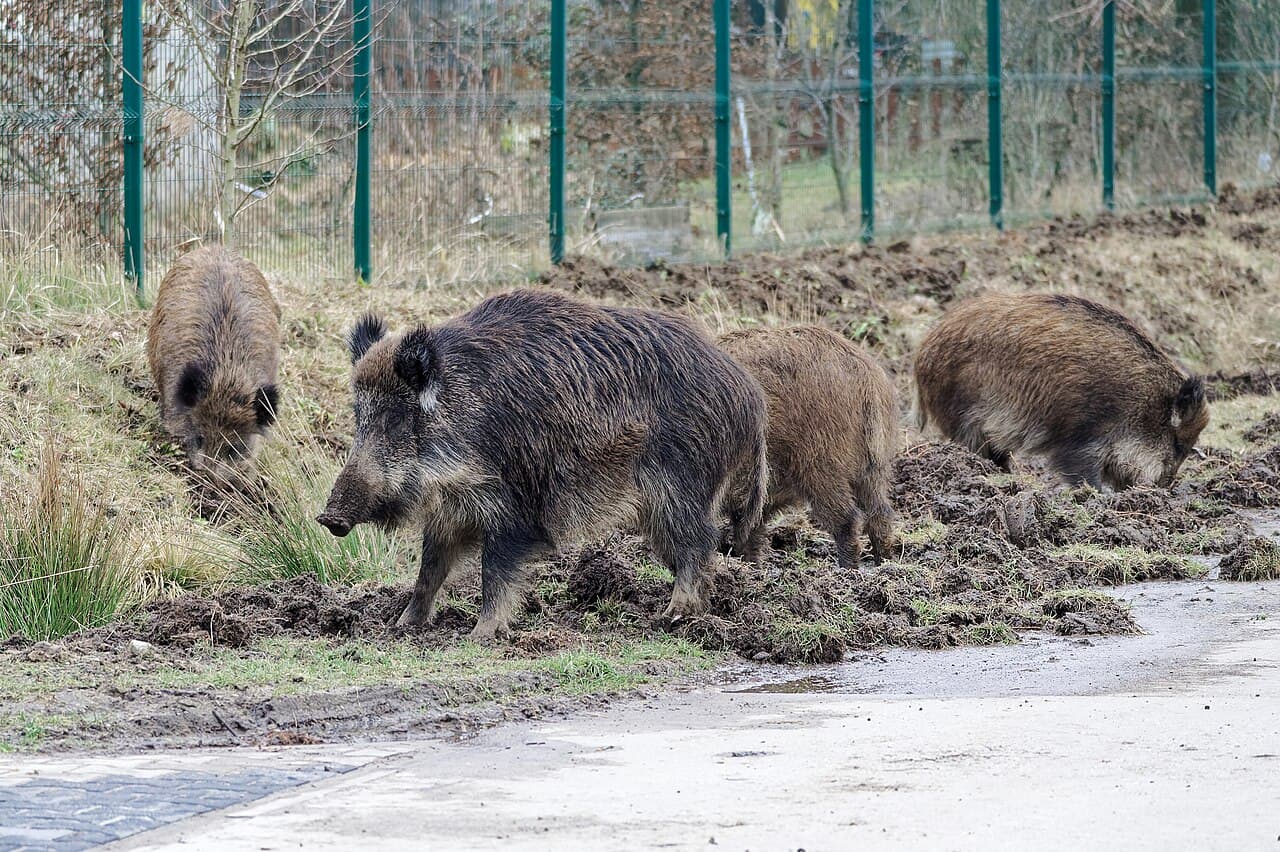
Wild boar sightings are becoming increasingly common across Poznań. Learn why they’re appearing in residential areas, how to stay safe, and what you should and shouldn’t do if you encounter one.
Residents across Poznań have been reporting increasing numbers of wild boar sightings in recent weeks, with animals spotted in parks, housing estates, gardens and even along busy roads. While encountering a wild boar in the city can be surprising, experts say these animals have become a familiar part of Poznań’s urban landscape rather than occasional visitors.
Understanding why wild boars are appearing in residential areas and knowing how to react if you meet one can help keep both people and wildlife safe.
Why are wild boars appearing in Poznań?
Wild boars are remarkably adaptable animals. Over recent years, they have become increasingly comfortable living close to people, making use of the city’s extensive green spaces, river valleys and woodland corridors to move around.
Poznań offers plenty of attractive habitats for wild animals, from parks and allotments to undeveloped green areas between neighbourhoods. Food is also readily available: overflowing bins, compost heaps, fallen fruit and food left out by people all encourage boars to remain in urban areas.
Milder winters have also contributed to growing populations, allowing more young animals to survive and increasing breeding success. Wildlife experts now describe urban boars as permanent residents in many Polish cities rather than animals simply passing through.
Although sightings often seem to increase during the summer months, this is partly because families of boars are more active and more people are spending time outdoors during the evenings when the animals are most active.
Are wild boars dangerous?
Despite their size, wild boars are generally shy and prefer to avoid people whenever possible.
Most encounters end with the animal quietly moving away once it becomes aware of human presence. However, they are still wild animals and should always be treated with caution and respect.
A wild boar is most likely to behave defensively if it feels threatened, becomes trapped with no escape route, or if a female is protecting her piglets. Dogs can also provoke aggressive behaviour, as boars may see them as predators.
While serious incidents remain uncommon, approaching a wild boar or attempting to interact with one is never advisable.
What should you do if you see a wild boar?
If you come across a wild boar while walking, jogging or cycling, the most important thing is to remain calm.
Follow these simple safety tips:
- Keep a safe distance and observe from afar.
- Slowly move away without making sudden movements.
- Allow the animal plenty of space to leave.
- Keep children close to you.
- Keep dogs on a lead at all times.
- Avoid making loud noises or trying to scare the animal.
- Never feed a wild boar, even if it appears calm.
In most situations, the animal will continue on its way without any interaction.
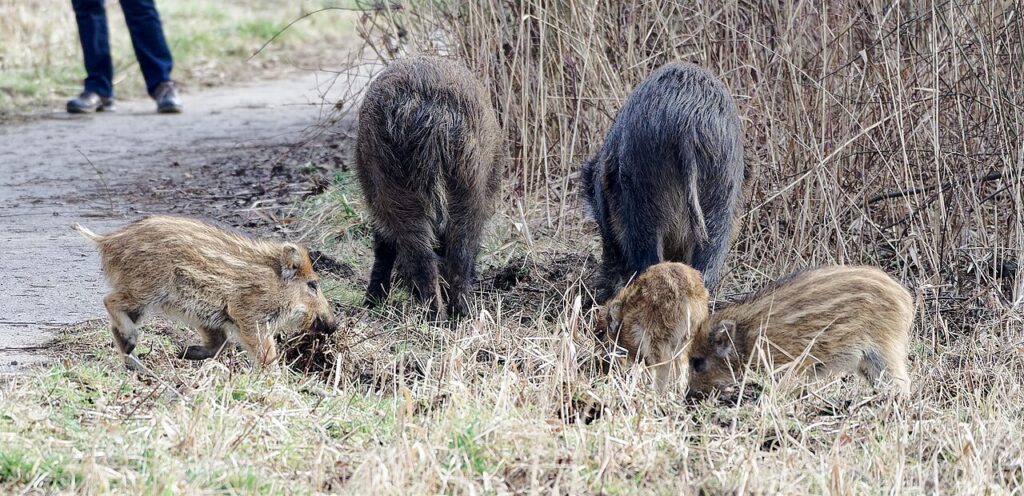
Never approach piglets
Young wild boars can appear harmless, but they should never be approached.
If you spot piglets, their mother is almost certainly nearby, even if she is not immediately visible. A sow defending her young is one of the situations in which a wild boar is most likely to charge.
The safest option is to quietly leave the area and give the family plenty of room.
What should you avoid doing?
Although curiosity is understandable, there are several things you should never do during an encounter.
Avoid:
- Trying to take close-up photographs or selfies.
- Feeding the animals.
- Throwing objects at them.
- Cornering or blocking their escape route.
- Attempting to touch piglets.
- Allowing dogs to chase them.
These actions increase stress for the animal and can create unnecessary danger for both people and wildlife.
Why feeding wild boars is a bad idea
One of the biggest reasons wild boars continue returning to urban areas is the easy availability of food.
When animals regularly find food around homes and parks, they gradually lose their natural fear of people. This increases the likelihood of future encounters and can encourage entire groups of boars to remain close to residential neighbourhoods.
Residents can help reduce unwanted visits by:
- Securing household rubbish bins.
- Cleaning up fallen fruit from gardens.
- Avoiding leaving food waste outdoors.
- Never intentionally feeding wild animals.
Small actions by many households can make a significant difference over time.
What if a wild boar appears injured or aggressive?
If a wild boar appears injured, trapped or behaves aggressively towards people, residents should avoid intervening themselves.
Instead, report the situation to the appropriate local authorities, such as Poznań’s City Guard (Straż Miejska) or emergency services if there is an immediate threat to public safety or the animal.
Attempting to move or assist a wild animal without specialist equipment and knowledge can place both people and the animal at unnecessary risk.
Living alongside urban wildlife
Wild boars are now part of everyday life in many Polish cities, including Poznań. While seeing one may still come as a surprise, these encounters are usually brief and uneventful when people give the animals space.
By remaining calm, keeping a respectful distance and avoiding behaviours that attract wildlife into residential areas, residents can help ensure that people and wild boars continue to coexist safely.
As sightings continue across the city, understanding how to respond is the best way to protect yourself, your family and the animals that now share Poznań’s green spaces.