Walk through the doors of the exhibition hall at Centrum Kultury ZAMEK and the first thing you may notice is not a painting.
It is the smell of wood.
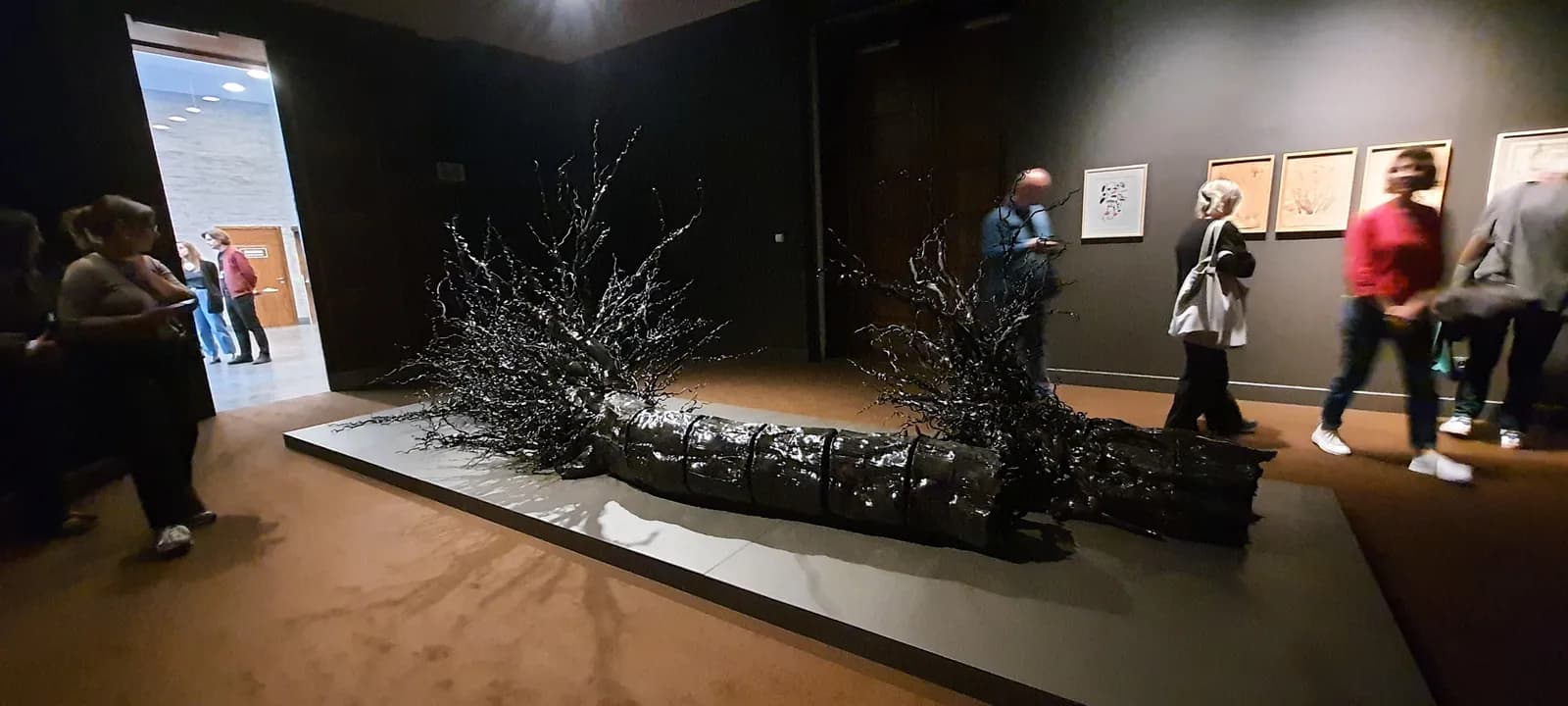
Then come the sounds of birds, followed by the feeling that you have stepped into somewhere quite different from a conventional gallery. At the centre of this atmosphere stands a dead walnut tree, its presence immediately drawing the eye.
This is the opening impression of The World as a Herbarium. Nature in Art from the 17th to the 21st Century, the new exhibition at ZAMEK in Poznań, which opened on 5 September and will run until 6 December 2026.
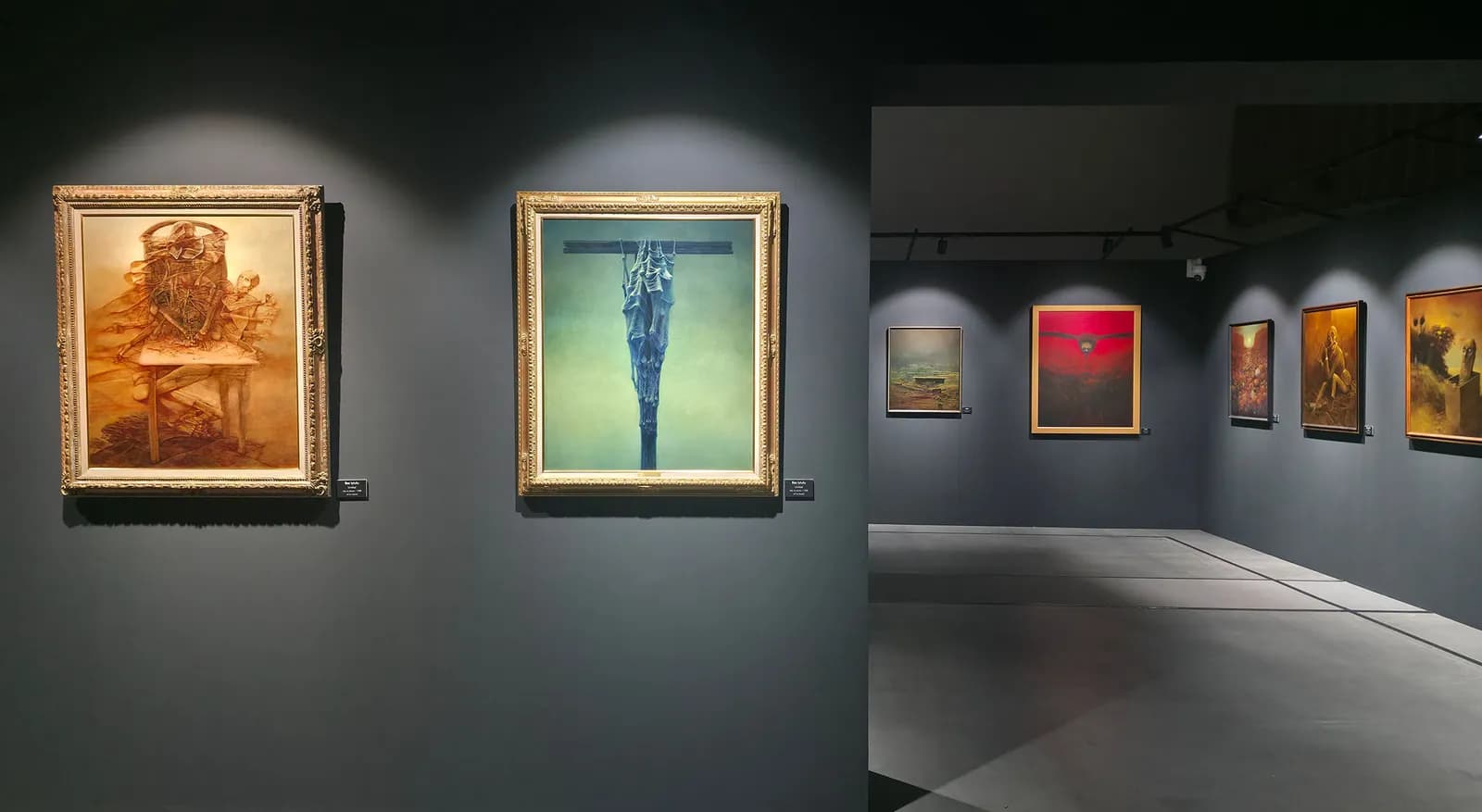
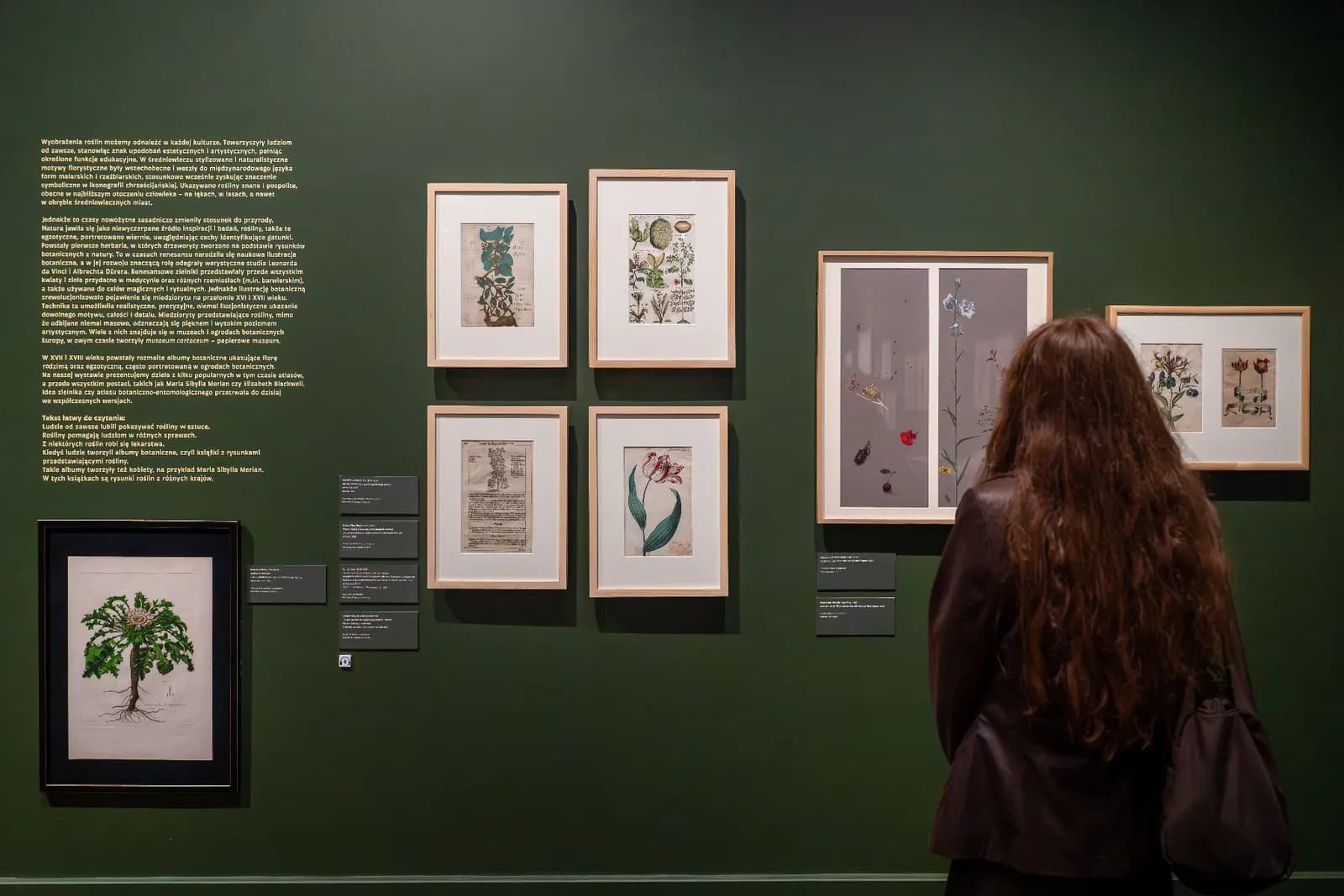
Curated by Anna Król, with collaboration from Kaja Mucha, the exhibition brings together works spanning more than 400 years. Paintings, prints, pastels, sculptures, collages and installations place historical works alongside contemporary art, asking visitors to consider how our relationship with nature has changed and where it might be heading.
Rather than simply presenting nature as something beautiful to look at, the exhibition gradually makes it feel present in the room.
From botanical illustrations to the climate crisis
The exhibition explores four broad themes.
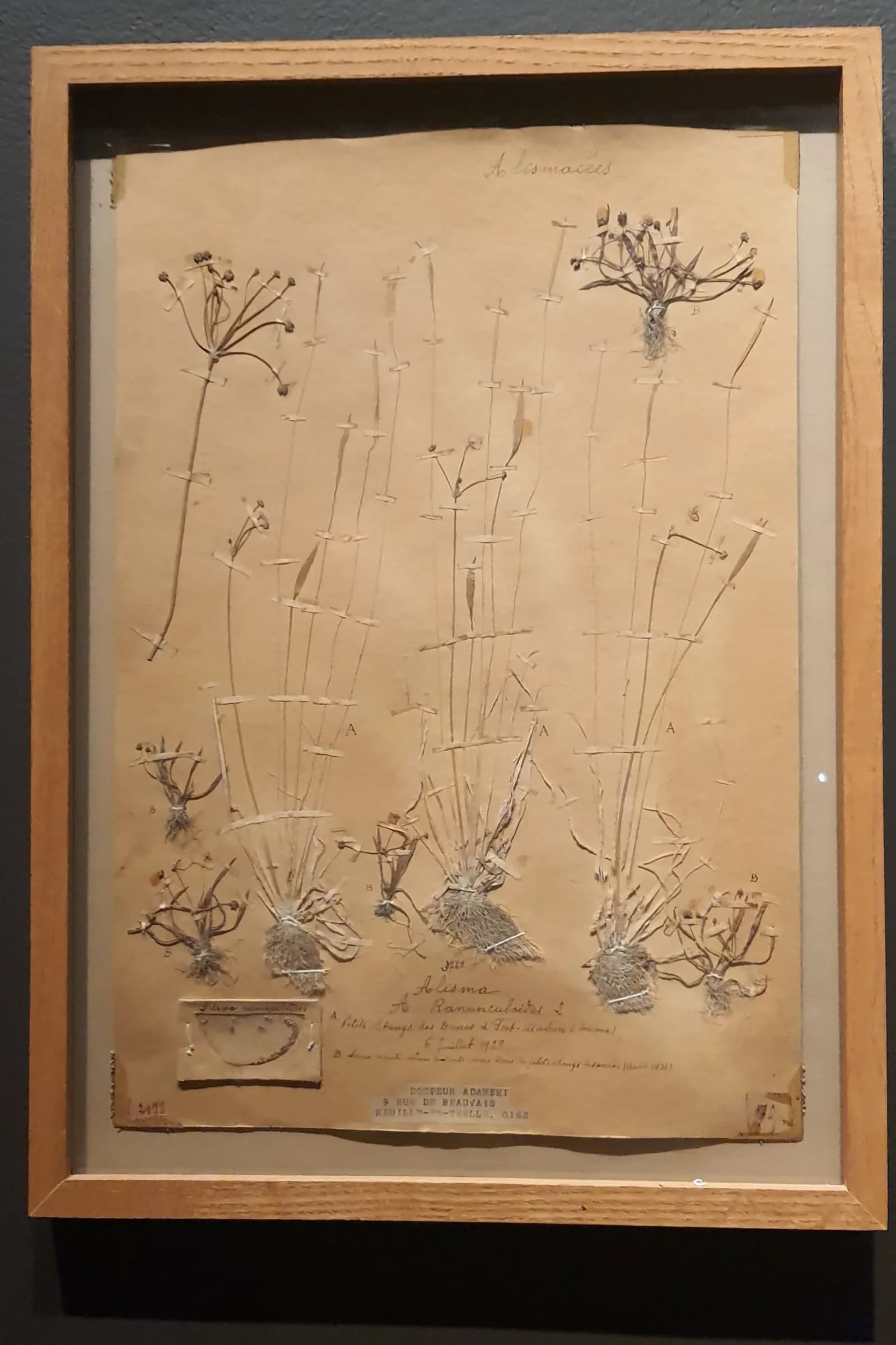
First, there are botanical and entomological illustrations and the tradition of herbaria, including the remarkably detailed work of Maria Sibylla Merian, the 17th-century naturalist and artist whose observations continue to inspire artists today. Her work is shown alongside that of Elizabeth Blackwell, as well as earlier botanical compositions and the work of figures including Jan Jonston, Szymon Syreniusz and Michał Boym.
Another section turns to Młoda Polska, presenting changing interpretations of the Polish landscape through artists including Jan Stanisławski, Ferdynand Ruszczyc, Julian Fałat, Władysław Ślewiński, Wojciech Weiss, Leon Wyczółkowski and Stanisław Wyspiański.
There is also a window into Japanese art through kachō-ga, the tradition of depicting flowers and birds. The work of Watanabe Seitei provides a particularly distinctive perspective on the relationship between the natural world and artistic representation.
Alongside these historical works are contemporary pieces concerned with ecology, the climate crisis and the treatment of non-human life. Many were created specifically for the Poznań exhibition.
The result is not simply a chronological journey. It is a conversation between different centuries, cultures and ways of seeing.
An exhibition you can hear, smell and touch
Personally, one of the most effective aspects of the exhibition for me was its sensory character.
There are works and objects that invite visitors to do more than stand back and look. You can touch and smell some of the elements, while birdsong forms part of the atmosphere.
It gives the exhibition a physical quality that is difficult to achieve through paintings and objects alone.
The dead walnut tree installation is particularly striking in this context. Its presence is both natural and unsettling. Surrounded by works that celebrate, document and interpret the living world, it becomes difficult not to think about absence and loss.
That feeling develops as you move through the exhibition.
The beauty of the botanical illustrations and landscapes is undeniable, but the contemporary works introduce another layer. Nature is no longer simply being observed or catalogued. It is being changed, damaged and, in some cases, lost.
The exhibition's title begins to take on a darker meaning. A herbarium preserves plants as evidence of what existed. Could art eventually become a way of preserving memories of natural environments that no longer exist?
That question is never presented as a simple prediction, but it is difficult not to leave the exhibition thinking about it.
Looking at nature differently in Poznań
The exhibition arrives at a time when discussions about climate change can easily become abstract or overwhelming. News images of floods, storms, fires and environmental destruction are now part of everyday life.
Here, the subject is approached through objects, images, sounds and centuries of artistic history.
The curator, Anna Król, describes the exhibition as a way of looking at the consequences of environmental change not only for ecosystems but also for culture and identity.
The world is like a herbarium, in which visual signs of nature are preserved, and art – although seemingly possessing little agency – is revealing its power to influence and transform precisely today,
Says Anna Król.
That idea gives the exhibition its emotional centre.
It is possible to admire the craftsmanship of the older works while also recognising that they document ways of seeing a natural world that is changing rapidly.
For visitors in Poznań, there is also something particularly accessible about bringing such a broad subject into the city centre. The exhibition encourages you to look more closely at the natural world outside ZAMEK too, whether that means noticing plants growing along a street, listening to birds in a park or considering what kinds of nature will still surround the city decades from now.
A thoughtful addition to ZAMEK's cultural programme
The organisers have also planned an extensive accompanying programme, which will include guided visits, workshops, family and senior tours, drawing sessions in ZAMEK's Open Courtyard and ethnobotanical walks exploring useful plants in central Poznań. Detailed information about the programme is expected to be announced soon.
An audio guide is also available in both Polish and English, making the exhibition accessible to the city's international community as well as Polish-speaking visitors.
The World as a Herbarium. Nature in Art from the 17th to the 21st Century can be seen in the Exhibition Hall and Grand Hall at Centrum Kultury ZAMEK from 5 September to 6 December 2026.
It is open Tuesday to Sunday, 12:00–19:00, and closed on Mondays. Tickets cost 25–35 zł, depending on the type of admission and guide.
My takeaway
For me, the exhibition leaves a mixture of sadness and motivation. It is difficult to see such a beautiful world presented alongside reminders of how vulnerable it has become without feeling some sense of loss.
But it also encourages action rather than resignation.
Walking back out into Poznań after hearing birdsong and smelling wood, the natural world feels a little harder to take for granted.
And perhaps that is the most lasting question The World as a Herbarium leaves behind: will future generations encounter nature as something they can experience for themselves, or increasingly as something they know through the things we managed to preserve?
Image credit: poznan.pl, Author