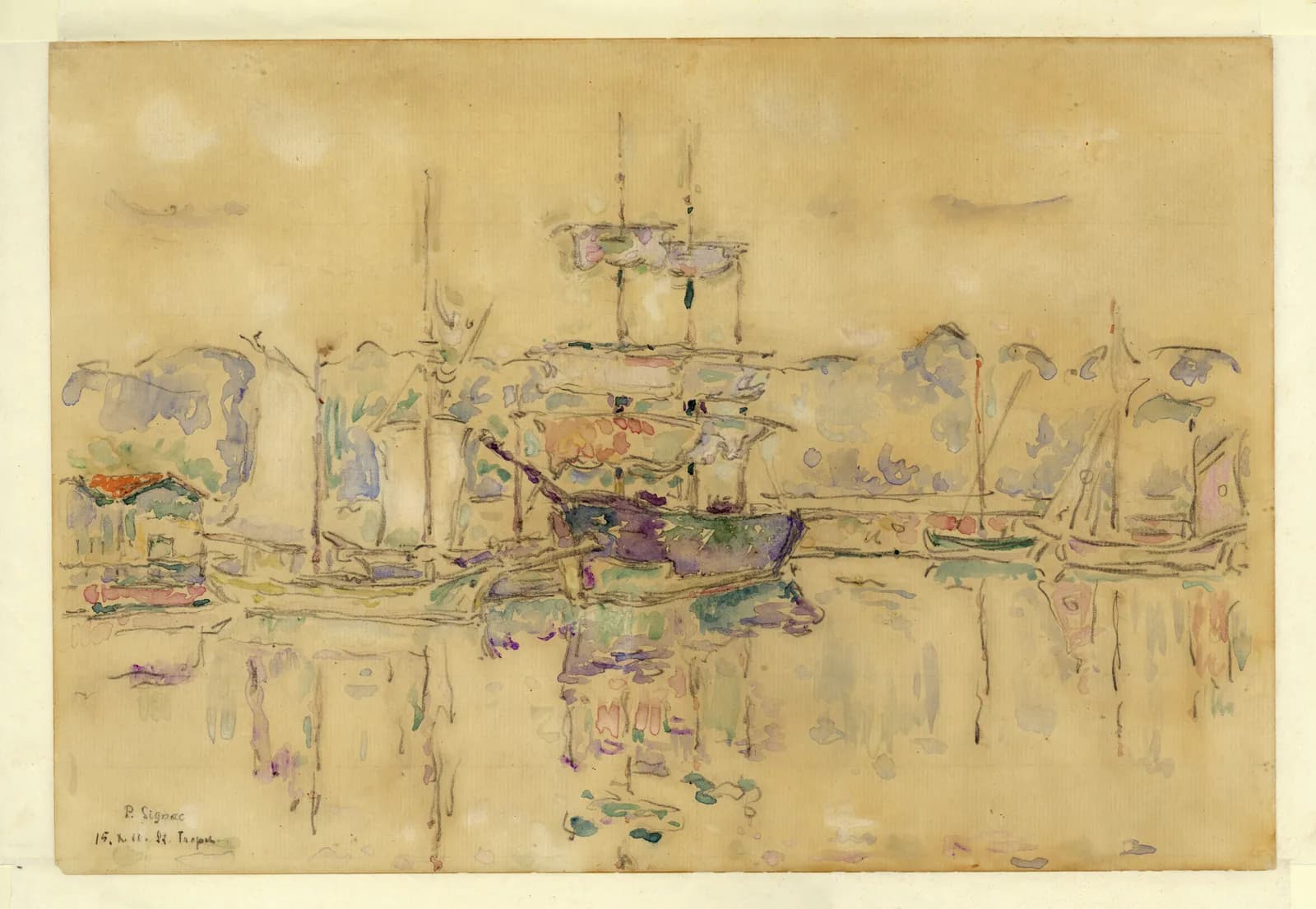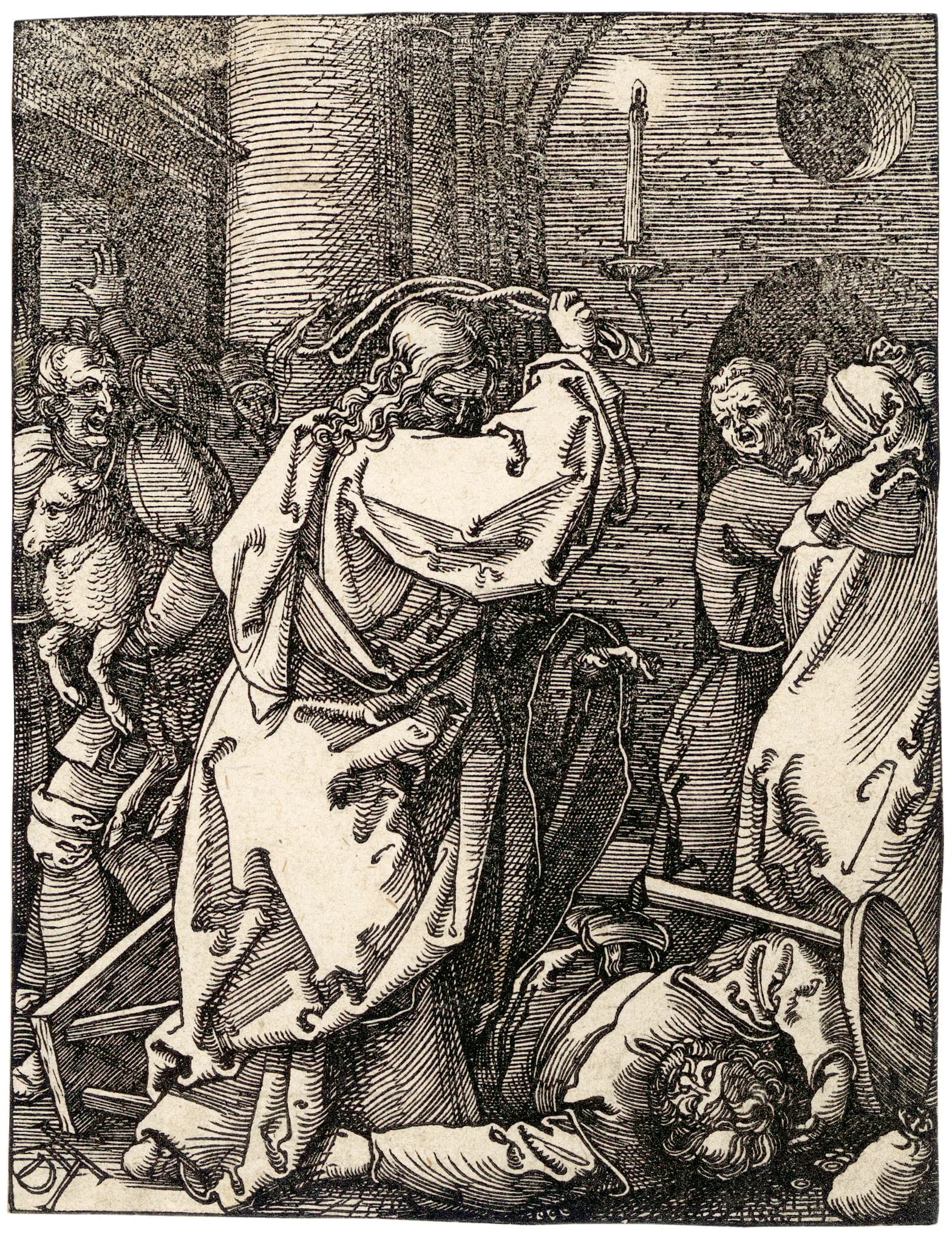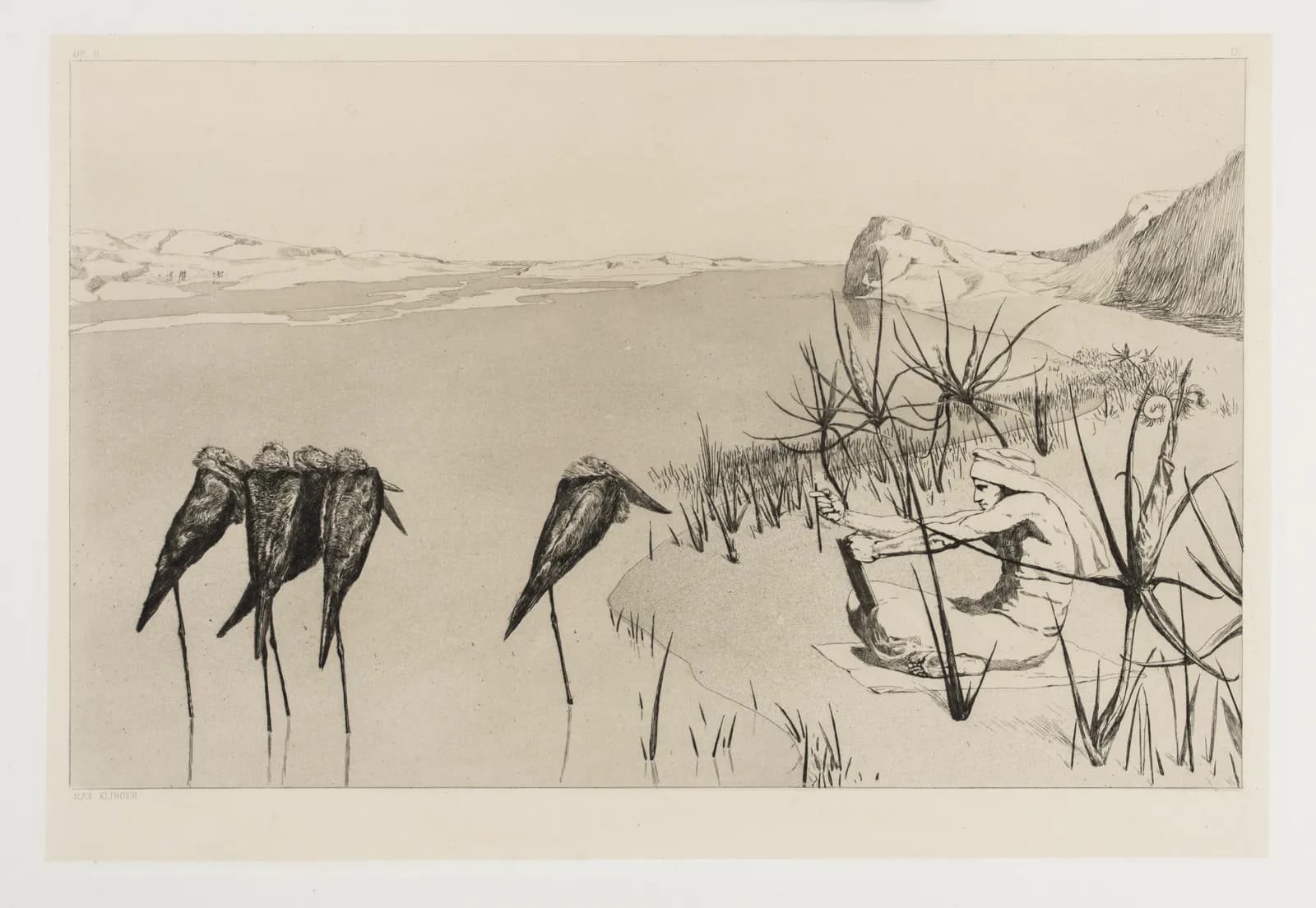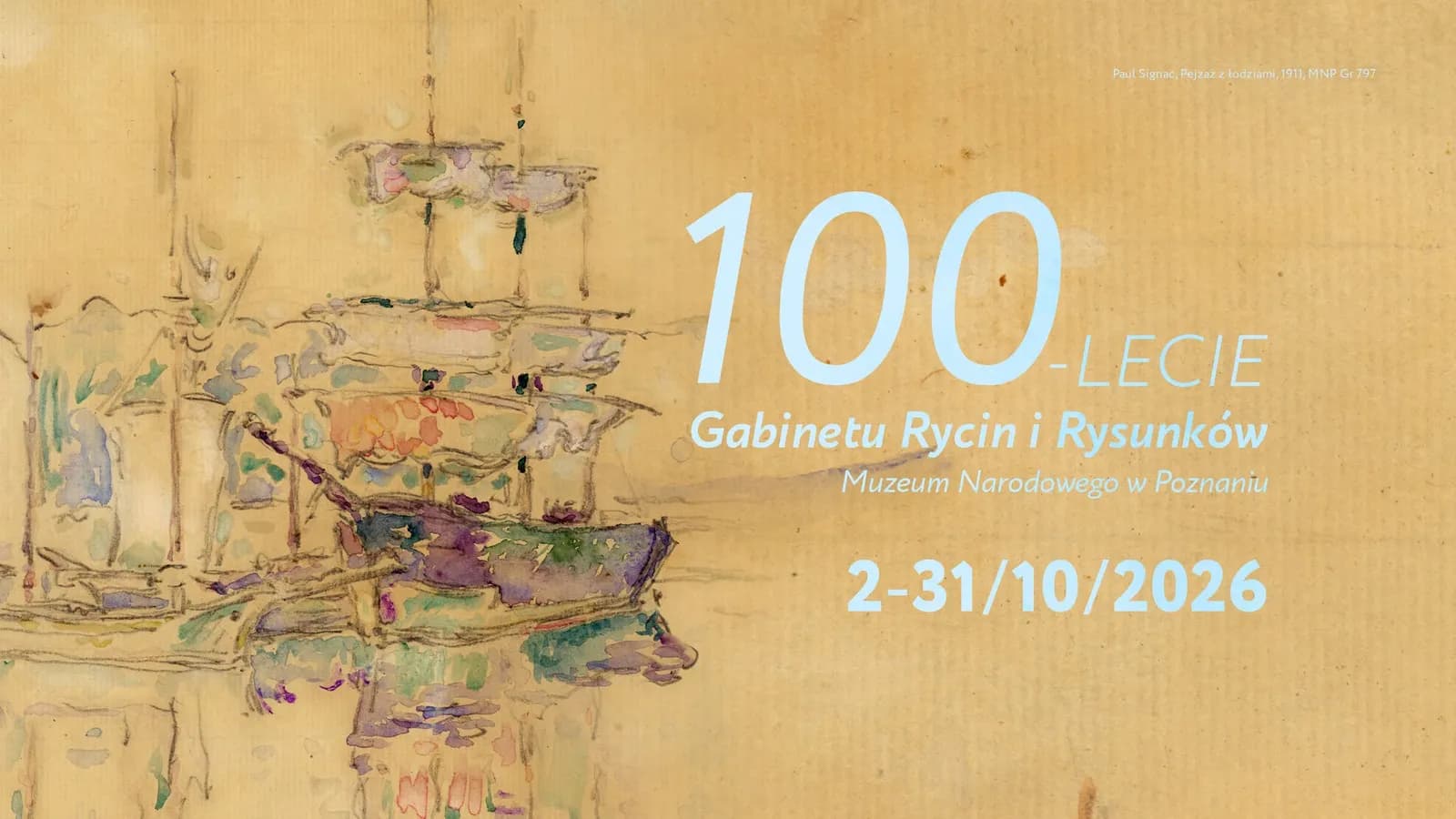
A century of collecting art on paper is being marked this autumn at the National Museum in Poznań, where a special display brings together more than 50 works from the museum's Prints and Drawings Cabinet.
Running from 2 to 31 October 2026, the exhibition offers a compact look at a collection that now numbers almost 52,000 works. Among the artists represented are Albrecht Dürer, Rembrandt van Rijn, Edvard Munch, Käthe Kollwitz, Tadeusz Kantor and Maria Jarema, alongside Wita Stwosza, Leon Wyczółkowski and Władysław Skoczylas.
The display is curated by Agnieszka Salamon-Radecka, head of the Prints and Drawings Cabinet, and Danuta Rościszewska.
From Dürer and Rembrandt to Kantor and Jarema
The exhibition traces the breadth of the collection rather than attempting to tell its entire history. Visitors can see works spanning five centuries of graphic art, covering techniques from woodcuts and linocuts to metal engraving, lithography and ceratotypes.
Among the more unusual elements of the display are selected printing matrices and state proofs, offering a glimpse into how graphic works were produced and how individual impressions could change during the printing process.
For visitors familiar with the museum's collections, it is also an opportunity to see works by artists who rarely appear together in one presentation. The selection moves from the Old Masters to modern and contemporary Polish art, with international figures such as Munch and Kollwitz alongside artists closely associated with Poznań and Poland.
A collection shaped in Poznań
The story of the Cabinet reaches back further than its official centenary. The beginnings of the collection date to 1893, when the museum, then known as the Provinzial Museum, later the Kaiser Friedrich Museum, began acquiring prints through its library.
The early holdings were predominantly German, although the collection was never exclusively so. Works by Max Klinger, Käthe Kollwitz, Edvard Munch and Hans Thoma entered the museum, alongside occasional works connected with Poland. The collection also began acquiring East Asian art at a surprisingly early stage.
After the museum came under Polish administration in 1919, its collections gradually took on a more distinctly Polish character. A decisive step came in 1926, when art historian Alfred Brosig took inventory of the museum's prints and drawings and established the foundations of the department as a separate museum unit.
Brosig's approach went beyond simply acquiring individual works. He sought to build a coherent collection of Polish art, bought contemporary works from artists around the country and maintained relationships with artists and collectors. Donations and purchases subsequently brought in important groups, including ex-libris works, the collection of Leon Wyczółkowski and Polish-related material from Gołuchów.
War, dispersal and rebuilding
The collection's history also reflects the upheavals of the 20th century.
During the Second World War, German authorities brought private collections from estates across Greater Poland into the museum, including portraits from the Skórzewski and Wolski collections. In 1942, more than 20 old master prints were purchased at an auction at Boerner's in Leipzig, including works by Dürer, Lucas van Leyden and Georg Pencz.
Towards the end of the war, some museum objects were taken deep into Germany. The post-war years therefore involved both rebuilding and recovering dispersed works. Some objects returned relatively quickly, while others came back in 1956 as part of restitution from the Soviet Union. This included dozens of drawings and several hundred prints by old masters.
The collection continued to expand in the decades that followed. Works from former landed estates and German collections entered the museum in the 1950s, along with almost 400 works on paper from the former City Museum.
The 1960s and 1970s brought a stronger focus on modern Polish art, with significant groups of works by artists including Tadeusz Brzozowski, Tadeusz Kantor, Zbigniew Makowski, Piotr Potworowski and Jonasz Stern. Japanese woodblock prints and sketchbooks by Jacek and Rafał Malczewski and Maria Nicz-Borowiakowa also strengthened the holdings.
A living collection
In recent decades, the Cabinet has continued to add to areas of particular importance to Poznań's cultural history. Since the beginning of the 21st century, its holdings relating to the Bunt artistic group have been expanded with works by Jerzy Hulewicz, Margarete and Stanisław Kubicki, Stefan Szmaj and Stanisława Przybyszewska.
The collection of 20th-century Polish graphic art has also continued to grow.
That long collecting process gives the October display its character. Rather than focusing on one movement, period, or technique, it offers a brief tour through a collection built by successive generations of curators, artists, collectors, and donors.
For visitors to the National Museum, the display is a chance to encounter works that span centuries and artistic traditions, while seeing how one of Poznań's specialist collections has developed over 100 years.
The centenary display runs from 2 to 31 October 2026 at the National Museum in Poznań.
See more: A Herbarium of a Changing World: Inside ZAMEK’s New Exhibition
Source: National Museum in Poznań