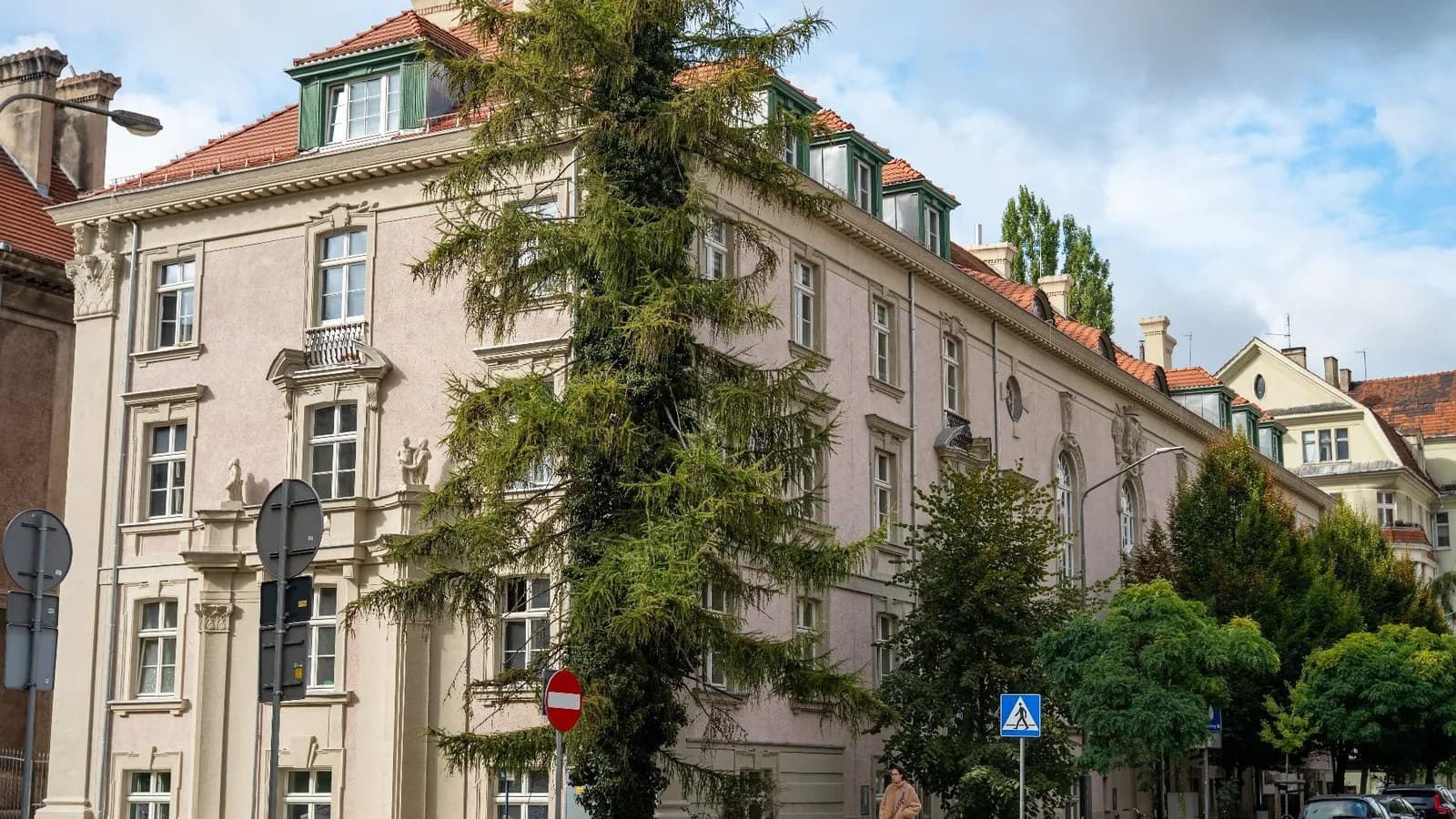
On a street better known for cafés, restaurants, old tenement houses and the constant movement of Jeżyce, the façade of Dom Tramwajarza has always stood out.
There is something immediately recognisable about the building at ul. Słowackiego 19/21. Its decorative frontage hints at another Poznań, one in which the city's tram network was expanding and workers' social lives extended well beyond the depot.
Inside, generations of Poznanians have watched films, listened to music, attended performances, learnt new skills and met friends.
Now the building has been given another lease of life.
Following a comprehensive renovation, the Sala Amarantowa has been restored and enlarged, the façade has been renewed, and the building's ageing installations have been replaced. The project has taken place in stages since 2022, with the latest phase concentrating on the interiors and the historic performance space.
For a building approaching its centenary, the result is a careful balance between old and new.
Before there was Amarant, there were tram workers
Dom Tramwajarza was built between 1925 and 1927 for employees of the Poznańska Kolej Elektryczna, the predecessor of today's MPK Poznań.
Architect Adam Ballenstaedt designed the complex in a neo-Baroque style. But this was never intended to be an ordinary residential building.
From the beginning, it was conceived as a social and cultural centre for the tramway workforce and their families. The central building contained a performance hall, workshop space and restaurant, while the adjoining sections provided accommodation for employees.
The idea of creating a dedicated organisation for the cultural and educational life of tram workers had already emerged in 1922, driven by conductors and motormen.
When the new building opened, its facilities reflected that ambition. The so-called Amarantówka included a library with around 2,500 books, a choir, sewing and dressmaking classes, a children's nursery and courses including cooking and ironing.
It was a building designed around people, and its cultural life continued to evolve.
The cinema years
For many older residents of Jeżyce, the name Amarant is likely to bring back a very specific memory: a film on the big screen in the Sala Amarantowa.
The cinema arrived much later than the building itself. Kino Amarant opened in 2002, using the main hall of Dom Tramwajarza as its screening room.
It became part of Poznań's network of study cinemas, showing independent and European films, less mainstream productions and films that did not normally appear in the city's multiplexes. The programme also included children's screenings and a series devoted to classic world cinema.
It was a small cinema in an unusual setting, with the history of the building itself forming part of the experience.
Amarant closed in January 2010, after less than eight years of operation.
The name, however, survived.
Today, the Sala Amarantowa still carries the memory of that period, while the building itself has returned to a broader cultural role.
Music, community and a changing Jeżyce
Cinema was only one chapter.
For decades, the building was also closely associated with music. From 1955, Dom Tramwajarza became the home of the then newly established MPK brass band, with rehearsals taking place there for many years. The building also accommodated the MPK blood donors' club and groups representing retired tram workers.
Later, as the building's fortunes changed, local organisations and activists became involved in attempts to revive it.
In 2015, the Centrum Amarant initiative took over the Amarantówka space with the aim of creating an active cultural centre for Jeżyce. Two years later, responsibility for the building passed to Estrada Poznańska, and since 2021, the building is operated by the Pan Gar Foundation.
That history helps explain why the renovation is about more than restoring an attractive old façade.
The building has repeatedly adapted to what Jeżyce needed from it.
Inside the restored Sala Amarantowa
The biggest changes are now visible inside.
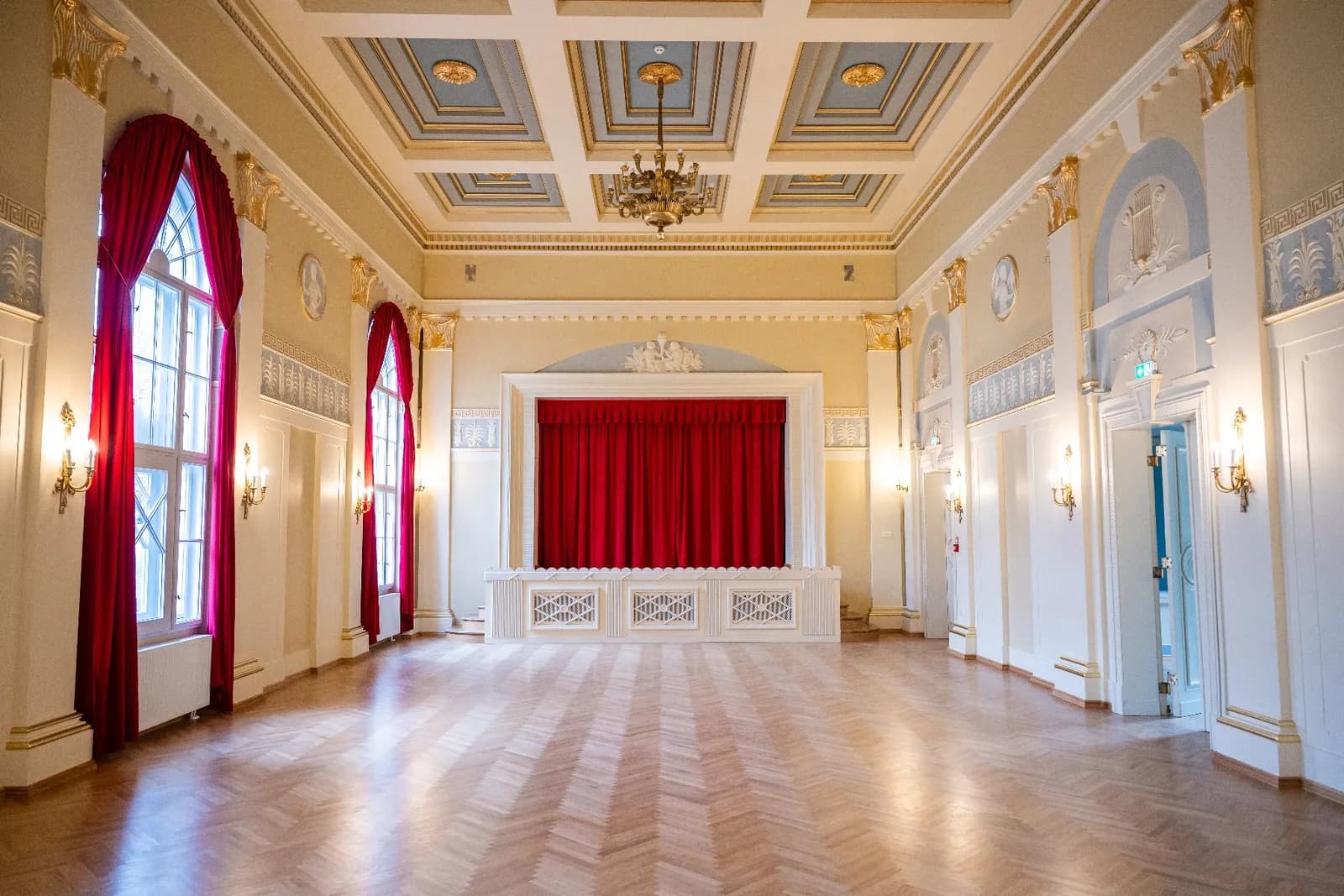
The auditorium has been enlarged by incorporating an adjoining room. Historic painted decoration and stucco have been refreshed, while the parquet floor has been replaced while retaining its previous arrangement.
The internal balcony, which had been closed to audiences, has also been brought back into use.
For performers and technical crews, the hall now has modern stage infrastructure, including a new stage operation system and lighting equipment. Air conditioning has also been installed.
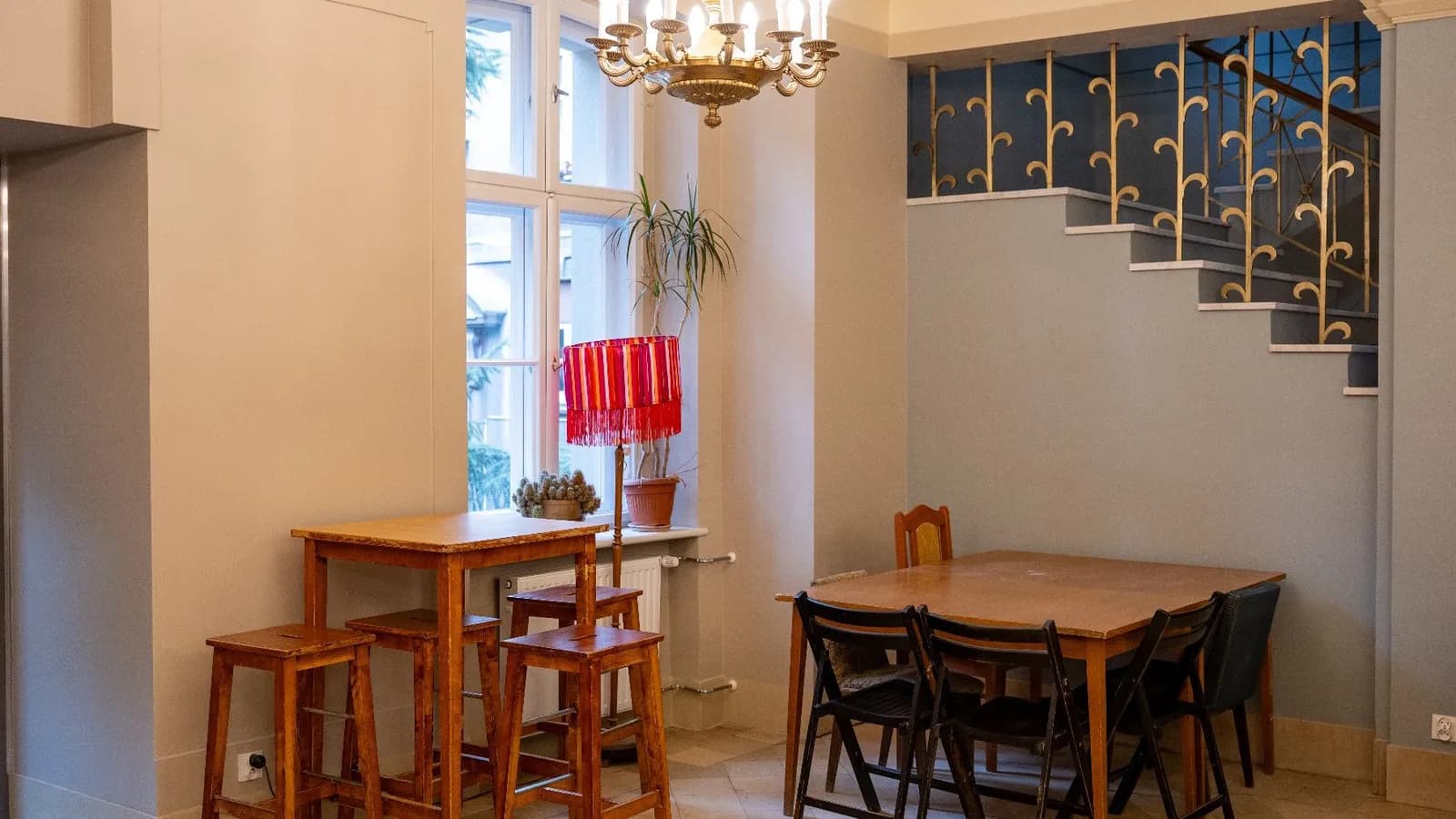
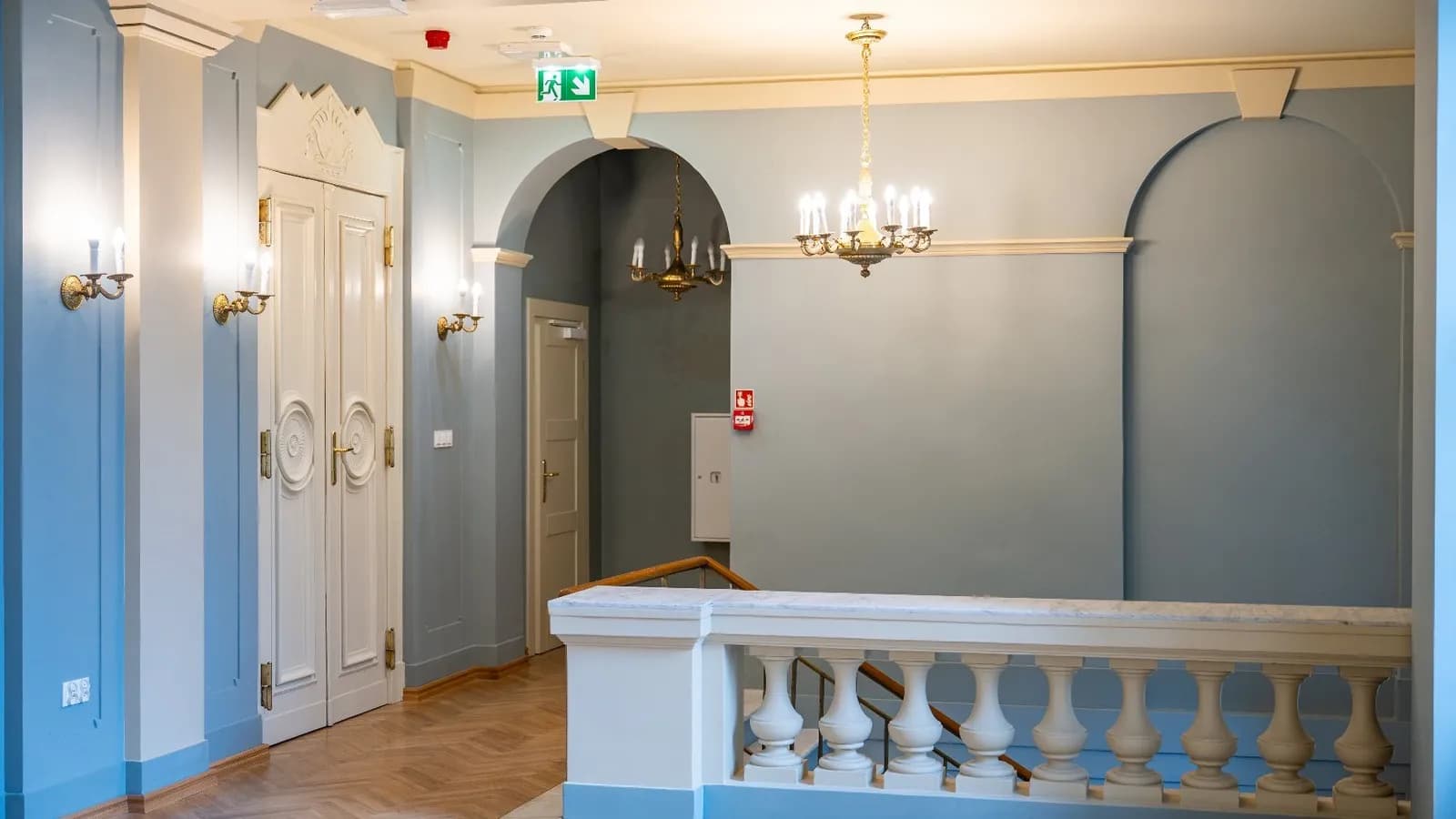
The foyer and staircases have been refurbished as part of the project.
It is a combination that should be familiar to anyone who has watched older cultural buildings being brought back into use: the decorative details remain recognisably historic, but the practical infrastructure has to meet contemporary expectations.
The building itself has had a thorough overhaul
The work has not stopped at the Sala Amarantowa.
The façade has been restored, including its original colour scheme, while historic window joinery in the public areas has been renovated.
Inside, the electrical, central heating, water, gas and fire protection systems have been replaced.
The residential sections have also received renovated staircases.
One of the more noticeable additions is the external lift, installed at the rear of the building to improve accessibility. The glazed structure was designed to fit into the existing historic setting without obscuring the character of the building.
The renovation has also removed later alterations to parts of the interior, helping to make the original layout of the nearly century-old building easier to read.
Nearly a century on Słowackiego
The most interesting thing about Dom Tramwajarza may be how many different versions of Jeżyce have passed through its doors.
It began as a place for tram workers and their families. It housed a library, educational activities and children's facilities. It became a venue for music and community organisations, then a small cinema for a new generation of filmgoers. Today, it operates as a cultural venue once again, hosting concerts, performances, workshops and community events.
The renovation does not attempt to turn the building into a museum of its own history.
Instead, the Sala Amarantowa has been equipped to keep doing what it has done in different forms for almost 100 years: bringing people together.
The cinema screen is gone, but the hall remains.
The tram workers have long since left the building, but their original social centre is still part of Jeżyce.
And after a four-year programme of renovation, the old Dom Tramwajarza is ready for the next part of its story.
Image credit: poznan.pl