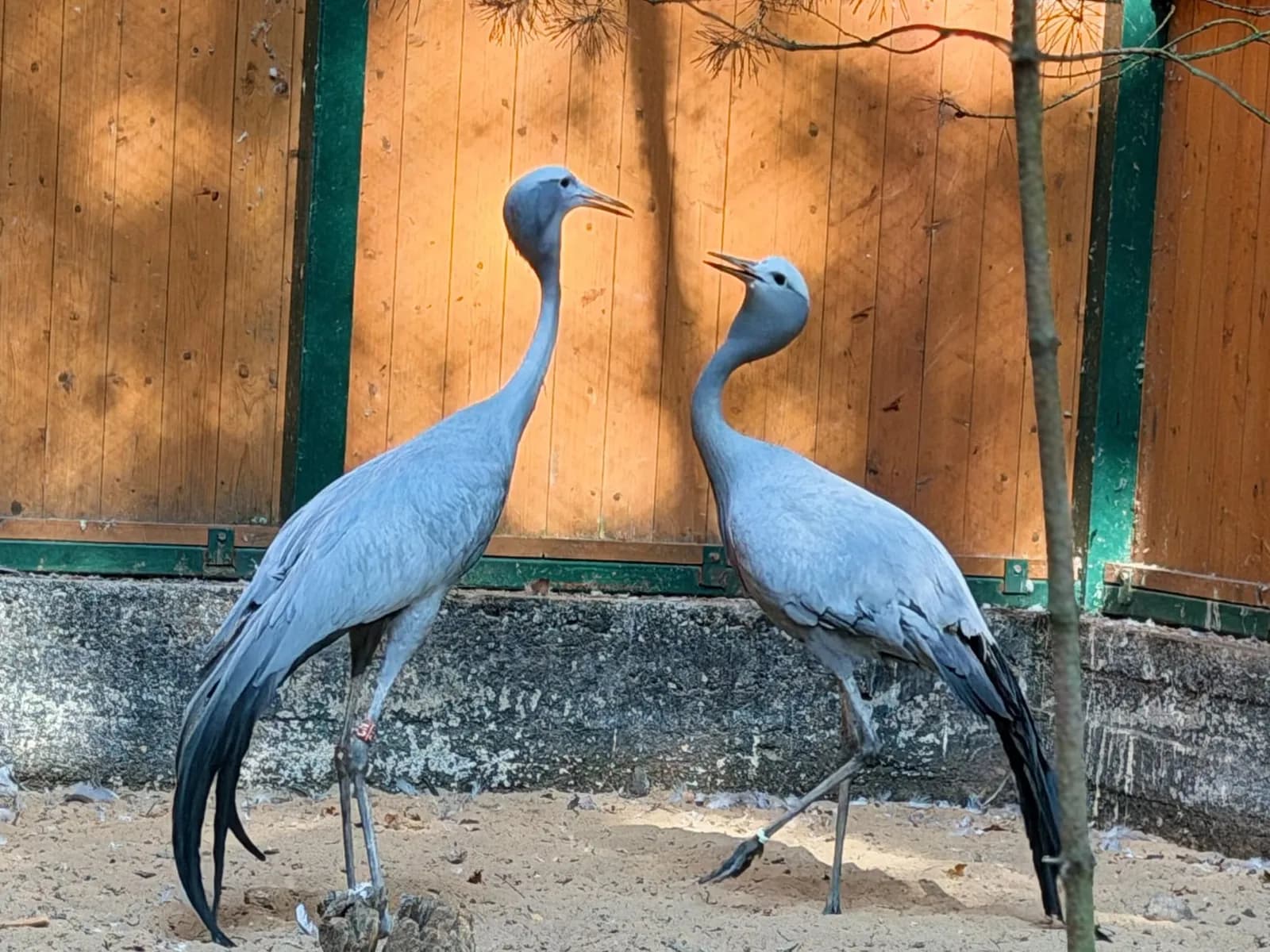
Poznań’s New Zoo has recently welcomed two new inhabitants. A pair of paradise cranes, also known as blue cranes, has arrived from the Zamość Zoo.
The New Zoo in Poznan informs that the cranes do not go out to the large enclosure yet, but they can already be observed by guests on the so-called “pre-paddock” which is the area between the heated, enclosed section and the large grassy area that they will share with zebu cows.
Where do paradise cranes originally live?
99 percent of the population of paradise cranes lives in the Republic of South Africa. Like their relatives in Europe and Asia, they prefer open, grassy landscapes with wetlands. They can be found both on drier inland plains and in slightly higher-elevation areas characterized by a harsher and cooler climate (frosts are not uncommon on the high plains of eastern South Africa).
An increasing number of their habitats are being intensively farmed, which unfortunately does not bode well for the population of paradise cranes. Unlike other crane species, they do not migrate over very long distances. On the IUCN Red List, they are classified as “Vulnerable,” meaning they are at risk of extinction, and their numbers are, unfortunately, declining.
One of the distinctive features of these birds are their beautiful trailing feathers which are formed by the tertiary flight feathers, that is the wing feathers, rather than the tail feathers, as is the case with many other bird species.
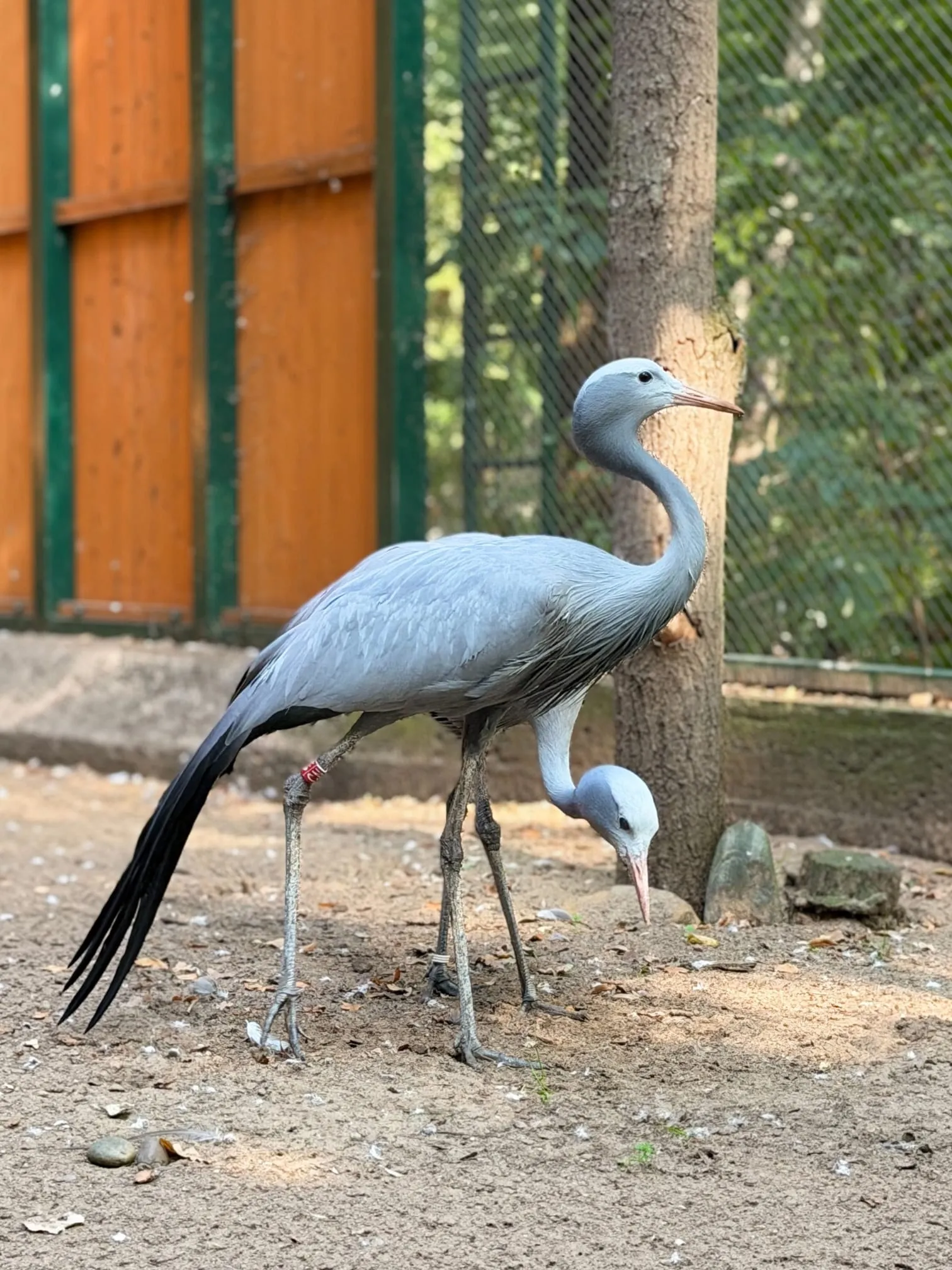
The paradise crane is the national bird of South Africa. Among the indigenous peoples of this part of Africa, its feathers symbolize prestige and courage.