From ordering food to catching the bimba, discover 15 essential Polish words and iconic Poznań gwara expressions every visitor, expat and new resident should know.
Whether you’re visiting Poznań for a weekend, studying at one of the city’s universities or planning to stay for longer, learning a few local words can go a long way. Most younger people speak excellent English, but making an effort to use a little Polish is always appreciated.
Then there’s Poznań gwara, the city’s distinctive regional dialect. Rooted in centuries of local history, it blends standard Polish with words influenced by German and has become an important part of Poznań’s identity. While few people speak it fluently every day, many expressions remain firmly embedded in everyday conversation.
Here’s your quick survival guide to help you sound a little more like a local.
1. Dzień dobry (jen DOB-ri)
Meaning: Good morning / Good afternoon
Your essential greeting. Use it when entering a shop, café, hotel or restaurant. It’s polite and almost always expected.
2. Dziękuję (jen-KOO-yeh)
Meaning: Thank you
A simple thank you is always appreciated.
3. Proszę (PRO-sheh)
Meaning: Please / You’re welcome / Here you are
One of the most versatile words in Polish. You’ll hear it everywhere.
4. Przepraszam (pshe-pra-SHAM)
Meaning: Excuse me / Sorry
Perfect for getting someone’s attention or apologising if you accidentally bump into someone.
5. Ile to kosztuje? (EE-leh toh kosh-TOO-yeh?)
Meaning: How much does it cost?
Useful at markets, souvenir shops and independent businesses.
6. Gdzie jest…? (G-jeh yest?)
Meaning: Where is…?
Ideal for asking directions.
Examples include:
- Gdzie jest dworzec? (Where is the railway station?)
- Gdzie jest Stary Rynek? (Where is the Old Market Square?)
7. Bimba
Meaning: Tram
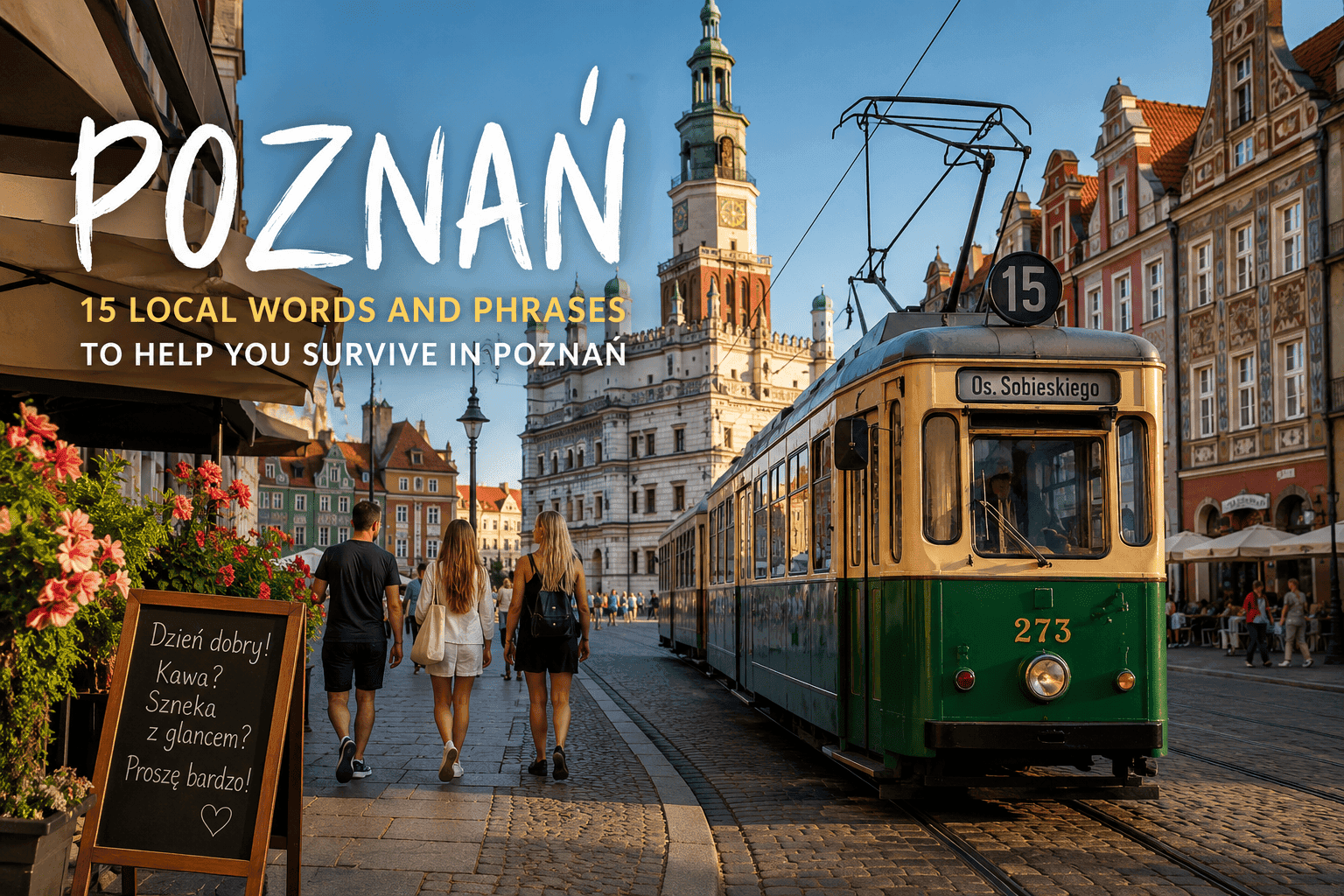
If someone tells you to “take the bimba”, don’t worry. They’re simply telling you to catch the tram. It’s one of Poznań’s best-known dialect words and one you’ll hear surprisingly often.
8. Pyry
Meaning: Potatoes
Potatoes are a source of local pride, which is why people from the region are sometimes affectionately nicknamed Pyry.
You’ll spot the word on restaurant menus and in the names of local businesses.
9. Tytka
Meaning: Paper bag
Need a bag in a bakery or shop? In Poznań, don’t be surprised if someone offers you a tytka.
10. Kejter
Meaning: Dog
One of the city’s favourite dialect words.
“Jaki fajny kejter!” simply means “What a lovely dog!”
11. Szneka z glancem
Meaning: An iced cinnamon-style sweet bun
This iconic Poznań bakery treat is a must-try. Order one with a coffee and you’ll immediately look more like a local than a tourist.
12. Gzik
Meaning: Cottage cheese with cream, herbs and seasoning
Usually served with baked potatoes, gzik is one of the region’s best-known traditional dishes.
13. Na szage
Meaning: To take a shortcut
Rather than following the pavement, locals might suggest going na szage, meaning to cut across a park or open space.
14. Bejmy
Meaning: Money
You probably won’t hear it every day, but it’s still one of the classic words associated with Poznań.
15. Cześć (cheshch)
Meaning: Hi / Bye
An informal greeting you’ll hear among friends and younger people. It’s also commonly used when saying goodbye.
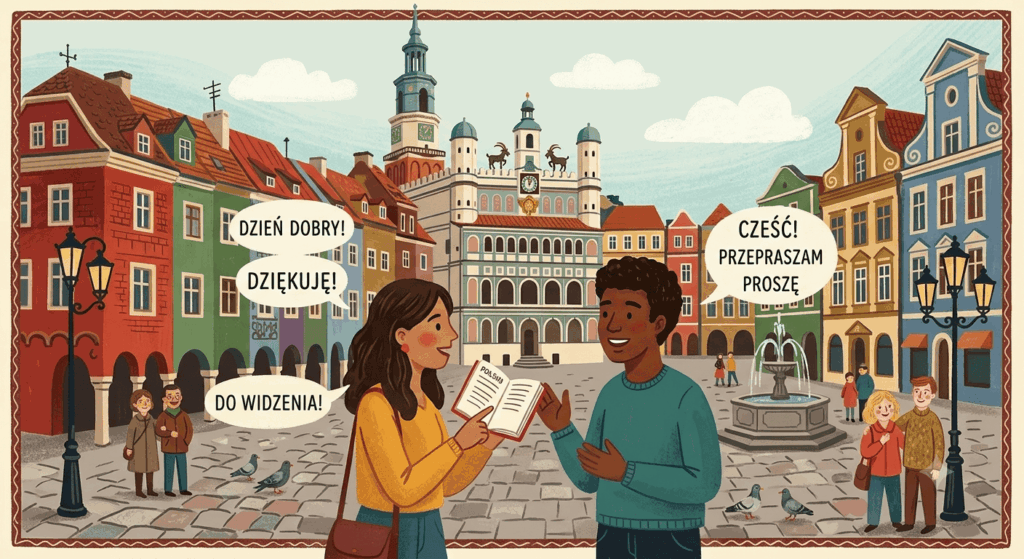
A Quick Mini Conversation
Tourist: Dzień dobry!
Local: Dzień dobry!
Tourist: Poproszę sznekę z glancem.
Local: Proszę bardzo.
Tourist: Dziękuję!
Local: A później jedź bimbą na Stary Rynek.
Translation:
Tourist: Good morning!
Local: Good morning!
Tourist: I’d like an iced sweet bun, please.
Local: Certainly.
Tourist: Thank you!
Local: Afterwards, take the tram to the Old Market Square.
Why Learn a Few Local Words?
You don’t need to speak fluent Polish to enjoy Poznań. Even a handful of words can make interactions warmer and more enjoyable, whether you’re ordering lunch, asking for directions or chatting with locals.
Learning a few expressions from Poznań gwara also shows an appreciation for the city’s unique heritage. It’s part of what makes Poznań different from anywhere else in Poland, and locals are often delighted when visitors recognise words like bimba, pyry or tytka.
So next time you’re exploring the city, don’t just ride the tram. Ride the bimba.
Read about traditional vegetarian food from Poznań here!