For many people, choosing where to spend retirement comes down to more than the cost of housing or access to healthcare. Being able to get around independently, stay active, meet other people and get practical help when it is needed can make just as much difference.
Poznań has spent years developing services and public spaces with older residents in mind. With more than 140,000 seniors living in the city, according to the city's figures, that represents roughly a quarter of Poznań's population.
The approach is not limited to care services. It covers transport, housing, sport, culture, volunteering and the everyday jobs that can become harder with age.
For years, we have been changing the city to improve the quality of life for people of all ages.
Says Jacek Jaśkowiak, Mayor of Poznań.
We are improving the accessibility of public spaces, developing more accessible transport, investing in healthcare and creating new services for older people. Throughout this process, we continue to work closely with seniors themselves. They know best what they need, and we listen to their voices.
Help with the practical things
One of Poznań's most distinctive initiatives is Poznań Viva Senior, a collection of free services designed to make everyday life easier for older residents.
The programme includes practical assistance that might otherwise mean arranging a tradesperson, finding transport or asking family members for help. Among the services are:
Taksówka dla Seniora, providing free journeys for appointments such as visits to a doctor, an office or a cemetery
Złota Rączka, offering help with minor household repairs
Mobilna pielęgnacja stóp, a free foot-care service
free window cleaning for seniors
cemetery and grave maintenance
free smoke and carbon monoxide detectors
Poznańskie Pudełko Życia, designed to provide important information in an emergency
Książka dla Seniora, delivering books, audiobooks and films from the collections of Biblioteka Raczyńskich to people's homes.
The city also runs a municipal rehabilitation equipment lending service. A separate Punkt Opieki Farmaceutycznej helps older residents manage their medicines safely.
Information about senior services is available through the Poznań Kontakt helpline on 61 646 33 44.
Staying active, connected and involved
Poznań's offer for older residents extends well beyond practical support.
The Centrum Inicjatyw Senioralnych at ul. Mielżyńskiego 24 acts as a hub for activities and information aimed at older people. There is also Srebrny Fyrtel, while October brings the annual Senioralni Poznań programme, filling the city with meetings, talks and activities for older residents and their families.
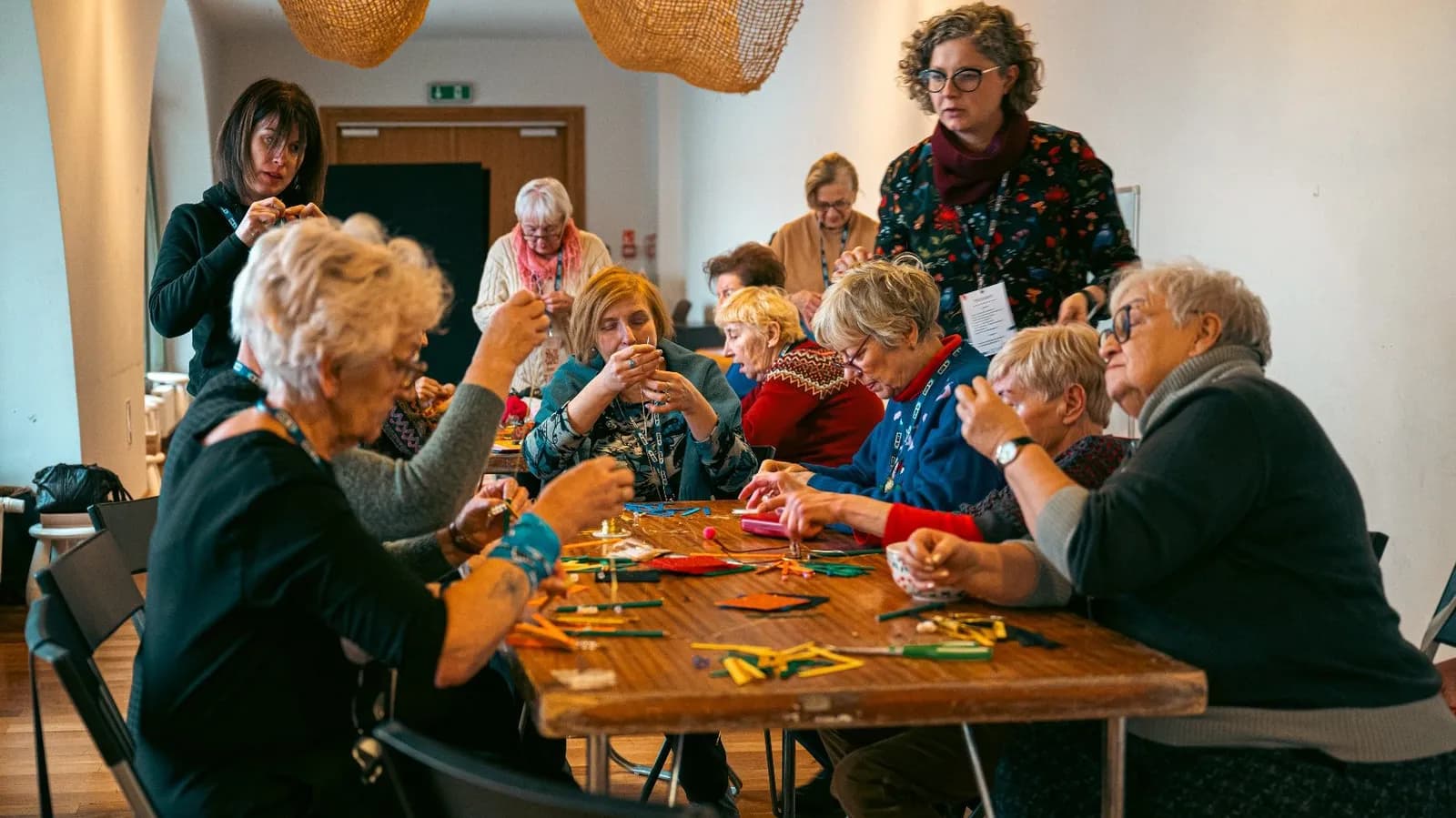
Intergenerational projects are another part of the picture. Centra Integracji Międzypokoleniowej provide opportunities for older and younger generations to spend time together, while dozens of senior clubs offer regular social activities. Some are connected with cultural institutions, including theatres.
For those who want to keep learning, Poznań has several Universities of the Third Age. Others choose volunteering, including the Poznańska Akademia Wolontariatu Senioralnego.
One particularly unusual but heart-warming initiative is Senior Maluszka Tuli, through which older women volunteer to support premature babies at a municipal hospital.
The city has also had a Miejska Rada Seniorów since 2007, giving older residents a formal channel for contributing to discussions about issues affecting their lives.
Sport is part of everyday life
Age is no barrier to taking part in organised sport in Poznań.
The city's Trener Senioralny programme attracts several thousand participants each year, while the regular Spartakiada gives older residents the chance to compete or simply take part in activities including table tennis, chess, draughts, Nordic walking, badminton and swimming.
Poznańskie Ośrodki Sportu i Rekreacji also run Seniorzy w akcji, with activities focused on movement, leisure and wellbeing. Some sessions are open to grandparents and grandchildren together, making exercise a social as well as physical activity.
Support when everyday life becomes more difficult
For residents who need more assistance, Poznań operates day support centres and residential care homes, while continuing to develop and modernise its facilities.
The city also supports people living with chronic or terminal illnesses and their families, including day services for people with dementia.
Its Zintegrowane Centrum Opieki i Teleopieki brings together support from psychologists, physiotherapists and nurses, alongside regular contact with an assistant and the ability to call for help around the clock.
Other services include health education and prevention programmes, free legal and psychological advice, and an osteoporosis prevention and early detection programme for women aged 50 and over.
Telecare is also available for people who are dependent on others or living with disabilities, while Pomoc po sąsiedzku provides a wider network of social support.
Getting around Poznań
Accessible transport becomes increasingly important when a city is home to a large and growing older population.
Poznań has introduced accessibility standards for public spaces and continues to adapt public buildings. The tram network is also largely based on low-floor vehicles, while stops and turning loops are being adapted to make journeys easier for people with limited mobility.
For older residents, the city's fare system includes a Bilet Seniora for people aged 65 to 70, costing PLN 90 for 365 days. Public transport is free for passengers aged 70 and over.
That combination of accessible vehicles and reduced fares can make a significant difference to independence, particularly for people who no longer drive cars or cycle.
Housing with older residents in mind
Housing is another part of Poznań's senior policy.
Residents aged 70 and over receive additional points when applying for municipal housing, with their income assessed differently for this purpose. The city also operates the Mieszkanie dla Seniora programme.
There are also Mieszkania studyjne dla seniorów, created from larger municipal flats, including properties exceeding 80 square metres. The idea is to make better use of existing housing stock while creating smaller homes suited to older residents.
A city shaped with its older residents
Poznań's approach covers a surprisingly broad part of urban life. A senior policy is visible not only in care homes and health programmes, but also on trams, in libraries, sports centres, theatres, community groups and local housing policy.
For international residents considering Poznań as a place to settle later in life, or for families already living here and thinking about the future, the range of services is worth knowing about. Many are specifically designed to support independence rather than replace it.
The city also continues to involve older residents in shaping those services. That is particularly relevant as Poznań, like many European cities, adapts to an ageing population.
For anyone considering retirement in Poznań, the practical question is therefore not simply whether the city has services for seniors. It is how easily those services can become part of everyday life, from getting across town and staying active to borrowing a book, meeting friends or getting help with a small job at home.
See more: Poznań’s Kino Pałacowe Helps Shape Accessible Cinema Across Poland
Source and image credit: poznan.pl