Poznań's Stary Browar will host a week of exhibitions and international discussion starting next week, as Poznań Design Festival turns its attention to longevity. The programme opens on Friday, 23rd October, with an artistic performance and exhibition vernissages, followed the next day by a conference bringing together international experts in architecture, healthcare and urban planning.
For the festival's English-speaking audience, Saturday's Poznań Design Talks: Futures of Longevity offers a chance to hear how different countries are approaching the challenge of living well as we age. From the design of everyday public spaces to the social habits associated with long life, the speakers will explore ideas with practical relevance for Poznań and the way its neighbourhoods develop.
An artistic opening and a week of exhibitions
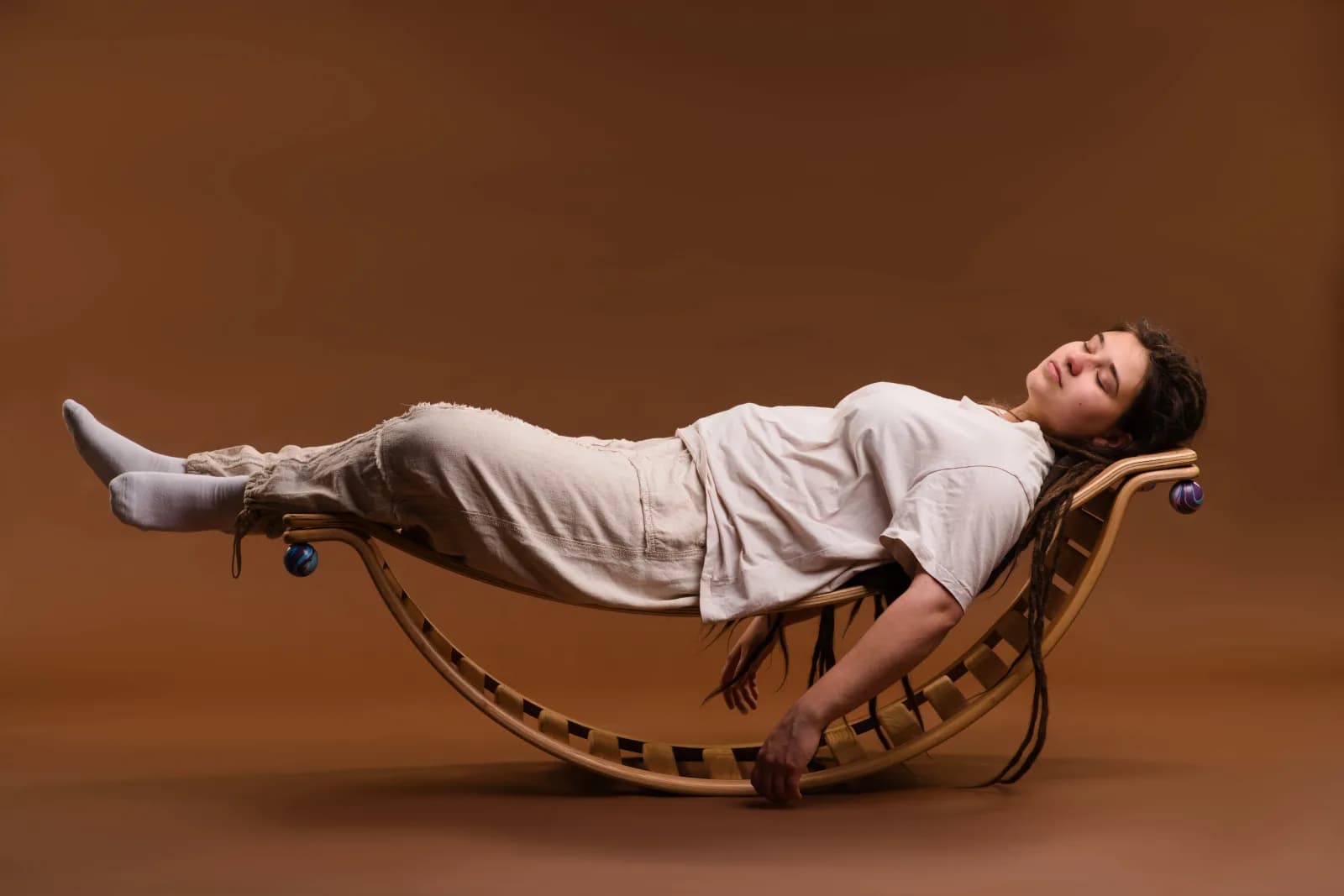
The festival begins at 7:00 pm on Friday, 23rd October, with Wielostan, an artistic prologue combining choreography and music. Choreographed by Paulina Wycichowska, with music by Sabio Janiak, the performance features Kinga Grącka, Amelia Jankowiak and Antoni Horla. The project involves the Scientific Student Research Group at the Dance Studies Laboratory of the Poznań University of Physical Education (AWF).
The official inauguration follows at 7:10 pm, alongside exhibition openings across Stary Browar's Słodownia spaces.
Rather than treating longevity simply as a medical question, the exhibitions explore how the places and objects around us can support a better quality of life at different ages.
The main exhibition, Longevity, sets the theme for a programme that includes several perspectives on living well:
A City Measured by Rest explores benches, greenery and public spaces that make a city more comfortable to live in. Curated by Agata Gawlak, Agnieszka Ptak-Wojciechowska and Marcelo Sagot-Beter, the exhibition comes from the Faculty of Architecture at Poznań University of Technology.
Design with Care presents work from the Faculty of Design at the Academy of Art in Szczecin, with a focus on care and the role of design in everyday life.
A Course Towards Longevity considers how we might design a world in which people live longer and better. The exhibition is curated by Beata Fabisiak of Poznań University of Life Sciences.
An Exceptional Home examines domestic space through the work of the Interdisciplinary Design programme at Magdalena Abakanowicz University of the Arts in Poznań.
Between Not Yet and Already looks at time, space and human experience, bringing together work from the Interior Architecture programme and the Department of Interior Architecture and Sculpture at Nicolaus Copernicus University in Toruń.
Forest Experience Zone, curated by Natalia Adamczyk, offers another way to engage with the festival's themes.
The exhibitions are spread across Słodownia +1 and +2, with the main exhibition and several other displays on the upper level.
All exhibitions will be open from 24th to 29th October, between 12:00 pm and 8:00 pm. Admission is free, making this an accessible opportunity to explore contemporary design and its relationship with daily life.
Poznań Design Talks: a global conversation about longevity
Saturday's conference brings together international and Polish specialists to consider how we can build places and communities in which people can thrive as they grow older.
The subject has immediate relevance in Poland, where an ageing population is putting increasing pressure on healthcare, housing, transport and social support. The festival's approach looks beyond individual lifestyle choices to ask what cities, neighbourhoods and public institutions can do to support people throughout their lives.
The programme runs from 12:00 pm to 5:30 pm, with registration opening at 11:30 am. It takes place in Słodownia +3 at Stary Browar.
David Sim: designing cities for everyday life
The opening keynote, Soft City: Living Longer, Living Better, begins at 12:15 pm and is delivered by Scottish architect David Sim, who spent 17 years working with Copenhagen-based Gehl Architects.
Sim's work has explored how the design of streets, buildings and public spaces influences the way people interact. His approach to the city places everyday experience at its centre, with an emphasis on walkability, social connections and spaces that work for people of different ages.
A city that makes it easier to walk to local services, meet neighbours, find somewhere to sit and spend time outdoors can support a more connected daily life. The question is not only how long people live, but how well their surroundings serve them along the way.
Public spaces that invite everyone in
At 1:15 pm, Polish designer Paweł Grobelny takes the programme in a practical direction with Public Space for Everyone.
Grobelny leads the Public Space Design Studio at the Academy of Fine Arts in Warsaw, and his work can be found in cities including Brussels, Paris and Shanghai. His session considers how carefully designed squares and other shared spaces can encourage people to discover their surroundings and enjoy spending time outdoors.
It is an opportunity to look at familiar urban details differently. Seating, access, planting and the arrangement of a square can all influence who feels welcome, how long people stay and whether public space becomes a natural meeting point.
Growing older in Peru: beyond medicine
At 1:30 pm, Peruvian gastroenterologist Diana Rivera explores ageing in Ageing in Peru: Beyond Medicine.
Drawing on her experience treating patients in Arequipa and a remote Andean village, as well as her current work in Galicia, Spain, Rivera will examine the influence of diet, lifestyle and family structures on the experience of growing older.
Her contribution broadens the discussion beyond architecture. The support available to older people, the relationships they maintain and the everyday routines they follow can vary considerably, even within one country.
The longevity city: technology, space and community
From 2:00 pm to 3:00 pm, an international panel will consider how urban planning, new technologies and artificial intelligence might contribute to cities that work across generations.
Moderated by Agnieszka Rumież, an architect from Poznań University of Technology, The Longevity City: Space, Technology, Community asks how these different elements can work together rather than in isolation.
The conversation touches on practical questions: how public services can remain accessible, how technology can support rather than exclude older people, and how shared spaces can help different generations live alongside one another.
Catherine Gall and the 15-minute city
After a short break, the conference resumes at 3:30 pm with Catherine Gall's presentation, The X-Minute City: From Urban Vision to Social Transformation.
Gall is executive director of the Chaire ETI laboratory at the Sorbonne in Paris. Her work focuses on turning the idea of proximity-based urban planning into practical strategies for cities.
The 15-minute city concept aims to make many everyday needs, such as shops, services, green spaces and other amenities, accessible within a short walk or cycle from home. It has attracted attention internationally, including in Paris, Melbourne, Copenhagen and Portland.
For a city such as Poznań, the concept offers a useful way to think about neighbourhood life. Can people access essential services without relying on a car? Are there welcoming places to rest along the way? Can local facilities support residents as their mobility and needs change?
Gall will also lead a Proximity Fresk workshop on Sunday, 25th October, where participants will be able to try one of the methods developed around this approach.
What Okinawa can teach us about ageing well
At 4:30 pm, American researcher Christal Burnette will turn the discussion towards Okinawa, Japan, an island widely associated with longevity.
Connected with the Okinawa Research Centre for Longevity Science, Burnette lives on the island and runs workshops exploring ikigai, often described as a sense of purpose, alongside traditional Okinawan food culture.
Her session, Secrets of Longevity in Okinawa, considers how wellbeing is shaped by the relationship between body, mind and community. Rather than searching for a single explanation for a long life, it looks at the combination of habits, social connections and cultural practices that can support it.
Measuring a city by its opportunities to rest
The final presentation brings the conversation back to Poznań.
At 5:15 pm, Agata Gawlak, Dean of the Faculty of Architecture at Poznań University of Technology, presents A City Measured by Rest: On Benches, Greenery and Spaces That Are Good to Live In.
Her contribution returns to one of the festival's central ideas: a city designed for longevity should be comfortable and accessible for people of different ages and abilities. Green spaces, nearby amenities and places to sit may seem like small details, but they can influence whether someone feels able to move around their neighbourhood independently and remain connected to local life.
The conference will close at 5:30. The full programme is available at poznandesignfestiwal.pl.