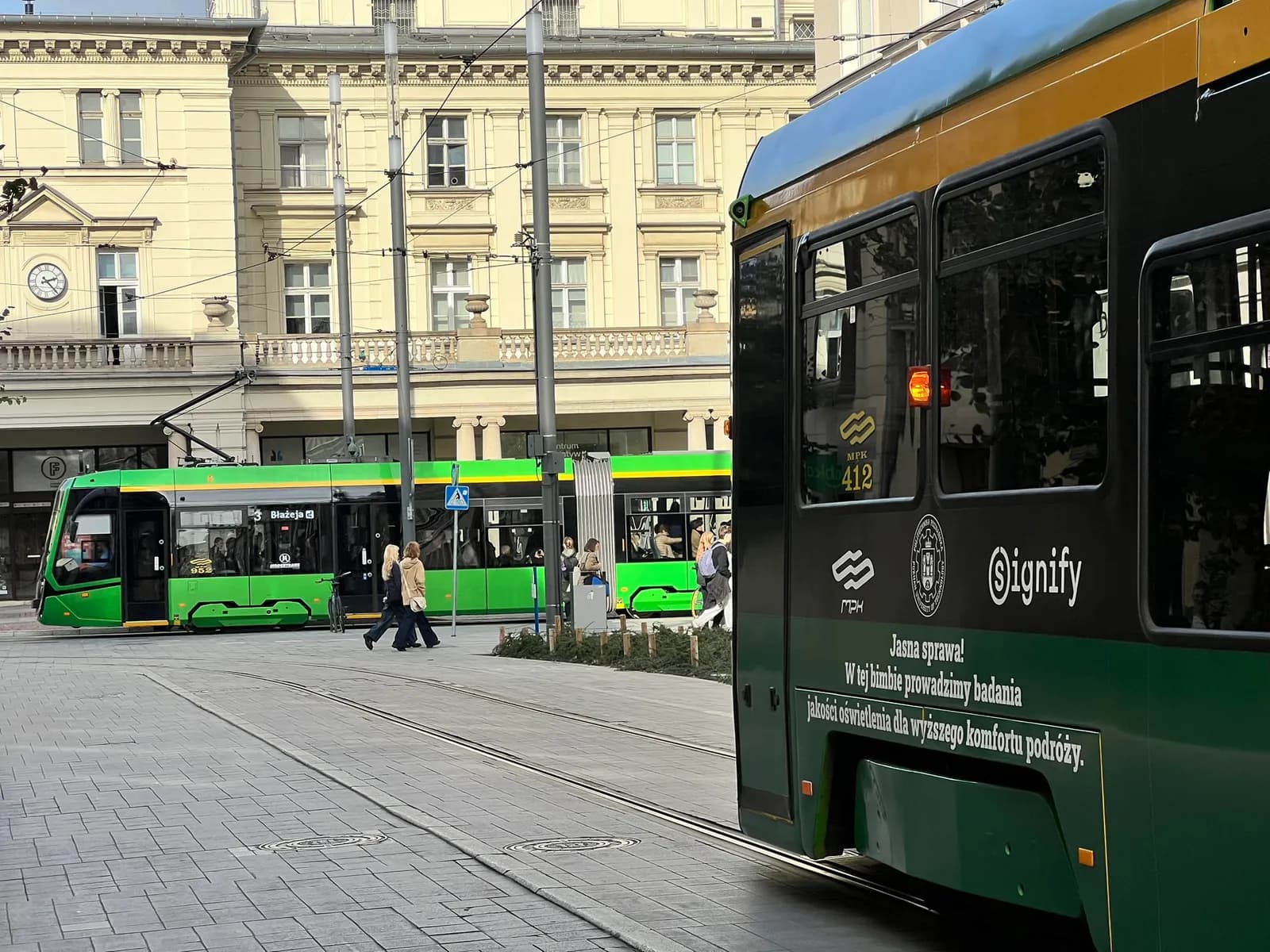
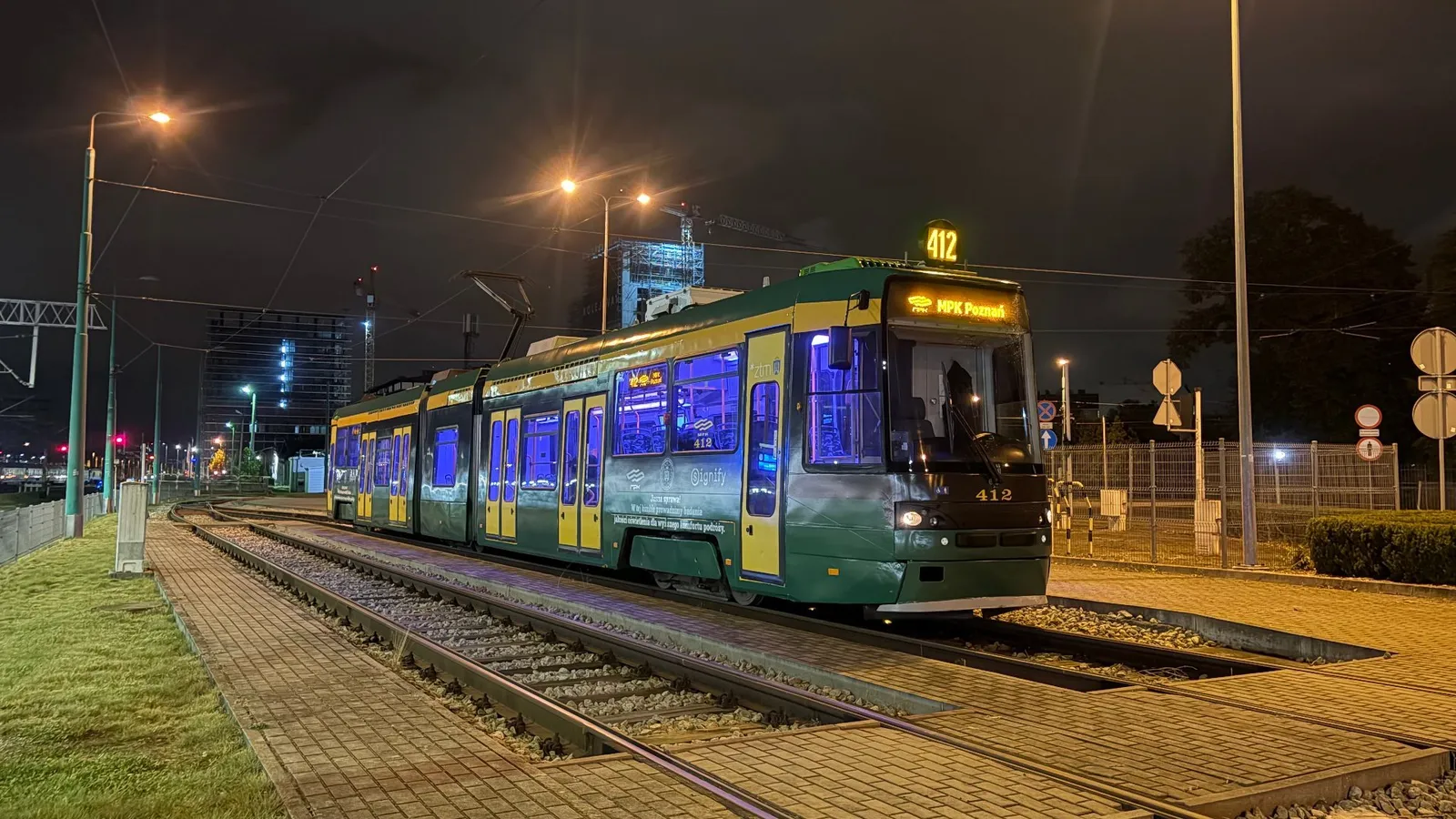
One of Poznań’s trams, Tatra number 412, is being used to test adaptive lighting designed to explore how light can influence passenger comfort. The project brings together Signify, Poznań University of Technology and MPK Poznań, with the specially equipped vehicle serving as a mobile research environment.
A tram journey through Poznań could become a little different depending on the time of day. One vehicle is now equipped with an adaptive lighting system designed to explore how light can influence passenger comfort, with researchers investigating its potential use in future public transport.
The project brings together lighting company Signify, Poznań University of Technology and the city's public transport operator, MPK Poznań. The specially equipped tram serves as a mobile research environment, allowing the partners to test different lighting conditions during real-world operations.
Rather than focusing solely on illumination, the initiative looks at how the atmosphere inside a tram might be adapted to passengers' needs throughout the day.
A tram becomes a mobile lighting laboratory
MPK Poznań has provided the vehicle, while Signify has supplied the lighting technology and researchers from Poznań University of Technology are responsible for conducting studies and analysing the results.
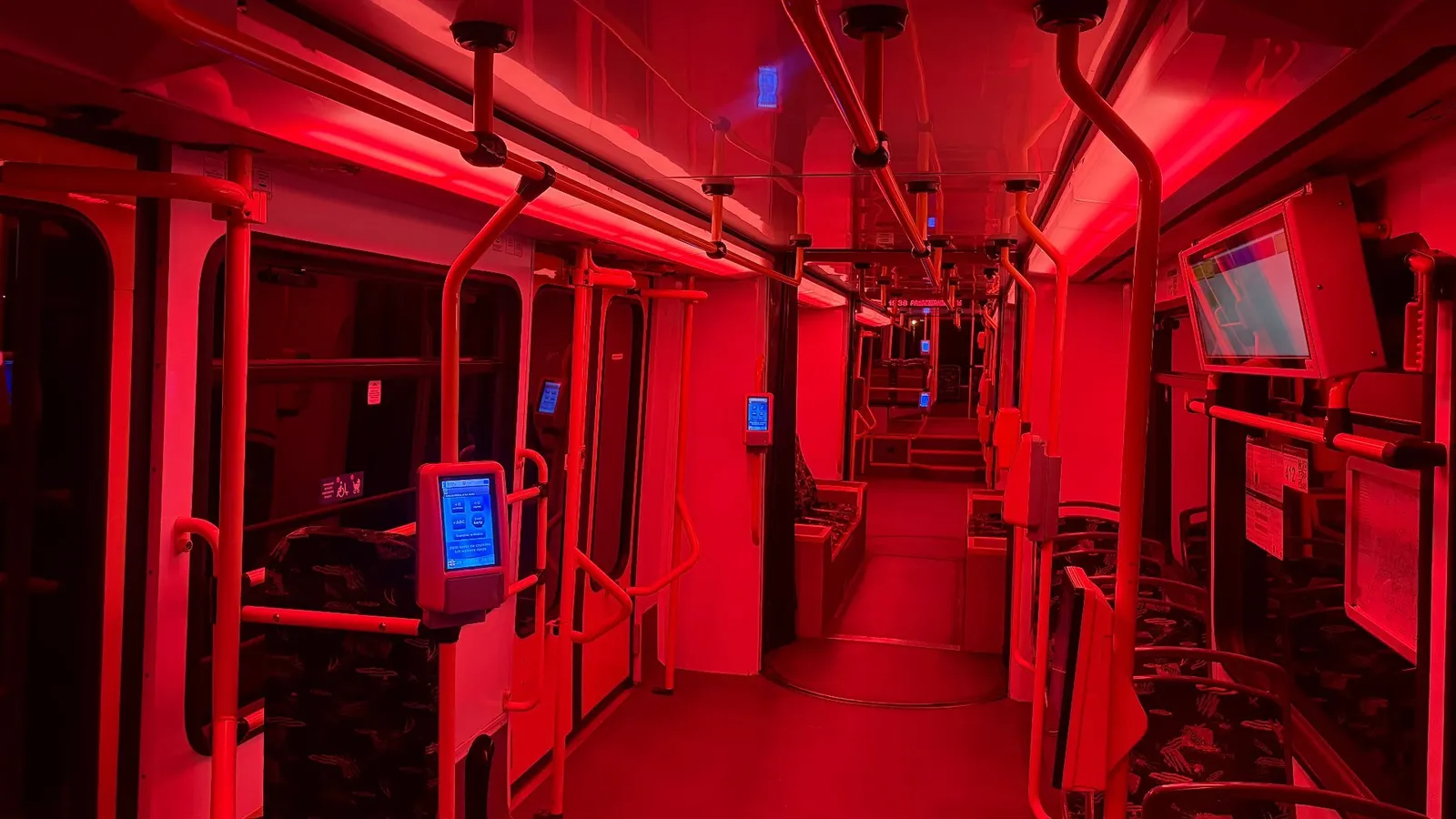
The system combines several technologies, each with a different role. Signify's BioUp Cyan Enhanced Dynamic modules are designed to support lighting conditions inspired by natural daylight and the human circadian rhythm. Premium Ambiance LEDs help create a more welcoming interior, while Philips Hue technology enables dynamic lighting effects.
The system can adjust its characteristics according to the time of day, allowing researchers to investigate different lighting scenarios in a working public transport environment.
Some effects are also planned around the tram's location. For example, the project envisages white and blue lighting near the stadium of Lech Poznań. These location-specific effects form part of the wider programme of tests.
The tram has also received markings identifying the three project partners, making the research initiative visible to passengers travelling around the city.
What could changing the light achieve?
Light influences how people perceive their surroundings, and its intensity and colour can affect the atmosphere of an indoor space. The research team wants to understand how these factors translate into the everyday experience of travelling by tram.
One area of interest is the relationship between lighting and the body's natural daily rhythm. Researchers will examine how adaptive lighting might affect passengers' perceived comfort and wellbeing at different times of the day.
The project also considers practical aspects of the passenger environment, including the perception of safety, visibility and accessibility for people with visual impairments.
Dr Julian Kominowski, the project's manager at Poznań University of Technology's Institute of Transport, said the work also includes sensors and algorithms designed specifically for the project, with energy efficiency among the objectives.
He described the initiative as part of the broader Smart City approach, combining improvements to the passenger environment with the use of technology in urban transport.
These are research aims rather than established outcomes. The partners intend to use the findings to develop technical recommendations for lighting systems that could be considered when designing future public transport vehicles.
What the partners say about the project
For MPK Poznań, the tram offers an opportunity to test new ideas without removing the research from the environment in which passengers actually travel.
Krzysztof Dostatni, President of the Management Board of MPK Poznań, said:
“One of Poznań’s trams will become a mobile laboratory where research will be conducted into the effects of light on travel comfort. This is an interesting example of cooperation in which a city transport operator’s fleet can be used to test solutions with the potential to improve the passenger experience in the future. We are pleased that this project will be carried out here in Poznań.”
Signify sees the project as a way to explore how lighting technology might contribute to a more comfortable journey, from the morning commute to the return trip home.
Rafał Kurzawa, R&D Group Leader at Signify, said:
“Light has a real impact on our wellbeing, concentration and comfort. At Signify, we have been developing solutions for years that support people's wellbeing in different spaces, from offices and schools to industrial facilities. This time, we have taken on the challenge of improving the comfort of people using public transport.
“I believe that modern lighting can help people start the day well, improve their mood during gloomy weather, and also encourage calm and relaxation on the journey home after an intense day. We want to make the best use of the possibilities offered by today's human-centric lighting technology.
“Working with Poznań University of Technology and MPK Poznań will allow us to find out how passengers respond to this lighting and which features they rate most highly. We are pleased that together we can carry out a project that combines scientific knowledge, business experience and the needs of city residents.”
The university's involvement centres on research in actual operating conditions, which can provide insight into how passengers experience the system during ordinary journeys.
Dr hab. Arkadiusz Ptak, Professor at Poznań University of Technology and Vice-Rector for Development and Cooperation with the Economy, said:
“Thanks to our cooperation with Signify and MPK Poznań, we will be able to conduct research under real tram operating conditions. This will help us better understand the needs of public transport users. Our aim is to develop recommendations that could be used when designing future lighting systems for public transport.”
What this could mean for future public transport in Poznań
For passengers, the most visible part of the project may be the changing appearance of the tram's interior. For the researchers, the more important question is what can be learned from those changes.
The findings could help establish technical guidelines for lighting in future public transport vehicles, including how systems respond to the time of day, how different lighting settings are perceived and how lighting design can accommodate a wider range of passenger needs.
The research also brings together three areas of expertise: Signify's lighting technology, the university's research capabilities and MPK Poznań's experience of operating public transport across the city.
For a city where trams are part of everyday life, the project offers a practical way to investigate whether a detail as familiar as interior lighting can make public transport more comfortable and accessible.
See more: Berdychowskie Bridges Win Poznań’s Quadro Architecture Award