One of Poznań’s most distinctive historic fountains is looking fresh again. The Dolphin Fountain at the junction of Aleje Marcinkowskiego and ul. 23 Lutego has undergone a comprehensive restoration, bringing back details that had gradually disappeared through earlier repairs.
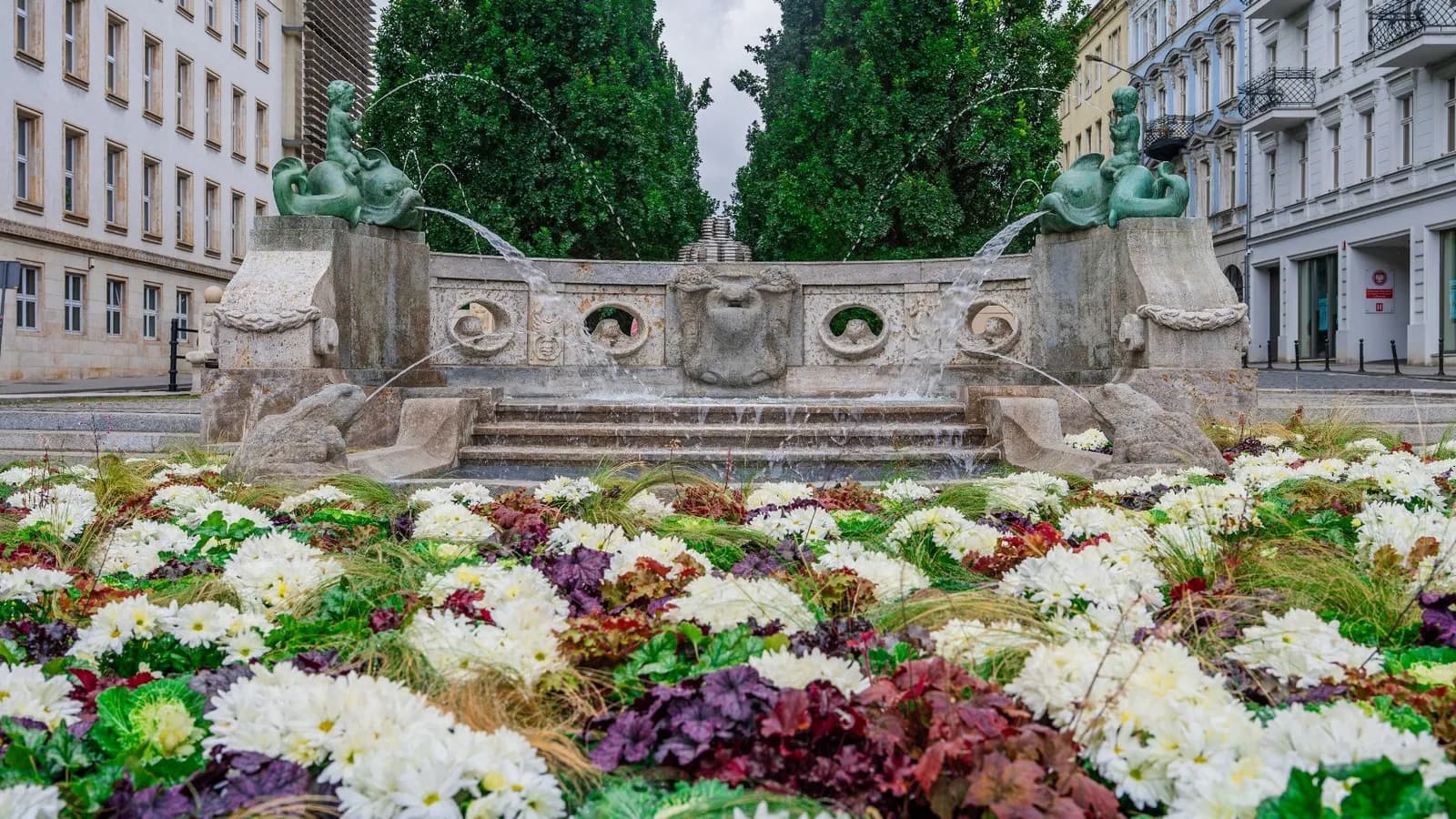
The fountain, also known as Studzienka Kronthala, dates from 1909 and has stood on Aleje Marcinkowskiego for more than a century. Its restoration has focused not only on how the monument looks, but also on returning its water features and materials as close as possible to their original form.
Back to the original stone
The fountain was originally constructed from shell limestone. Over the years, however, some sections were repaired using concrete and artificial stone.
The latest work has reversed some of those changes. Newly restored sections, including the steps between the basins and parts of the balustrade, have been made using carefully selected shell limestone to match the historic material.
The existing stonework was also conserved, with damaged areas and joints repaired as part of the process.
Particular attention was given to the bronze sculptures of children riding dolphins. The sculptures were cleaned, conservation work was carried out and damaged areas were repaired before the metalwork was protected.
Water returns to the shell details
One of the less obvious changes is also one of the most atmospheric.
For some time, water had no longer been flowing from the shell-shaped elements incorporated into the balustrade. During the restoration, new openings and nozzles were installed, allowing these features to become part of the fountain’s water display once again.
Behind the scenes, the entire technical system has also been modernised. The pumps, filtration, water-treatment equipment, electrical installations and controls have all been upgraded.
Water is now disinfected using UV-C technology rather than chlorine or other chemical agents. This was particularly important for protecting the limestone from substances that could have an adverse effect on the historic material. The new system is also designed to reduce the build-up of mineral deposits.
A different view after dark
The restoration has been completed with warm LED lighting, highlighting the fountain’s architectural and sculptural details after sunset.
That means the fountain can now be appreciated differently while walking along Aleje Marcinkowskiego in the evening as well as during the day.
All conservation work was carried out under the supervision of heritage conservation authorities.
The fountain was commissioned in 1909 by Poznań businessman and social benefactor Gustaw Kronthal. Its design was created by Berlin sculptor Hugo Lederer.
More than a century later, the restored monument once again forms part of the streetscape of Aleje Marcinkowskiego, close to Plac Wolności and the northern edge of Poznań’s historic centre.
See more: New Poznań Musical Theatre Rises Above Święty Marcin
Source and image credit: poznan.pl