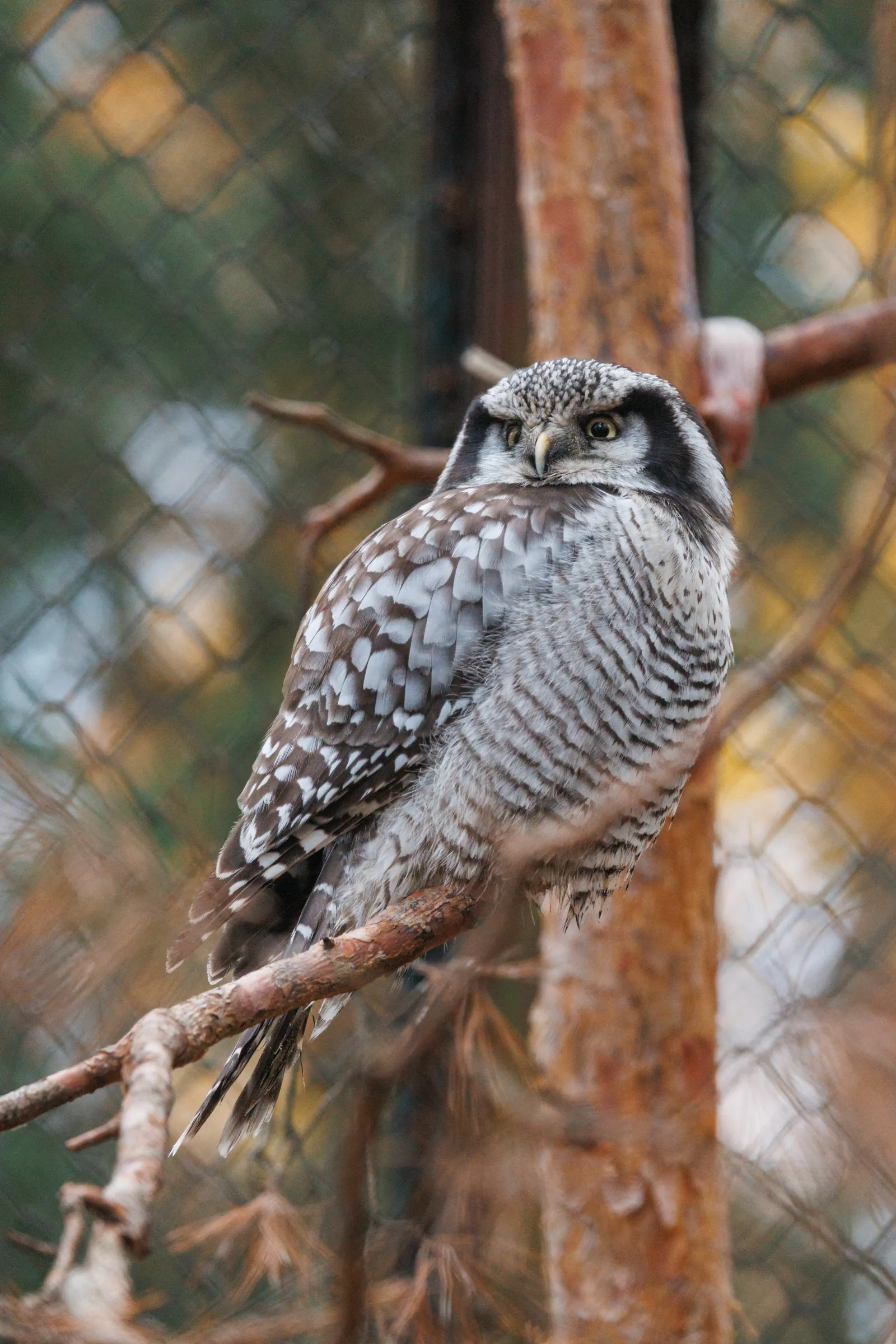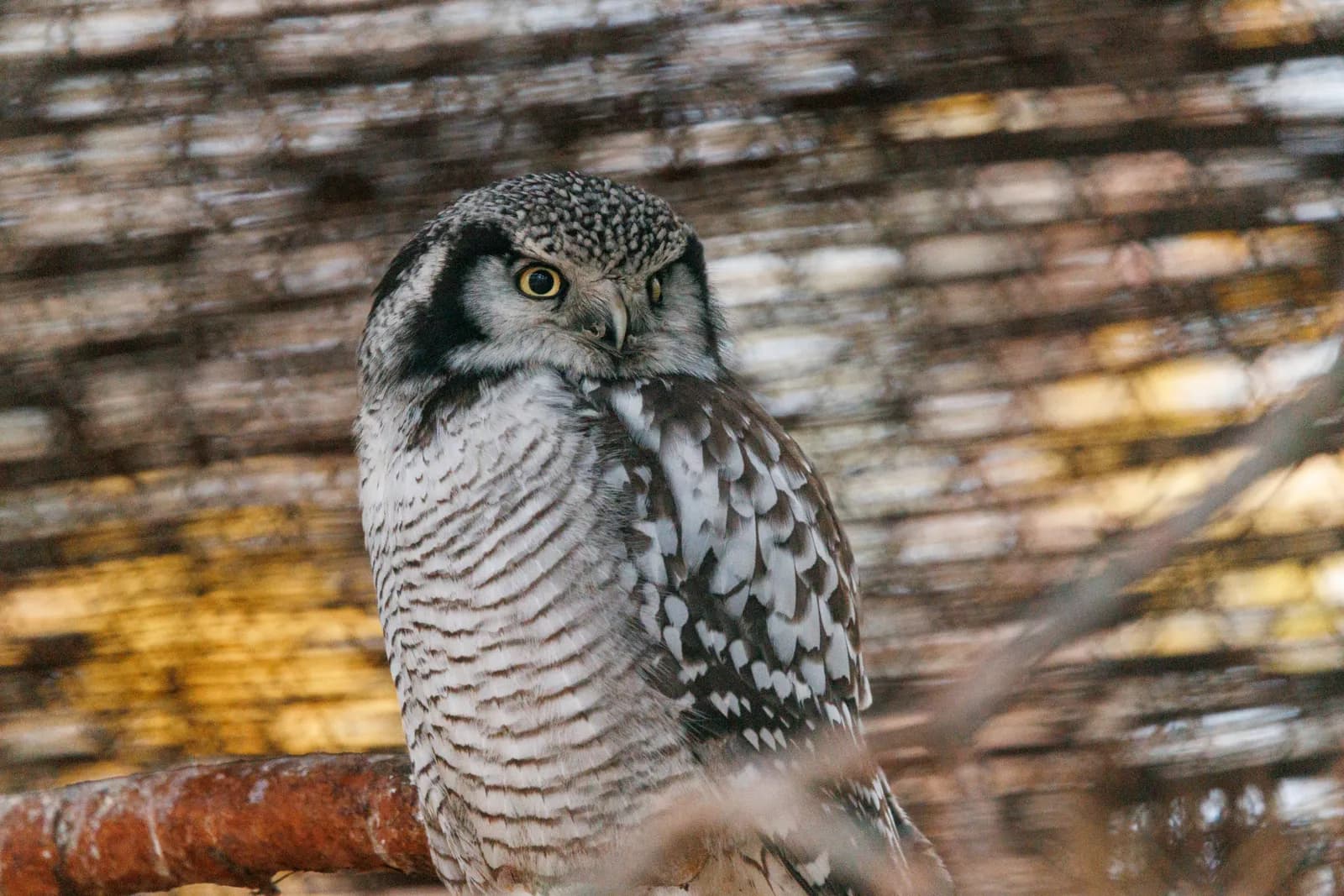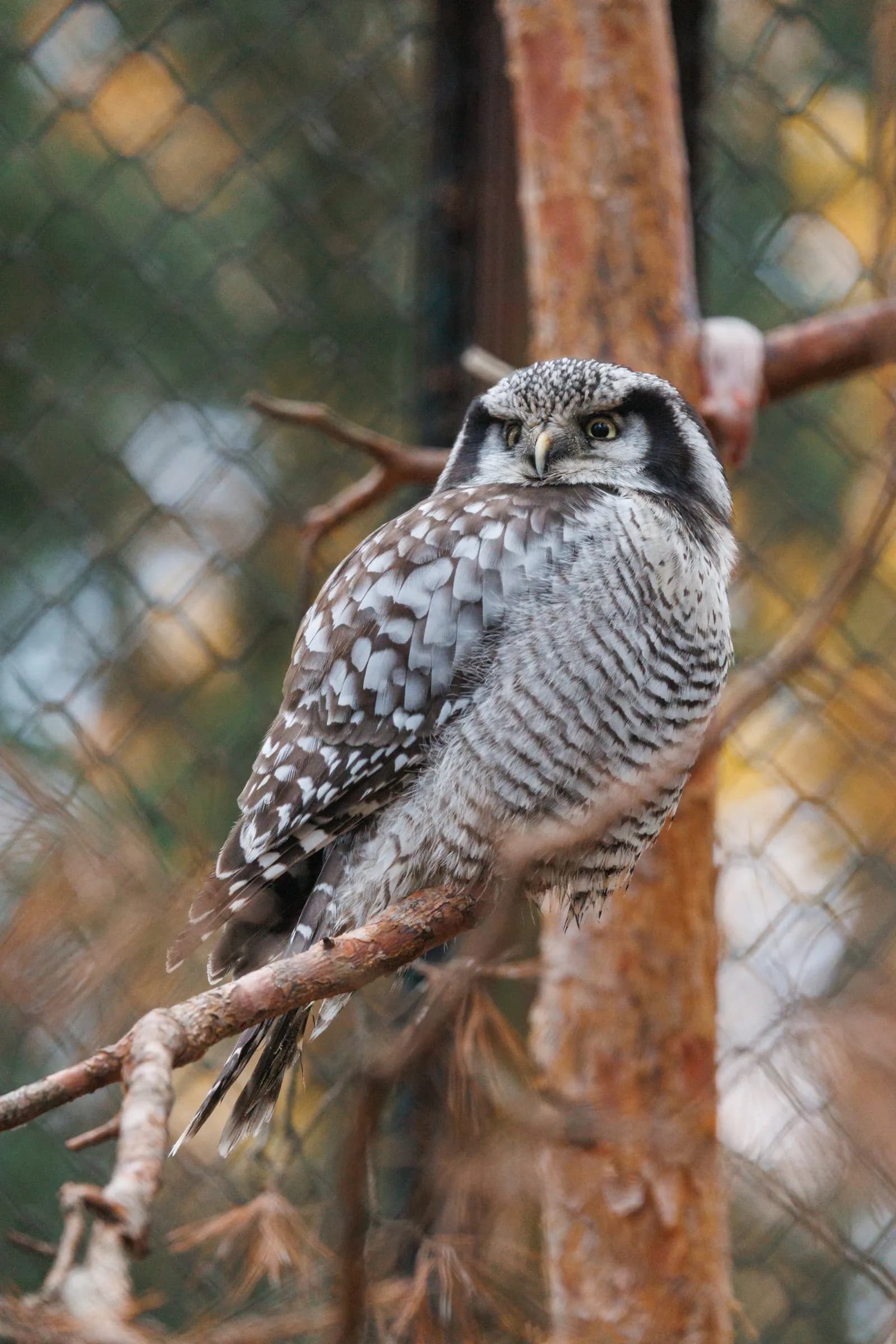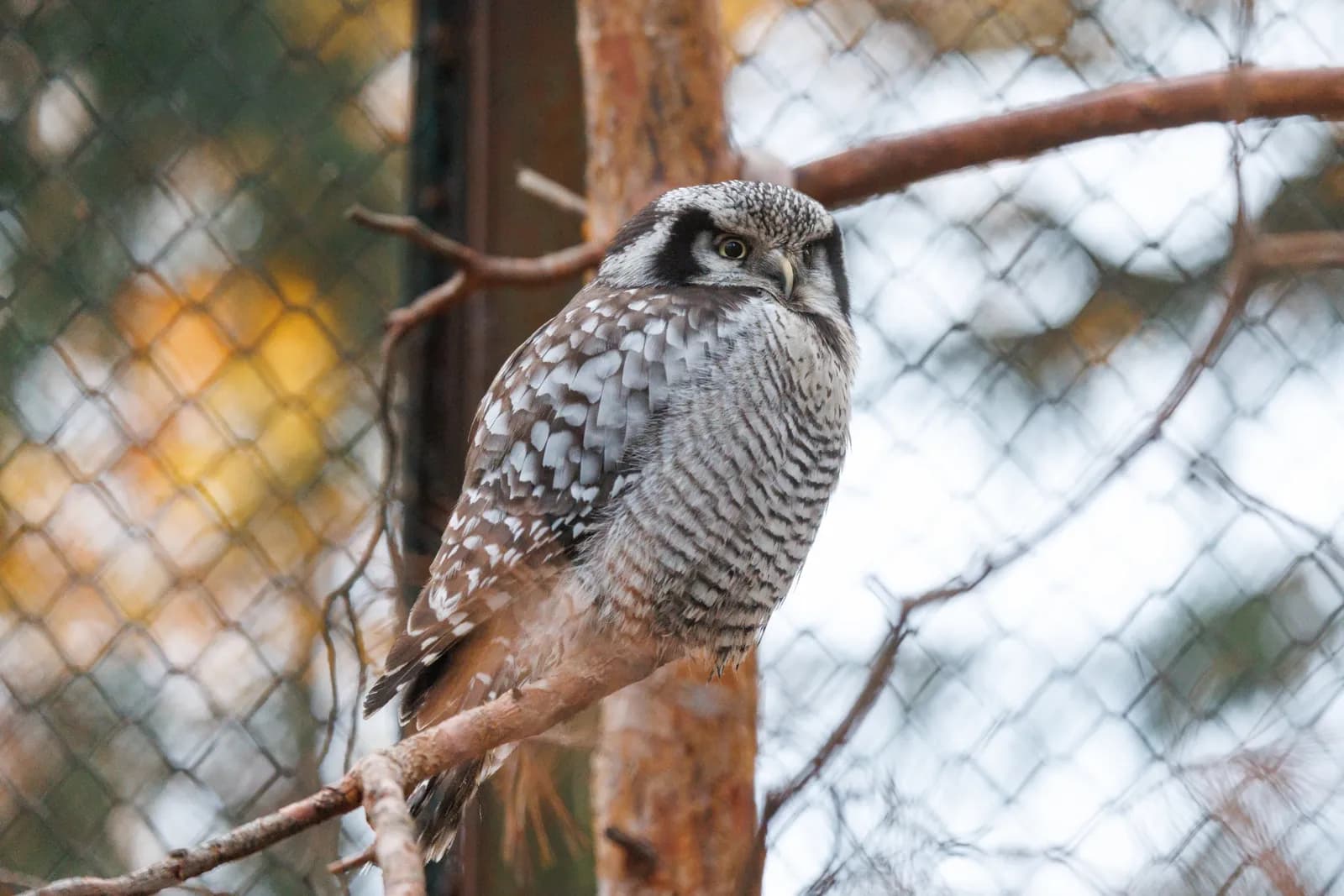
The Zoo informs that they are hoping that the young owl will form a pair with the slightly older female who also arrived from a Czech Zoo Hluboká.
The male hatched a little over seven months ago and the female is a year older than him. According to various sources, these owls can live from over ten years to as many as sixteen years.
In the wild northern hawk-owls can be found in forests with clearings and peat bogs in Scandinavia, as well as the northern regions of North America and Asia. They inhabit areas where summer days are long, thus they often hunt during the day. Their feathers are stiffer than those of other owls, so they are not as quiet in flight, but they fly much faster.
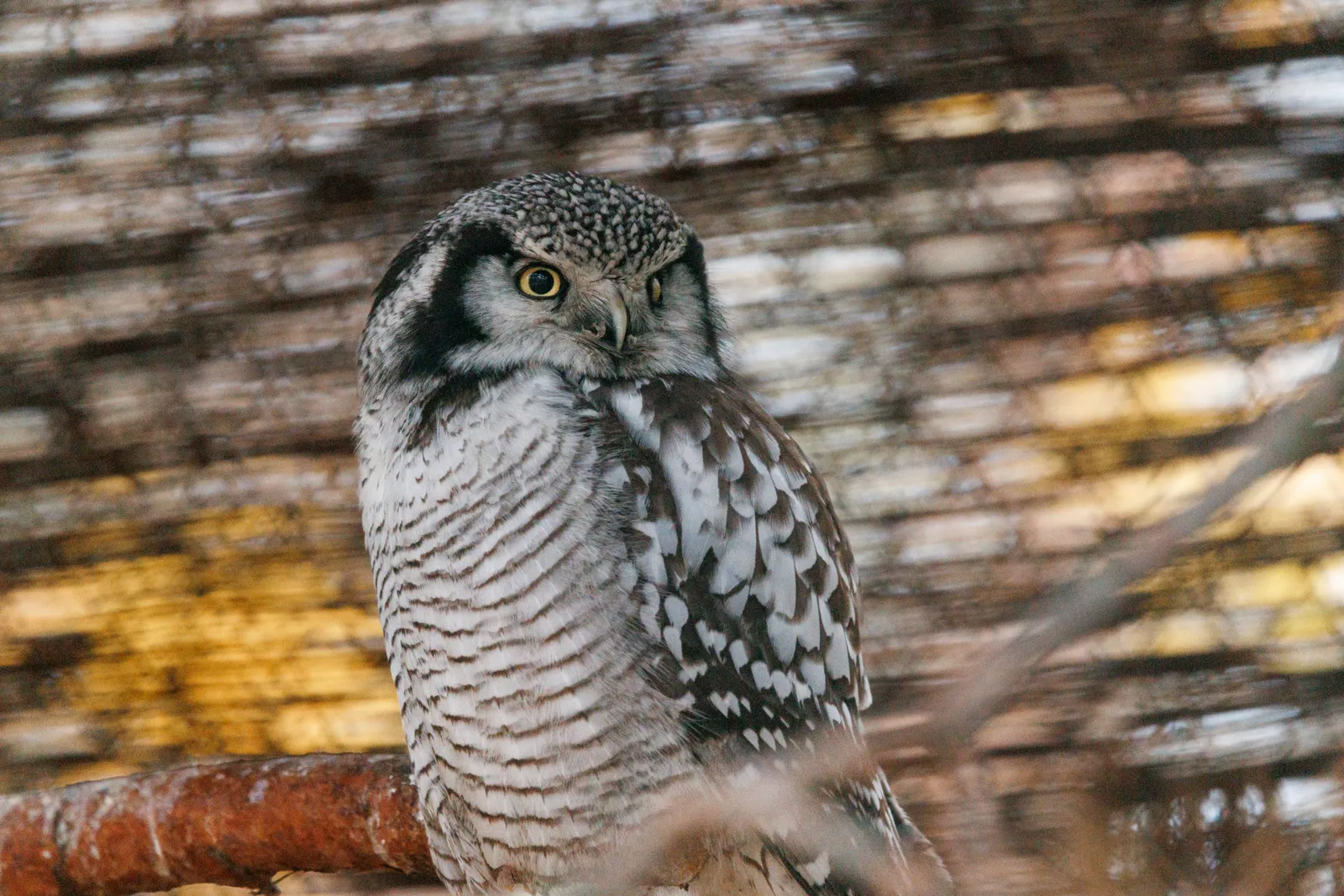
Their body shape is also unusual for an owl - their head is slightly smaller than that of other species, their wings are shorter and the tail is longer. With a slightly poorer eyesight, no binoculars and a little imagination, in flight, their silhouette might resemble other birds of prey such as sparrowhawks. Also, unlike most of their relatives, northern hawk-owls rely primarily on sight when hunting, which is supported by their anatomy. The ear openings in their skull are arranged symmetrically, while asymmetry of these openings in the other species helps them to construct a three-dimensional, auditory picture of the world. This shows that the northern hawk-owls rely primarily on sight when hunting, with hearing playing a secondary role.
Northern hawk-owls can be spotted in the wild in Poland as well, however they very rarely fly over from Scandinavia during cool autumns and snowy winters, they are not a breeding species here.