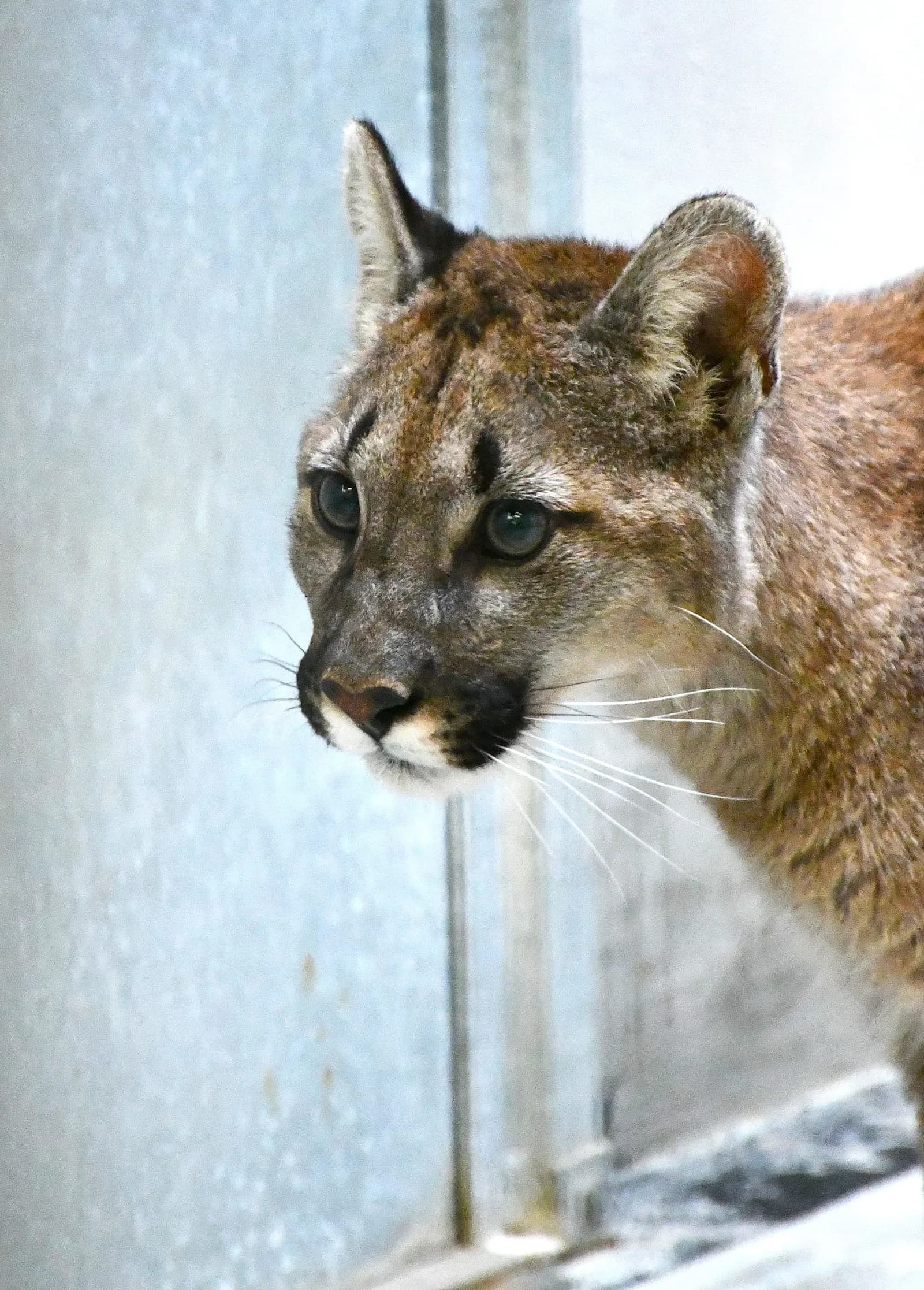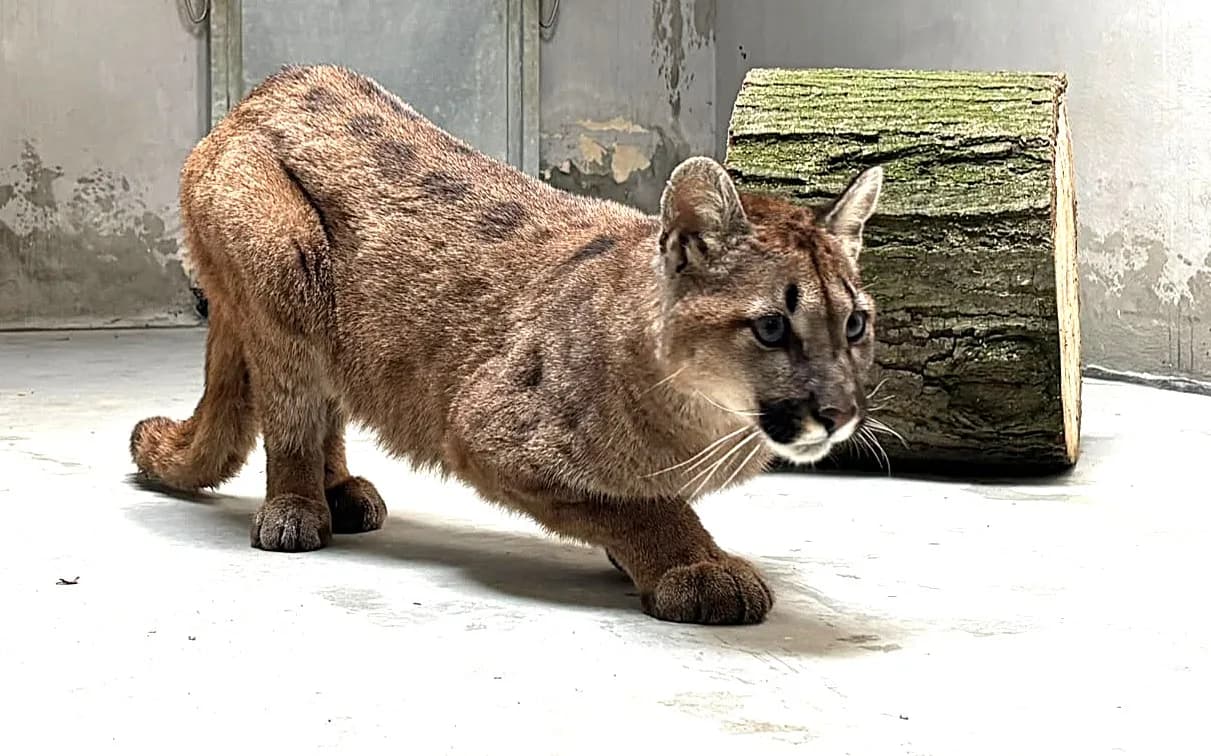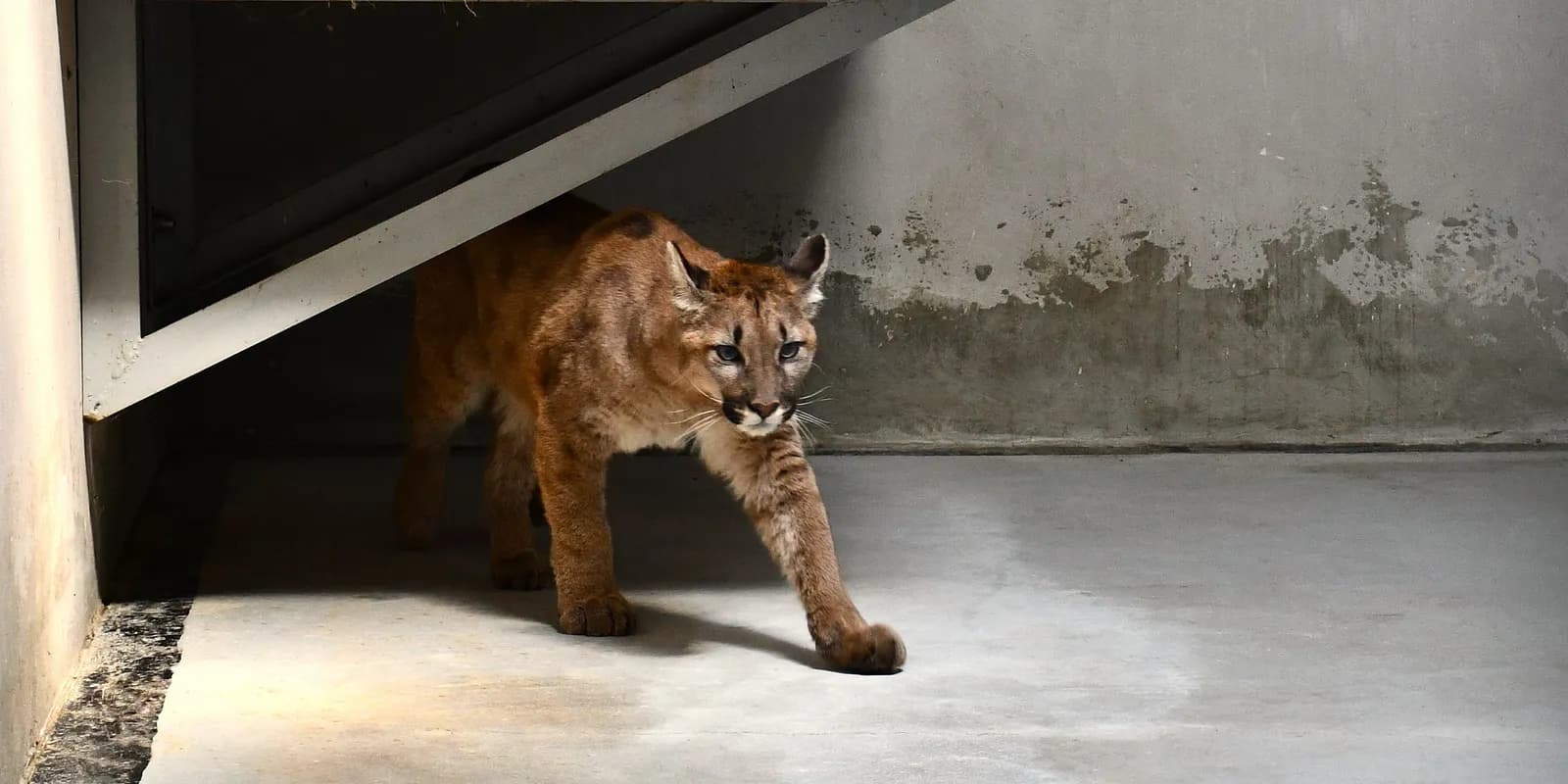
A young puma rescued in the forests near Polanów in West Pomerania has left Poznań after completing her quarantine at the city’s New Zoo.
The animal, which was captured on 12 July in the Polanów area, was temporarily transferred by Poland’s Centralny Azyl dla Zwierząt to Poznań Zoo. Following veterinary examinations and the required quarantine period, she has now been moved to Natuurhulpcentrum, a wildlife and exotic animal rehabilitation centre in Oudsbergen, Belgium.
Her stay in Poznań was always intended to be temporary. Neither the Centralny Azyl dla Zwierząt nor Poznań Zoo had the facilities needed to provide a suitable long-term enclosure for a puma.
From the forests near Polanów to Poznań
Both hunters and residents had seen the young puma in the woodland around Polanów. A number of institutions became involved in the effort to safely capture the animal after reports suggested that she was showing little fear of people and was approaching residential areas.
Pumas are native to the Americas and are not a species found naturally in the Polish wild. When such animals appear in Poland, they are generally thought to have escaped from, or been released by, private owners or illegal breeders.
That created a difficult situation for everyone involved. A puma is a large wild predator, and a young animal accustomed to human environments can present particular challenges when it is outside its natural habitat.
The priority was therefore to capture her without causing harm and move her to a place equipped to care for an exotic wild animal.
A temporary home at Poznań's New Zoo
According to Remigiusz Koziński of Poznań Zoo the animal was estimated to have been around six months old when she arrived. The characteristic spots on her coat, which are particularly visible in young pumas, remain clearly noticeable. By the time she left Poznań, she was approximately seven to eight months old.
During her time at the zoo, she underwent the necessary examinations and completed quarantine. The zoo's role was not intended to become a permanent one, however.
As Koziński explained,
Poznań Zoo did not have suitable facilities for keeping the puma over the longer term, that is why it was necessary to find her an appropriate ‘home’.
A new destination in Belgium
That search resulted in a place at Natuurhulpcentrum in Oudsbergen, Belgium.
The centre specialises in rescuing and rehabilitating non-domesticated animals, including both European wildlife and exotic species. It provides care for animals that cannot safely return to the circumstances in which they were found and works with a range of wild and exotic species.
The transfer also highlights the role of Poland's Centralny Azyl dla Zwierząt (Central Asylum for Animals), whose remit includes the professional care and emergency protection of non-domesticated animals, illegally transported animals, animals kept in poor conditions and animals that may pose a danger.
The puma's stay in Poznań was one example of that wider cooperation. The Centralny Azyl dla Zwierząt arranged the temporary placement, while Poznań Zoo provided the quarantine facilities and veterinary care before a suitable long-term destination could be found.
The end of the Poznań chapter
For residents who followed the unusual story of a puma moving through the West Pomeranian countryside, the latest development brings the Polish part of the rescue to an end.
The big cat is now in the care of a specialist wildlife centre in Belgium, rather than facing life in an environment for which neither she nor the people around her were prepared.
For Poznań Zoo, meanwhile, the case demonstrates the practical role that zoological institutions can play in emergency wildlife interventions, even when they cannot provide a permanent home for a rescued animal.
The puma's journey began in the forests around Polanów, continued through quarantine in Poznań and now takes her to a specialist rehabilitation centre in Oudsbergen.
What to do if you see a puma in the wild
With the season for mushroom picking starting, it is vital to know what to do in case you spot such an animal in the forests.
If you encounter a puma in Poland, do not approach it, try to feed it or attempt to capture it yourself. Keep your distance and move away calmly, without cornering the animal or blocking its escape route. Remember to keep eye contact with the animal. Pumas are predators which attack by surprise; thus looking away or turning your back to the animal might trigger their hunting instinct. By looking them in the eye, it gives them a clear signal that you see them and you are not helpless prey.
If you are with children or pets, bring them indoors or keep them close to you. Do not follow the animal to get a better photograph.
A sighting of a large wild animal in an unusual location should be reported to the appropriate local services such as the City Guard (Straż Miejska) so that trained personnel can assess the situation and decide what action is needed. If the animal appears to pose an immediate threat to people, contact the emergency services.
When reporting a sighting, provide as much useful information as possible, including:
When and where you saw the animal, preferably with a precise location
The direction in which it was travelling
A description of the animal and its behaviour
Whether it appeared injured or distressed
Whether other people or animals were nearby
A photograph or video, only if it can be taken safely from a distance
Most importantly, do not try to deal with a puma yourself. The capture of the animal near Polanów involved cooperation between several institutions precisely because handling a wild predator requires specialist knowledge and equipment.
For anyone who encounters an unfamiliar large animal in the countryside around Poznań or elsewhere in Poland, keeping a safe distance and reporting the sighting is the safest approach for both people and the animal.
See more: Wild Boars in Poznań and what to do when you see one
Source and image credit: Ogród Zoologiczny w Poznaniu, press release