Discover the fascinating history of Zamek Cesarski in Poznań, from its imperial beginnings under Wilhelm II to its role today as Centrum Kultury Zamek.
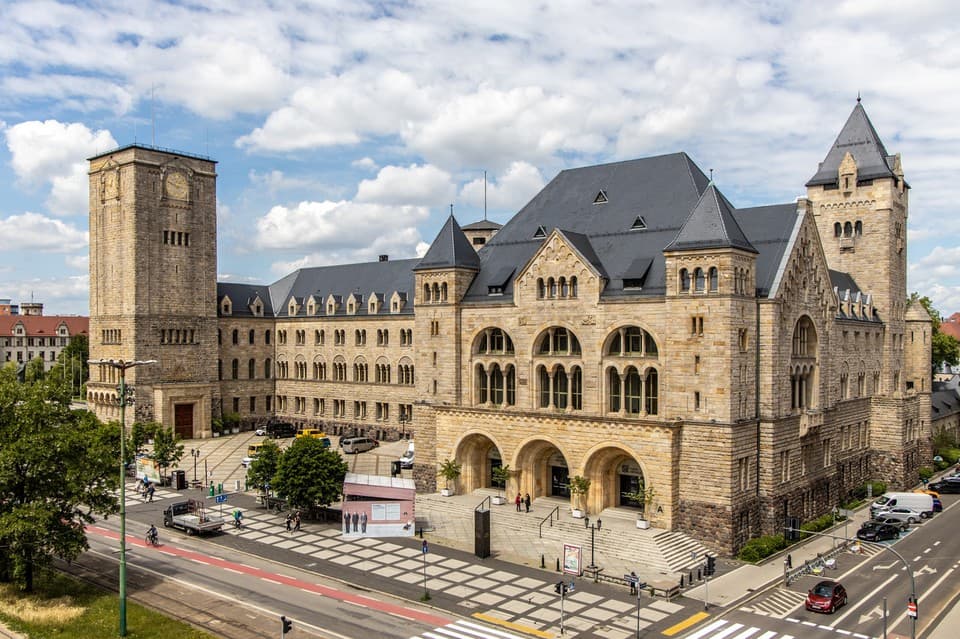
Standing at the heart of Poznań’s Imperial District, Zamek Cesarski (Imperial Castle) is one of the city’s most recognisable and thought-provoking landmarks.
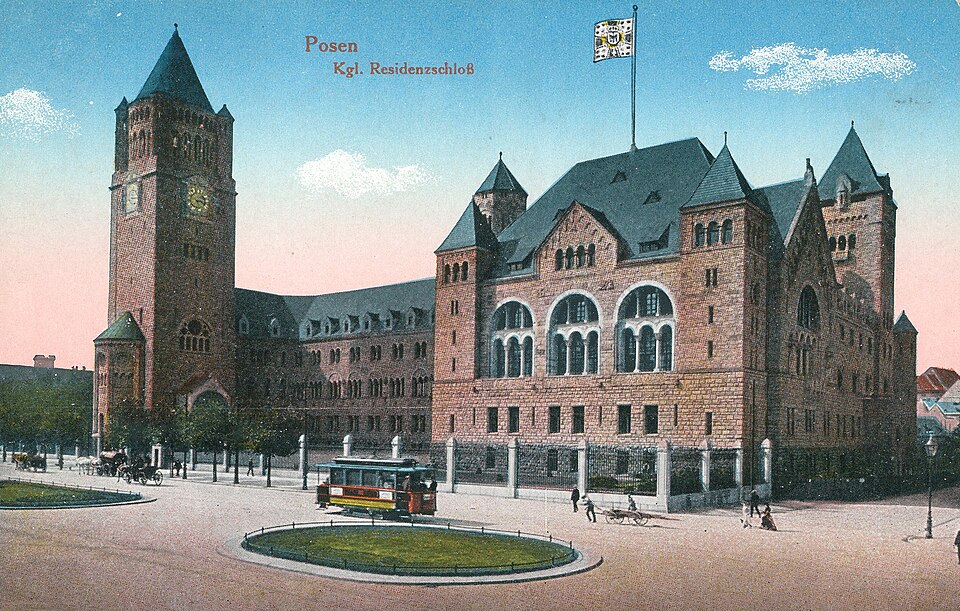
At first glance, its towers, stone walls and monumental entrance suggest a medieval fortress. In reality, this is one of Europe’s youngest castles, built at the beginning of the 20th century as a symbol of imperial ambition.
Over more than a century, the building has witnessed dramatic changes in Poznań’s history. It was created as a residence for a German emperor, became a Polish state building after independence, was transformed during Nazi occupation, and later became a major cultural centre.
Today, as Centrum Kultury Zamek (Imperial Castle Culture Centre), it is no longer a symbol of power but a place for exhibitions, concerts, cinema, theatre and public discussion.
For locals and visitors, Zamek remains one of the best places to understand the complicated history that shaped modern Poznań.
A Castle Built to Impress
The construction of Zamek Cesarski began in 1905, when Poznań was part of the German Empire. The project was commissioned by Emperor Wilhelm II as part of a wider plan to strengthen German influence in the city.
The building was designed by architect Franz Heinrich Schwechten, who created a monumental Neo-Romanesque structure inspired by medieval imperial residences.
Unlike the historic castles found elsewhere in Poland, Zamek was never built for defence. Its purpose was symbolic. The architecture was intended to communicate authority, prestige and political power.
The castle became the centrepiece of the Imperial District, an ambitious urban development project that introduced grand public buildings and reshaped this part of Poznań.
The surrounding area remains one of the most architecturally significant parts of the city, linking historic buildings, green spaces and important cultural institutions.
A Royal Residence Without a Royal Future
Wilhelm II officially received the keys to the castle during his visit to Poznań in 1910.
Although designed as an imperial residence, the emperor spent relatively little time there. The building’s political meaning proved more important than its role as a home.
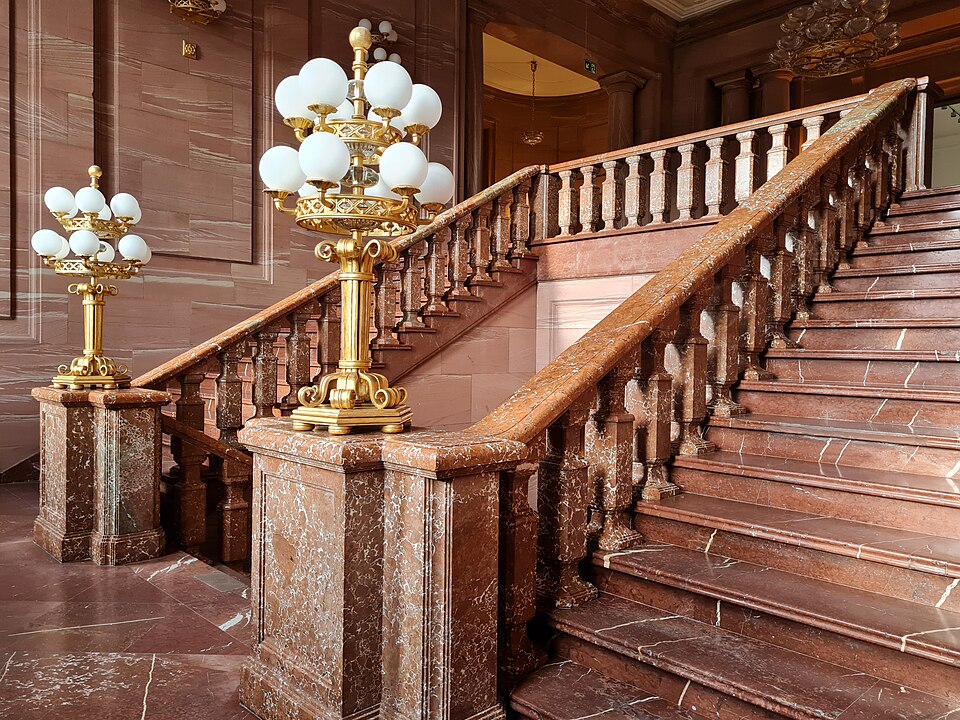
Inside were luxurious apartments, ceremonial rooms and a grand throne room designed to impress visitors. The interiors reflected the ambitions of the German Empire, combining historical references with modern construction.
One of the interesting details about Zamek is that it was built during a period when European powers used architecture as a way of expressing national identity and political influence.
From Imperial Symbol to Polish Institution
The history of Zamek changed dramatically after Poland regained independence in 1918.
Following the Greater Poland Uprising and the incorporation of Poznań into the Second Polish Republic, the former imperial residence became a Polish state building.
The castle was adapted for new purposes, including use by public institutions and the University of Poznań.
A building created to represent foreign rule was gradually transformed into part of the civic life of a newly independent city.
This change reflects one of the recurring themes in Poznań’s history: adapting existing spaces and giving them new meaning.
War, Occupation and Reconstruction
The Second World War brought another dramatic chapter.
During the Nazi occupation of Poznań, Zamek was altered extensively. German authorities planned to transform it into a residence for Adolf Hitler, and many elements of the interior were redesigned to match Nazi ideas about power and architecture.
Hitler never actually lived in the building, but the wartime changes significantly affected its original appearance.
After 1945, Poznań faced the challenge of deciding what to do with a building that carried such complicated historical associations.
A New Role as a Cultural Centre
In the post-war years, Zamek entered another phase of its history.
The building became known as Pałac Kultury (Palace of Culture) during the communist period before eventually developing into the cultural institution known today as Centrum Kultury Zamek.
Rather than preserving the building only as a historical monument, Poznań gave it a new public purpose.
Today, visitors come to Zamek for:
- Contemporary art exhibitions
- Film screenings
- Concerts and performances
- Educational programmes
- Festivals and cultural events
- Community activities
The building’s transformation from imperial residence to open cultural space is one of the most interesting aspects of its story.
Interesting Facts About Zamek Cesarski
It is not actually a medieval castle
Despite its name and appearance, Zamek Cesarski was built between 1905 and 1910. Its castle-like design was intended to create a connection with Europe’s medieval imperial traditions.
It was one of the most expensive buildings in Poznań
The project required significant investment and was designed as a statement building for the German Empire.
Wilhelm II influenced the design
The emperor took a personal interest in the project and wanted the building to reflect imperial prestige.
It survived several political eras
Few buildings in Poznań have experienced such different roles:
- Imperial residence under German rule
- Polish state institution
- Nazi occupation building
- Communist cultural centre
- Modern arts venue
It remains a place of debate and memory
Zamek represents different things to different generations. For some, it is a reminder of the city’s difficult past. For others, it demonstrates Poznań’s ability to transform historic spaces and create something new.
Why Zamek Matters to Poznań Today
For many visitors, Zamek Cesarski is simply one of the city’s most impressive buildings. For residents, it represents something deeper.
Its story reflects Poznań itself: a city shaped by changing borders, different cultures and periods of political transformation.
The castle’s greatest achievement may be that it has moved beyond its original purpose. A building once created to demonstrate imperial authority now belongs to the public.
Today, Zamek is a place where people meet, create, learn and experience culture, making it one of the most important landmarks in modern Poznań.
A Building That Reflects Poznań’s Story
Zamek Cesarski is not just an architectural attraction. It is a living record of Poznań’s 20th-century history and a reminder that buildings can change meaning over time.
From imperial ambition to cultural openness, its journey mirrors the story of the city itself.
A visit to Zamek offers more than impressive architecture. It offers a chance to understand the events, identities and ideas that shaped Poznań.
Click here for more interesting history in Poznań!