When someone collapses at home, in a park or on a busy Poznań street, knowing what to do in the first few minutes can make a crucial difference. Yet for many people, the hardest part is simply having the confidence to start.
A new series of free practical first aid workshops is giving Poznań residents the chance to practise those skills before they are ever needed.
The sessions are being organised by Poznań-based Fundacja Re.akcja together with the Centrum Inicjatyw Rodzinnych (Family Initiatives Centre), part of Poznańskie Centrum Świadczeń, at ul. Franciszka Ratajczaka 44.
The project is funded by the City of Poznań and is designed around practice rather than simply listening to a presentation.
What happens during the workshops?
The three-hour sessions focus on situations in which a bystander may need to act quickly.
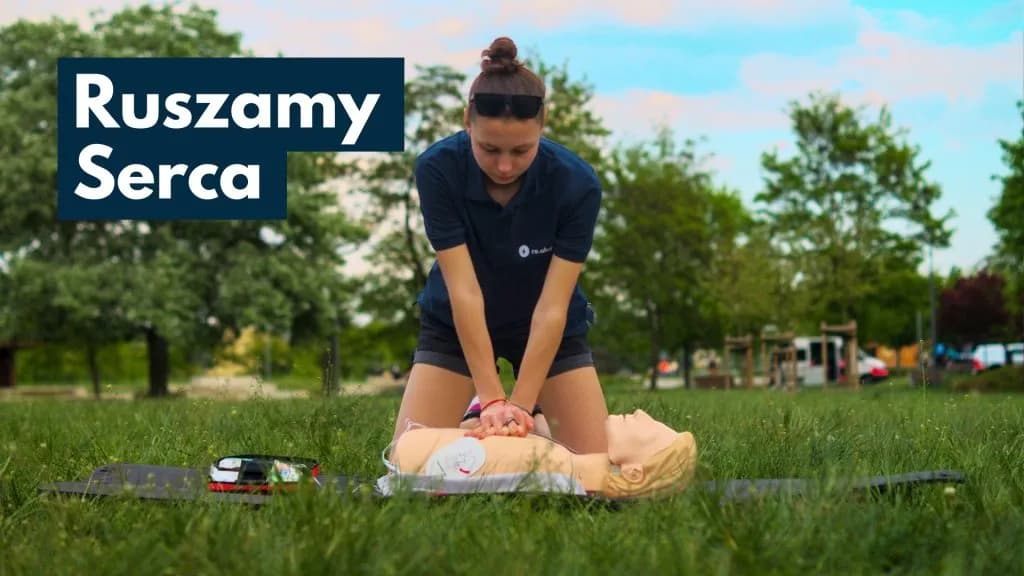
Participants learn how to assess an injured or unconscious person, call for help and begin resuscitation. The programme also covers CPR for both adults and children, as well as the use of an automated external defibrillator, commonly known as an AED.
One of the useful features of the training is the equipment used during the exercises. Participants work with interactive mannequins that provide feedback on their technique, including whether chest compressions are being performed correctly.
That gives people an opportunity to make mistakes, adjust their technique and repeat the exercise in a controlled setting.
For anyone who has ever wondered whether they would actually know what to do in an emergency, that practical experience can be considerably more useful than simply reading instructions.
The first few minutes can be critical
Cardiac arrest can happen anywhere without warning, including at home. According to figures cited by the European Resuscitation Council, around 70 per cent of out-of-hospital cardiac arrests occur at home.
The same source has highlighted the importance of bystander intervention. When somebody is in cardiac arrest, the person who is already there is often the first one able to begin the chain of survival.
The current 2025 European Resuscitation Council guidelines emphasise early recognition, calling for emergency help, starting CPR and using an AED as soon as one is available.
For people without previous training, fear can be a significant barrier.
As Fundacja re.akcja instructor Aleksandra Bugaj explains:
Lack of knowledge and fear of making the situation worse are the most common reasons why people in Poland are afraid to start resuscitation. However, it is precisely the time between the cardiac arrest and the start of chest compressions that can prove fatal. That is why, during our sessions, we teach the basics and simple procedures that can save a life.
The workshops are intended to make that first step less intimidating by allowing participants to practise it repeatedly.
No previous experience with an AED needed
AEDs can still make people nervous. The idea of using a defibrillator on someone who has collapsed may sound like something that should only be attempted by a medical professional.
In reality, modern AEDs are designed to guide the person using them. The device analyses the situation and provides instructions to the rescuer.
The workshops give participants the chance to become familiar with the process in a safe environment, including understanding when an AED should be used and how to follow its instructions.
Remaining course dates
The current remainin workshop dates at Centrum Inicjatyw Rodzinnych:
22 September
28 September
9 October
27 October
30 October
Each session is free of charge, but places are limited because of the practical nature of the training.
Advance registration is required through Fundacja re.akcja's website.
A useful skill for families, neighbours and colleagues
First aid training is often associated with workplaces, schools or professional qualifications. These workshops take a different approach by making the training accessible to ordinary residents.
That has particular relevance for families. A medical emergency does not necessarily happen somewhere with trained staff nearby. It can happen while someone is cooking dinner, playing with their children or visiting a neighbour.
Being able to recognise an emergency, call for professional help and begin CPR while waiting for the emergency services is a skill that can be useful to anyone.
For Poznań, initiatives such as this also form part of a broader effort to build everyday awareness of public safety. Fundacja re.akcja combines first aid education with work on AED access and cyber safety, while the Centrum Inicjatyw Rodzinnych provides a familiar local setting for residents and families.
For international residents of the city, practical community training can also be a useful way to become more familiar with emergency procedures in Poland and to gain confidence in responding when help is needed.
See more: Poznań Volunteer Coordinator Contest Enters Its Final Days
Source and image credit: Fundacja re.akcja