RestaurantWeek® continues in Poznań until 25th November, inviting diners to explore some of the city's restaurants through specially created festival menus. As part of our media patronage of the event, we have been visiting participating venues and speaking to the people behind their kitchens.
Our latest stop was Posto, a Michelin Guide 2026 restaurant in Jeżyce, where French and Polish culinary traditions meet seasonal ingredients, thoughtful sourcing and a clear commitment to making the most of what is available locally.
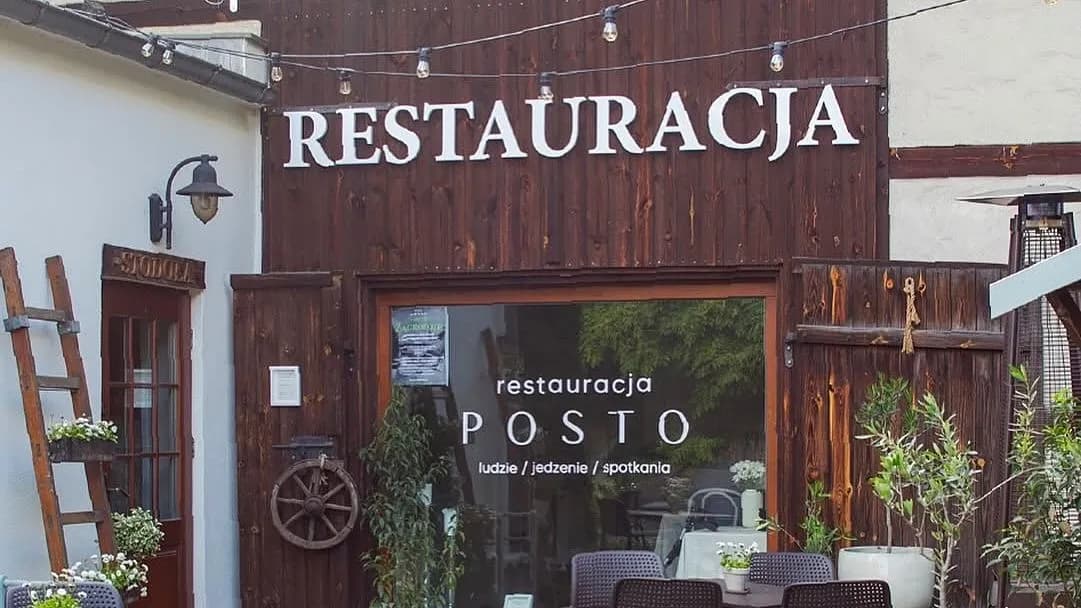
Located at Kościelna 43/10, Posto has a welcoming atmosphere that manages to feel both elegant and relaxed. The service is friendly and attentive, making it a comfortable choice for a dinner with friends or a date. The restaurant's outdoor courtyard, set within a historic Bamber homestead (zagroda bamberska), adds another distinctive element to the experience.
Food is naturally at the centre of the visit, and the RestaurantWeek menus offer a good introduction to the kitchen's approach.
Two RestaurantWeek® menus at Posto
Posto has prepared two different three-course menus for the festival, each bringing together seasonal produce and influences from across European cuisine.
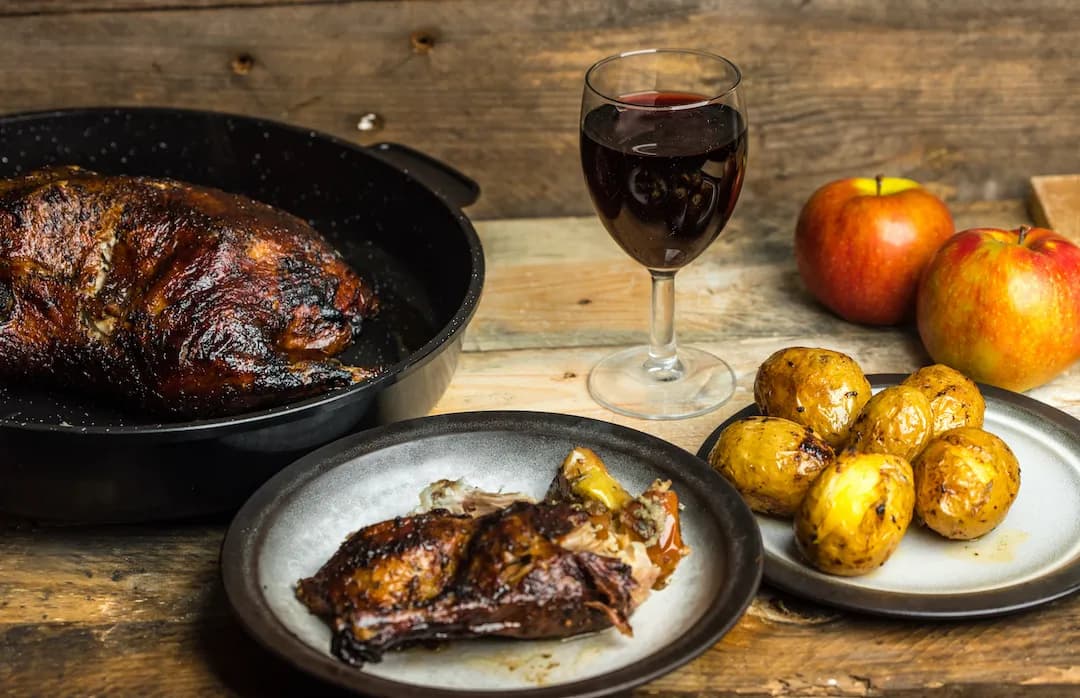
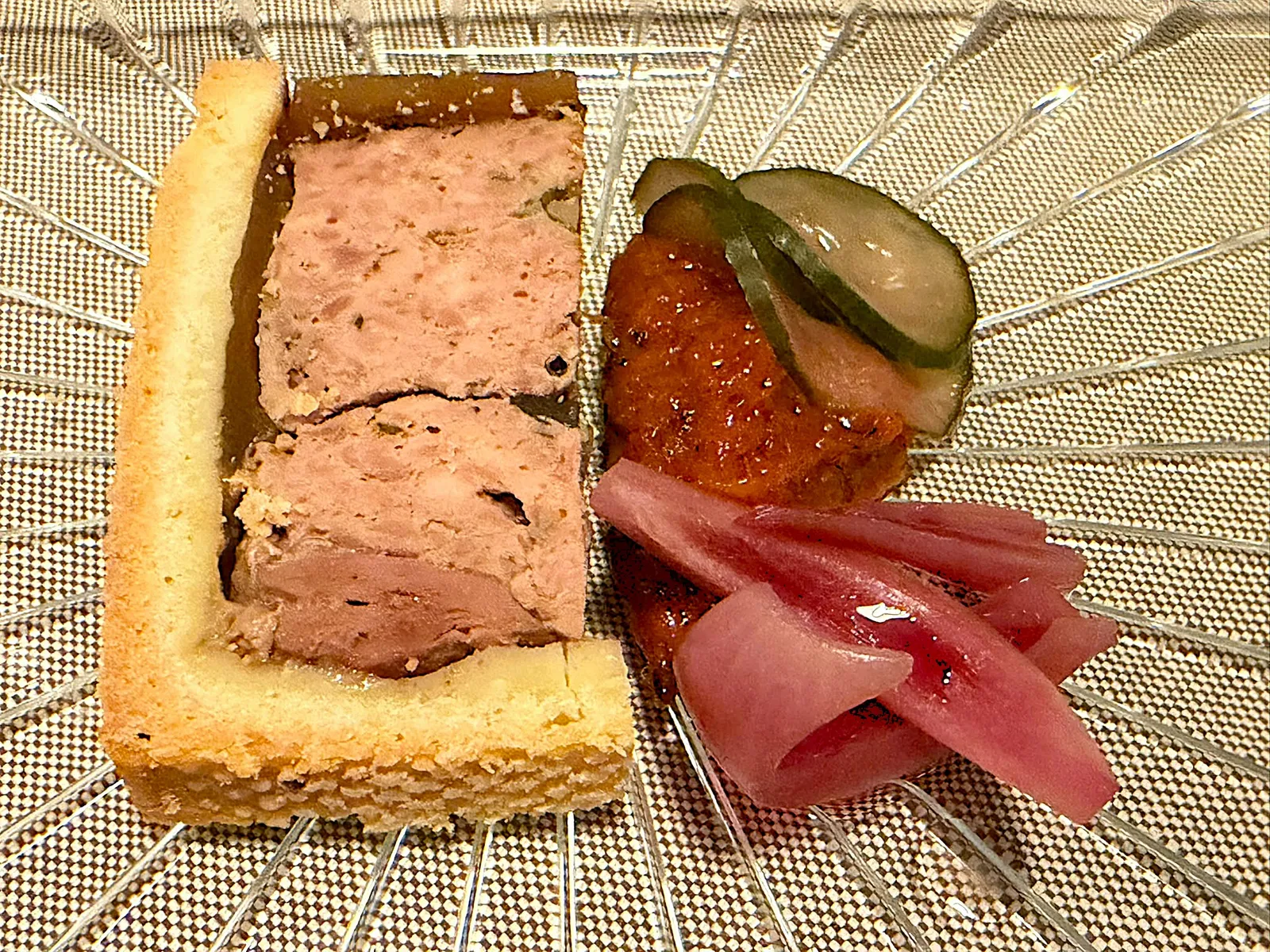
The first menu opens with pâté en croûte, a French-style pastry-enclosed pâté made with duck liver and sea buckthorn jelly. The main course takes a more recognisably Polish direction: pulled duck served with pickled red cabbage, black garlic mayonnaise and a traditional Poznań pyza, a soft, steamed yeast dumpling.
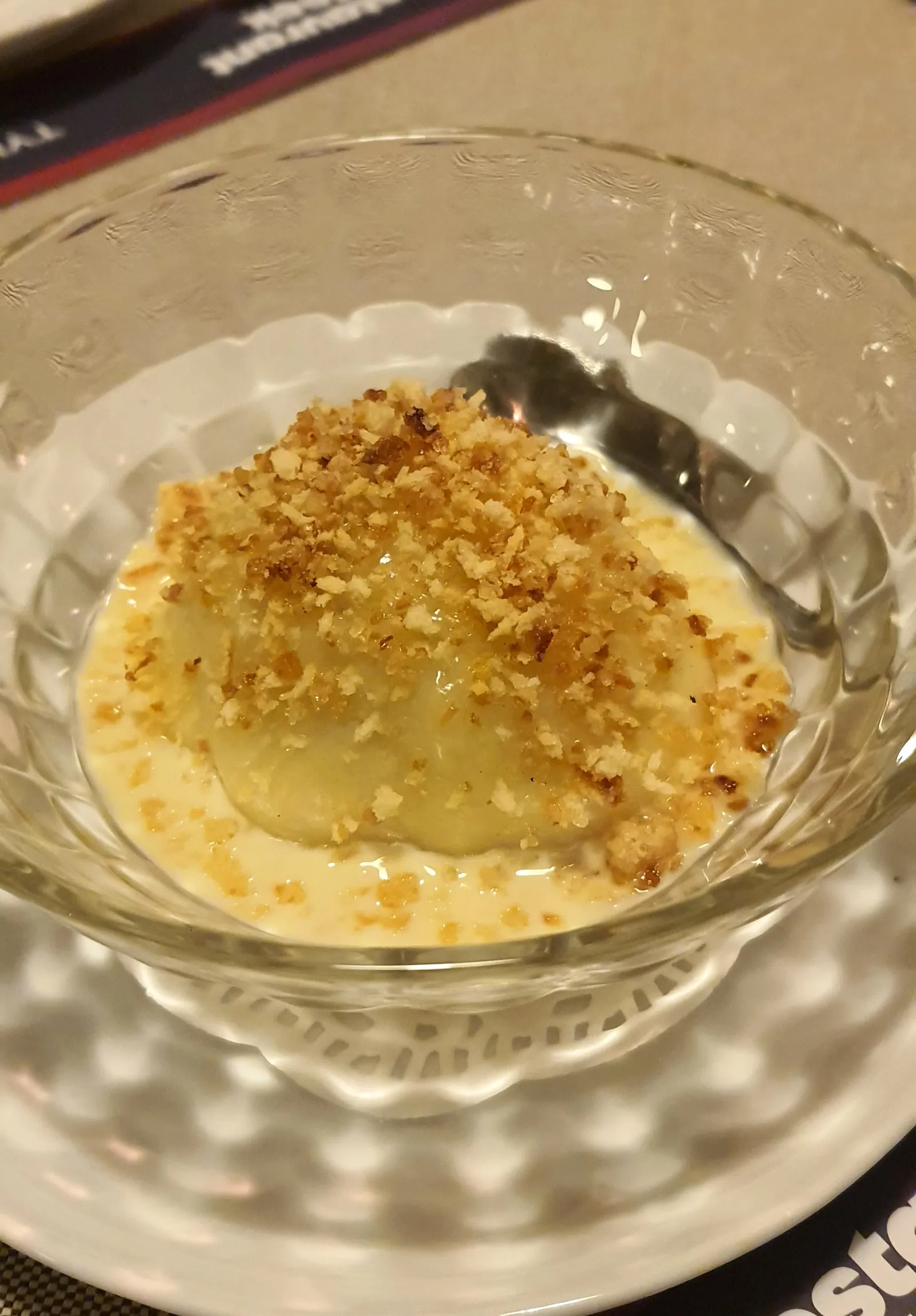
For dessert, there is a plum knedle with English sauce and caramelised panko. Warm, comforting and particularly suited to the colder months, it is a lovely seasonal finish. The combination of plum, sauce and crunchy caramelised breadcrumbs gives a familiar Polish dish an interesting twist.
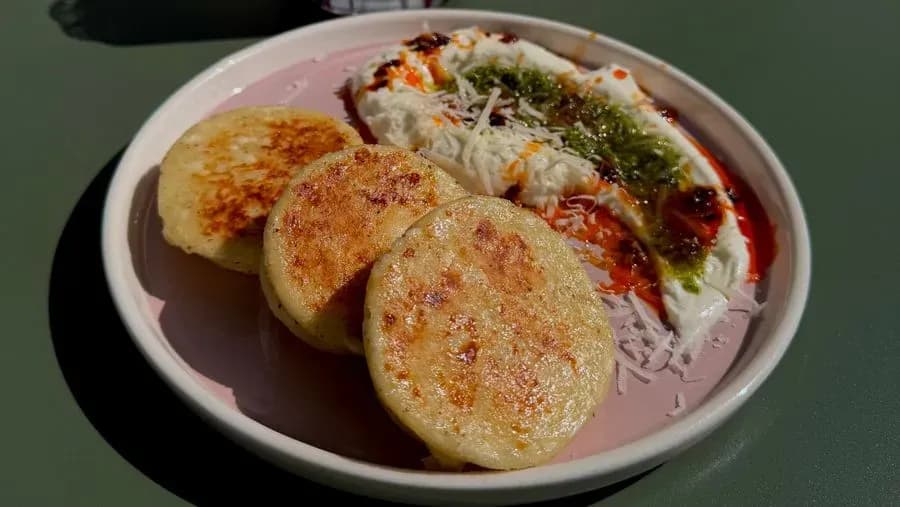
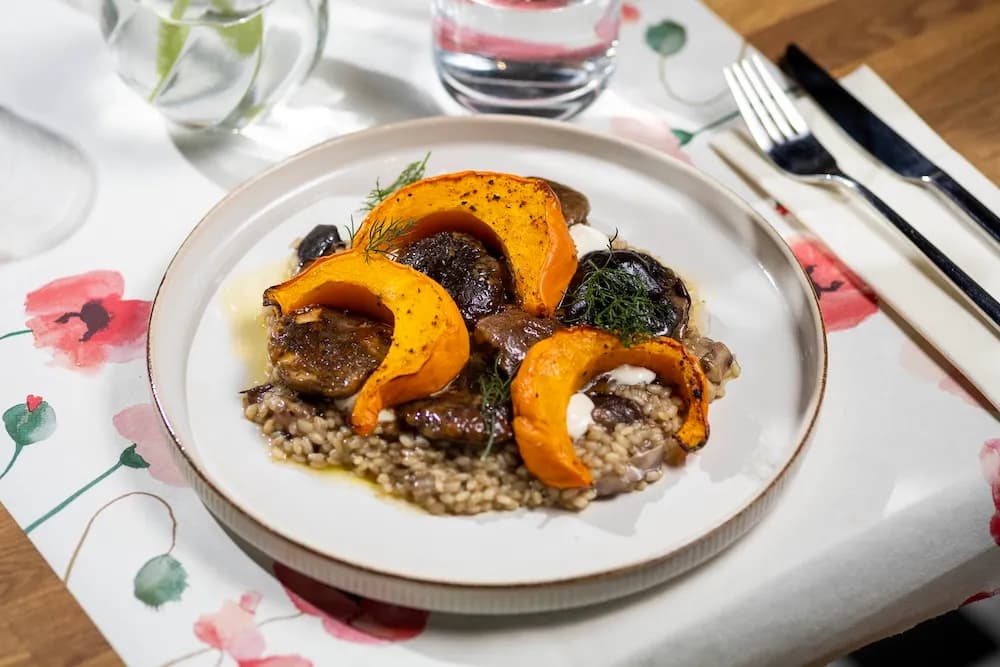
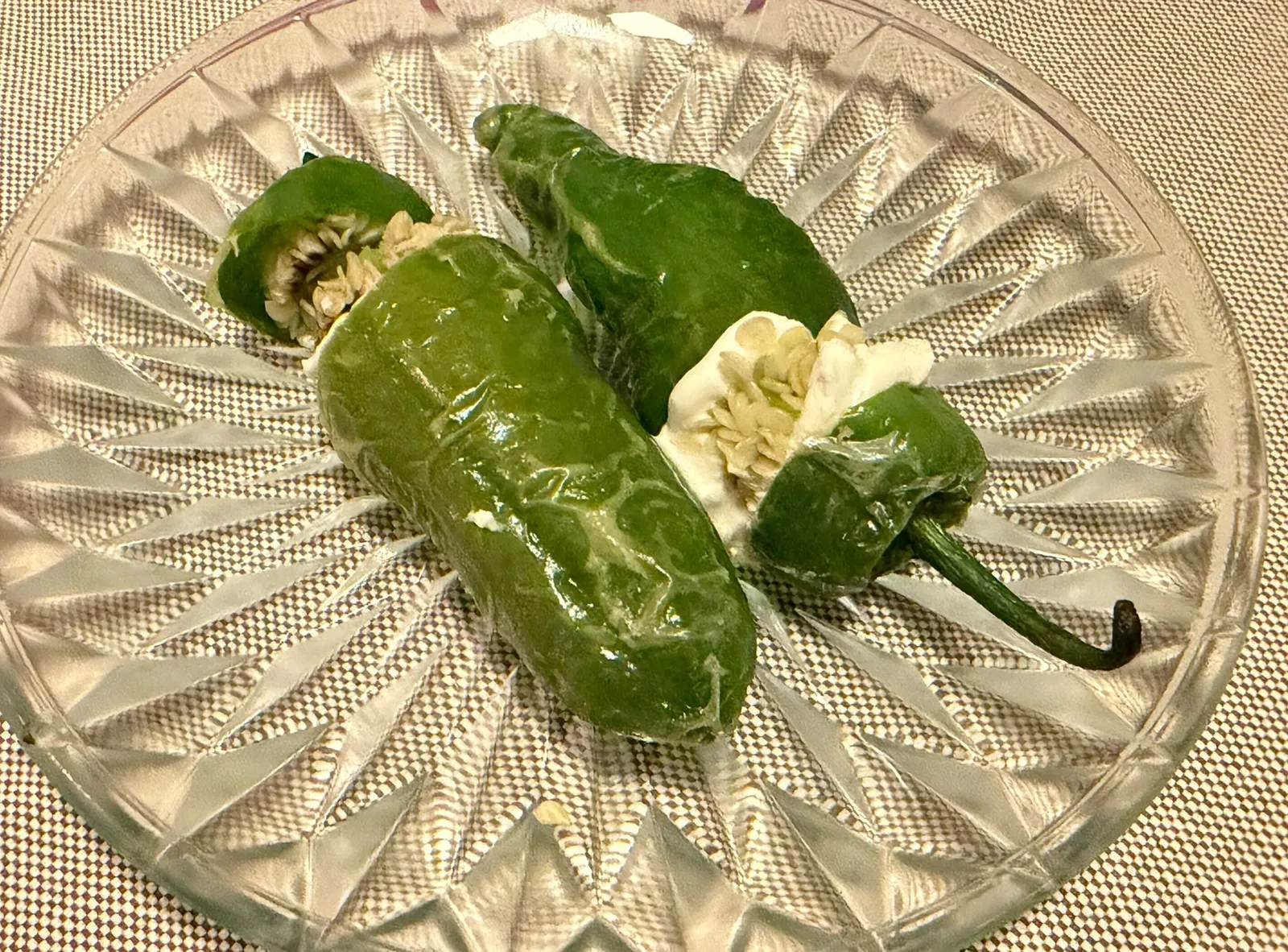
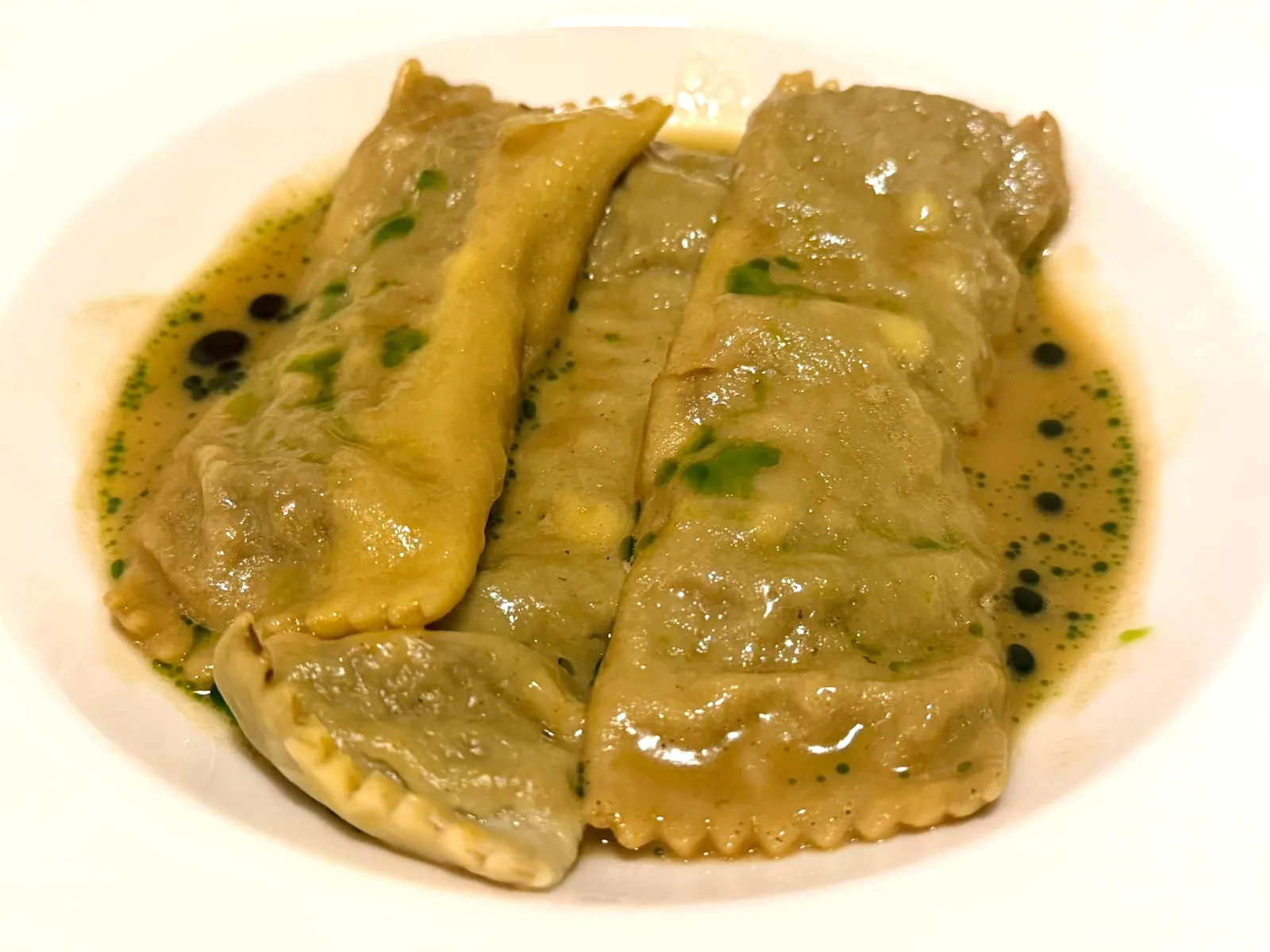
The second menu takes a slightly different route. It begins with Padrón peppers accompanied by feta and lemon mousse, creating a combination of sour, bitter and sweet flavours. The main course is ravioli filled with mushroom duxelles, served with herbs and butter. Rich, aromatic and full of umami, it is a particularly satisfying autumn dish.
The dessert, chocolate ganache with dried plums macerated in alcohol and finished with salt flakes, completes the meal.
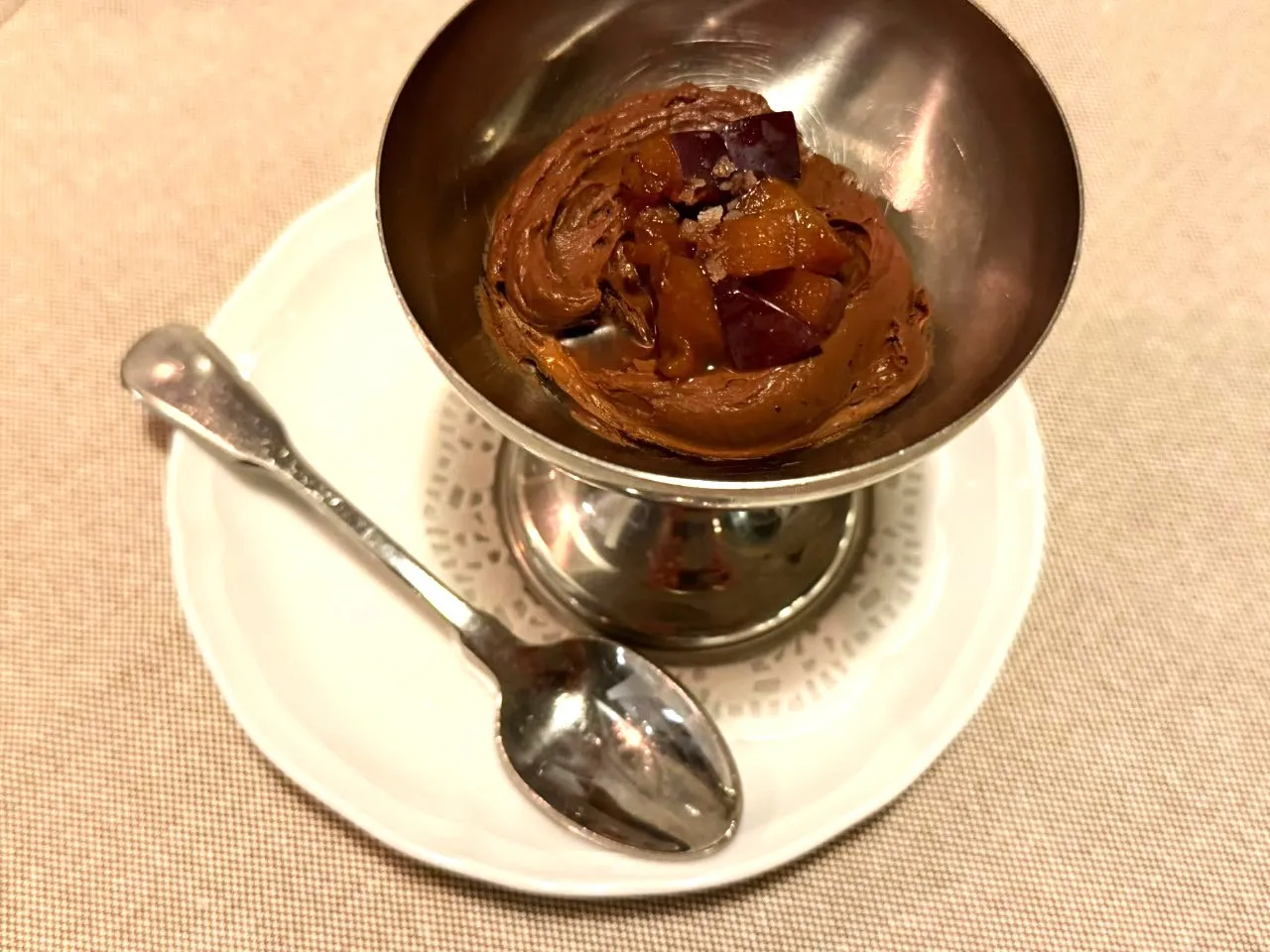
Both menus reflect the restaurant's interest in combining familiar ingredients and culinary traditions with a contemporary presentation.
Cooking with the seasons: a conversation with Chef Mateusz Mikuła
We spoke to Posto's Chef Mateusz Mikuła about creating the RestaurantWeek® menus, finding inspiration in seasonal ingredients and making sustainability part of everyday restaurant operations.
Q: How did you decide what to put on Posto's RestaurantWeek® menu? It is different from your regular menu, isn't it?
Mateusz Mikuła: Yes, it is different from our regular menu, although it brings together French and Polish cuisine, which are at the heart of what we do. We mainly focus on these two cuisines.
The menu includes pâté en croûte, which is a French pâté baked in pastry but made with our Polish ducks. We also have pulled duck with pickled red cabbage and pyza, which takes a classic combination of flavours and presents it in a new way. Then there is the plum knedle, which is also a typically Polish dessert, although the Czechs have knedle too.
In the second menu, we have Padrón peppers, which are Spanish, so that is a little departure from France. We also have mushroom ravioli, which brings together a little Italy, a little Poland and a little France. Finally, there is chocolate ganache with plums, another dessert combining French and Polish influences.
We serve European cuisine, mainly French, although we sometimes introduce Spanish influences. In the summer, for example, we had gazpacho, as well as Greek-inspired dishes, including lamb with baked briam and feta.
Q: What does the process of creating your seasonal menus look like? Do you have a particular source of inspiration?
Mateusz Mikuła: Every menu we create is seasonal, of course, because that is when it is easiest to get the ingredients. We work with what is available at a given moment. That is always the first factor determining what goes on the menu.
Naturally, in spring we have asparagus, then strawberries, rhubarb and so on, while in autumn we have mushrooms.
We also have an advantage because we have our own garden, which is divided into two sections. We use a lot of things from there. All the ingredients we use for decoration, although we do not use much decoration because that is not our main focus, come from there. We concentrate on flavour. We grow all our herbs, nasturtium flowers, of which we have plenty, sprouts, tomatoes, lovage, basil and other basic herbs ourselves.
The garden is also a source of inspiration. We plant herbs because we intend to use them. We do not grow things without a plan. Everything is put to use and grown with the next menu in mind.
We do not deliberately bring in ingredients that are out of season. We try to ensure that everything we prepare comes from local suppliers and is at its best at that particular time of year.
It is possible that we will bring sturgeon back to the menu. We do not use it in summer because our supplier, has not been farming sturgeon for a couple years due to the water temperature being too high. It is only a few degrees, not a huge difference, but they believe the sturgeon do not have the best conditions then, so we do not use them. Just as the French do not sell oysters in summer, we do not use sturgeon during that period, even though it is available elsewhere. We select the ingredients we believe are best at a given moment.
In spring, for example, we sourced wild garlic from southern Poland. It is a protected plant in Poland, but there are three regions in the south of the country where it can legally be harvested. It was only available for a short time, but we knew it was there and developed dishes around it.
That is why our menus can sometimes be quite short. We simply work according to what is currently available and in season.
Q: That is an admirable approach. It must also give you plenty of room to be creative, yes?
Mateusz Mikuła: Yes. This is very much part of our DNA when it comes to creating menus and running the restaurant. We use what is best at a given moment.
At the moment, for example, we have pumpkin, although the season is slowly coming to an end because of the frost.
In June and July, when we have tomatoes, half of our menu was full of them. Practically every dish included tomatoes in different forms and variations, prepared in different ways. The idea was also to make maximum use of what we had available at that moment. It was similar with asparagus in May, when it was an ingredient throughout the menu, from the appetiser to the main course.
Tomatoes and asparagus are individual vegetables, but you can use one ingredient in a dozen different ways.
Q: Is there a particular dish you are proud of? Something you currently have on the menu or have served in the past?
Mateusz Mikuła: Let me think. At the moment, perhaps it is something that might sound banal: rosół (broth).
We currently serve duck rosół made from our own ducks. These are ducks raised for us, and we use their breasts and legs in our main courses. We also make stock from them.
Everyone likes rosół, but ours is special because we finish it with warming spices, including a little clove, and orange. It has a really distinctive character without being too strong, because not everyone likes duck.
We know from our guests that this rosół makes an impression precisely because it is slightly different. It does not have such an intense duck aroma.
So perhaps it is not necessarily a dish I am particularly proud of, but I can see that our guests enjoy it.
Sometimes it is enough to change or modify something slightly. Everyone knows rosół. Every household makes it, although everyone makes it differently, and everyone says their mother's or grandmother's is the best. It is a bit like sałatka jarzynowa (Polish vegetable salad).
But when guests come here, they tell us they have never tasted anything like it before. For them, it is a real 'wow' moment.
It is just rosół, just a soup, but we have refined it to a point that it becomes something unique.
Q: I heard that tomorrow's menu, for St Martin's Day on 11th November, will be based around goose. Is that right?
Mateusz Mikuła: Yes, it is also a reflection of what we do, as I mentioned earlier.
We have goose, but we ordered whole geese from our supplier. Naturally, we will serve the breasts à la carte with cranberries and celeriac. There will also be a classic confit leg with pyza, red cabbage and sauce.
We have made stock, which will be served traditionally as rosół, as well as czernina, a traditional Polish duck blood soup, made with goose stock and blood.
For the appetiser, we will also have pâté en croûte made with goose legs and breasts. We have half-goose, which has been marinated and will be served with mushrooms, and there will also be goose risotto.
We have used the goose from beginning to end, making use of everything we could. We try to work this way so that nothing goes to waste.
Q: Do you visit other restaurants yourself as a guest? If so, what do you pay the most attention to?
Mateusz Mikuła: (Laughs) Honestly, I don't visit other restaurants because I don't have the time.
I would love to, of course, because I enjoy trying different things, but I simply don't have the time physically. When I am not working and have a day off, I spend that time with my family and cook at home myself.
So it is not that I do not want to go out. It is simply a lack of time. But I know that Poznań has a lot of really good restaurants.
A garden, local suppliers and a practical approach to sustainability
One of the most interesting aspects of our conversation was how naturally sustainability fits into Posto's everyday operations.
The restaurant grows a considerable number of its own ingredients, including herbs, tomatoes, flowers and other seasonal produce. The garden is not simply decorative. It is planned around the dishes the kitchen intends to prepare, with ingredients grown specifically for upcoming menus.
The remaining produce comes from local farmers and sustainable suppliers. The decision not to serve certain ingredients outside their natural season, even when they can be sourced elsewhere, is another part of this approach.
The chef's example of the sturgeon is particularly telling. Rather than treating availability as the only consideration, Posto takes into account the conditions in which the fish is raised and chooses not to serve it during the summer months.
There is also a clear focus on using ingredients in their entirety. The restaurant's St Martin's Day goose menu is a good illustration: breasts, legs, bones and other parts all have a place in different dishes.
This philosophy extends beyond individual menu choices. It is about planning, sourcing and making the most of the ingredients that come into the kitchen.
Thanksgiving at Posto: an evening with Up In Smoke
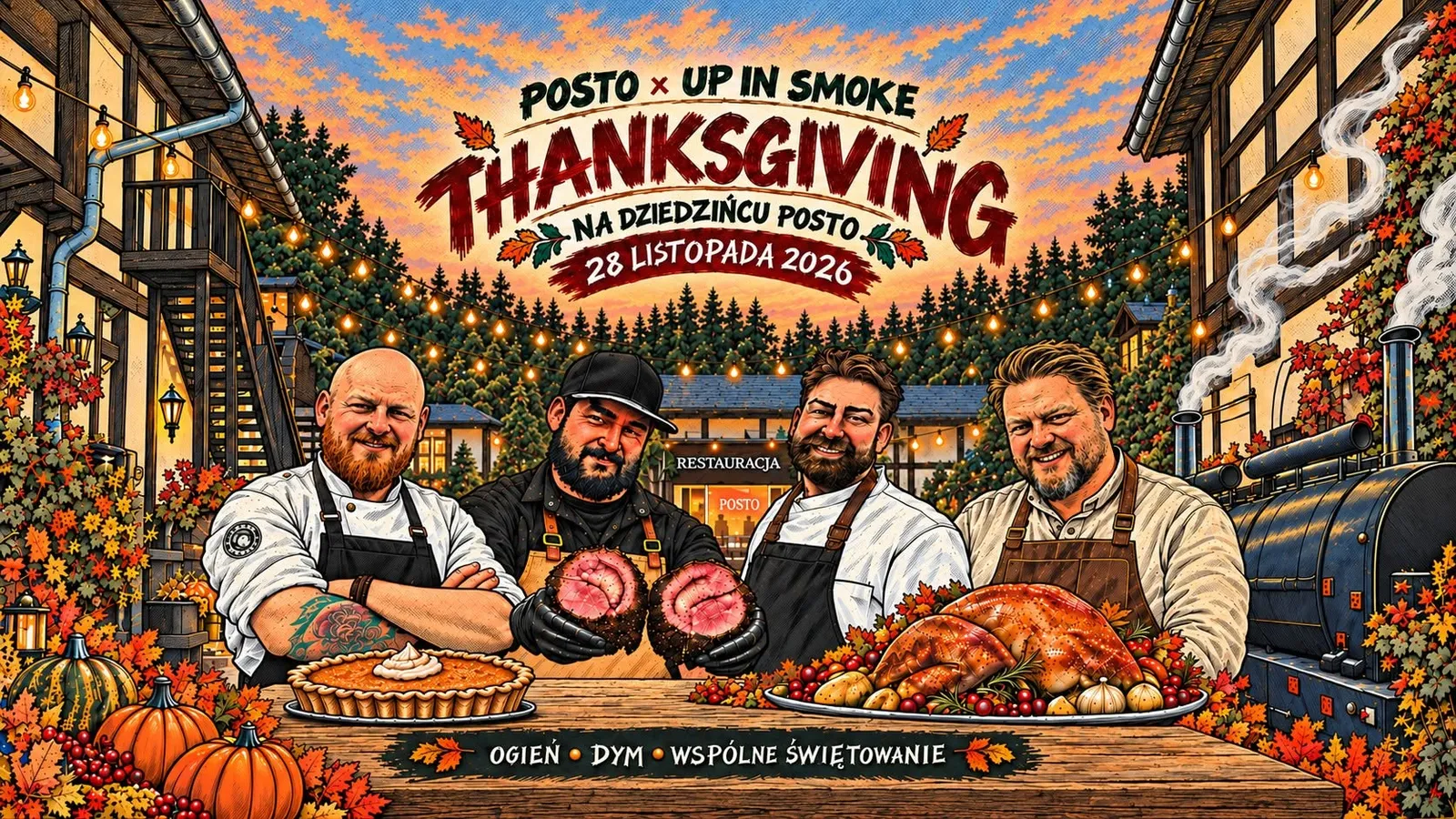
There is another opportunity to visit Posto later this month. On 28th November 2026, the restaurant will host a Thanksgiving event in its courtyard together with Up In Smoke.
The concept is informal, with food, fire, smoke, music and a relaxed atmosphere rather than traditional table service. Guests who purchase a ticket will be able to try all the dishes on the prepared menu, with additional portions available to purchase separately. It will also be possible to visit without a ticket and order from the dishes available for general sale.
The Posto menu will feature a Pilgrim Sandwich, Holiday Ham, Mac & Cheese, Loaded Mashed Potato Balls, Sweet Potato Fries and Honey Bread Pudding.
Up In Smoke will contribute a duck smash burger, empanadas and a French dip sandwich with lamb.
Tickets cost 249 zł per person. There are two ticketed time slots: 14:00 - 17:00 and 18:00 until the event ends. General-sale food will be available from 14:00 until sold out.
Visiting Posto
Our RestaurantWeek visit offered a pleasant introduction to Posto's cooking, with two menus that balance familiar Polish flavours and European influences. The dishes are carefully considered without feeling unnecessarily complicated, and the warm service and distinctive courtyard make the restaurant an enjoyable place to spend an evening.
The conversation with Chef Mateusz Mikuła also offered a useful insight into the thinking behind the food. At Posto, seasonality is not simply a description on the menu. It influences what the kitchen grows, what it buys, what it prepares and, just as importantly, what it chooses not to serve.
RestaurantWeek runs until 25th November, alongside the joint BreakfastWeek festival. Posto is one of the participating restaurants worth adding to your list.