What should a city look like when people are living longer? And how can everyday design make it easier to stay active, independent and connected throughout our lives?
Those questions will shape the 13th edition of Poznań Design Festival, taking place from 23 to 29 October 2026. This year's theme, Longevity, brings together designers, architects, researchers, urban planners, local government representatives and residents for a week of exhibitions, workshops, talks and discussions.
The subject is particularly relevant to Poznań. Around a decade ago, the city joined the World Health Organisation's (WHO) global network of Age-Friendly Cities and Communities. The festival now offers an opportunity to look at what that ambition means in practical terms, from housing and transport to public spaces, technology and the simple question of whether people can comfortably get through their everyday routines as they get older.
The WHO describes age-friendly cities as places that support people to remain active, connected and involved in community life as they age.
Designing for a city where people live longer
Population ageing is already reshaping societies around the world. The festival points to projections that the global number of people aged 60 and over could reach around 2.1 billion by 2050.
For designers, that raises questions well beyond healthcare. The way streets are laid out, the distance to shops and services, the design of homes, the usability of technology and even everyday objects can all influence how comfortably people move through later life.
Designing a long-lived city begins with changing our perspective. It is not about creating a city ‘for seniors’, but designing a space in which a person can be young and at the same time age comfortably. A place where they can function well throughout their entire life, regardless of age, physical ability, fitness or life situation,
Says Dr hab. inż. arch. Agata Gawlak, Dean of the Faculty of Architecture at Poznań University of Technology.
That approach runs through the festival. Rather than treating older people as a separate group with separate needs, the programme asks how cities can be designed to work better across generations.
From Okinawa to the 15-minute city
One of the central events will be Poznań Design Talks: Futures of Longevity, bringing six lectures and a panel discussion to the festival programme.
The conference will examine several ideas that have become influential in conversations about ageing and urban life, while also questioning some of the assumptions behind them.
The concept of Blue Zones, for example, has become closely associated with places such as Okinawa, Sardinia, Ikaria and Costa Rica's Nicoya Peninsula, where unusually high levels of longevity have been reported.
The festival is not presenting Blue Zones as a simple formula for a longer life. Instead, speakers will look at what can actually be learned from the idea, particularly once the commercial claims surrounding it are stripped away.
Scientific debate surrounds this concept. The quality of the demographic data behind it has been questioned, some of the original zones are now described as historical, and the term itself has become heavily commercialised. We see that as an argument for discussion, not against it. We are interested in what remains of these observations once the marketing is removed, and whether they can be translated into design decisions in a Polish city,
Says Andżelika Jabłońska, director of Poznań Design Festival.
The 15-minute city will receive similar scrutiny. The model proposes that residents should be able to reach six basic functions within around 15 minutes on foot or by bicycle: housing, work, shopping, healthcare, education and leisure.
The festival will ask what this looks like in practice and how the idea translates to the very different urban structures and service patterns found in Polish cities.
International perspectives on ageing
The conference will bring several international voices to Poznań.
Christal Burnette, a researcher at the Okinawa Research Center for Longevity Science, will discuss ikigai, the Japanese concept associated with a meaningful life, as well as yakuzen, a traditional approach to food and health. Her talk is titled “Secrets of Longevity in Okinawa”.
Catherine Gall, executive director of the ETI research laboratory at the Sorbonne, will examine the practical side of the 15-minute city. Her work focuses on translating the concept from academia into cooperation with local authorities, businesses and city networks.
For Diana Rivera, a gastroenterologist from Peru now working as a consultant in Galicia, the discussion will move towards an aspect of ageing that is often overlooked. Her talk, “Ageing in Peru: Beyond Medicine”, will consider the role of families in providing long-term care where public provision is limited.
Architect David Sim, author of Soft City, will approach longevity through the physical form of the city. His work has ranged from Scotland to Tokyo and from retail design to the rebuilding of Christchurch after the 2011 earthquake.
His presentation, “Soft City: Live Longer, Live Better”, looks at the everyday relationship between urban design and social contact. Sometimes, the question is simply whether you can walk to the bakery.
The conference will finish with “The Longevity City: Space, Technology, Community”, a panel discussion looking at technology and artificial intelligence alongside the role of communities and urban design. The organisers also hope the discussion will produce practical recommendations for designers and city decision-makers.
A 'Silver Map' for Poznań
One of the festival's more practical projects will be developed with Adam Mickiewicz University and the Poznań Senior Citizens Initiatives Centre.
The partners will work towards a List of Design Recommendations for Longevity Cities, drawing on the expertise of specialists from across Poland as well as seven workshops involving designers, students, older residents and people from Poznań.
The eventual recommendations will be published as a report intended for architects, designers, urban planners and people responsible for municipal policies and services.
The idea is to ask a straightforward question: what needs to change in the city if people are going to live well here for decades to come?
That makes the project particularly relevant locally. The WHO's age-friendly approach stresses that older residents should be involved in shaping the environments in which they live, rather than simply having services designed for them from a distance.
Seven exhibitions across seven days
The festival will also turn the theme into something visitors can see and experience.
Seven exhibitions will be presented during the festival week. The main exhibition at Stary Browar will bring together 14 different visions of long life.
The projects range from highly technological ideas to objects designed around very ordinary aspects of everyday life.
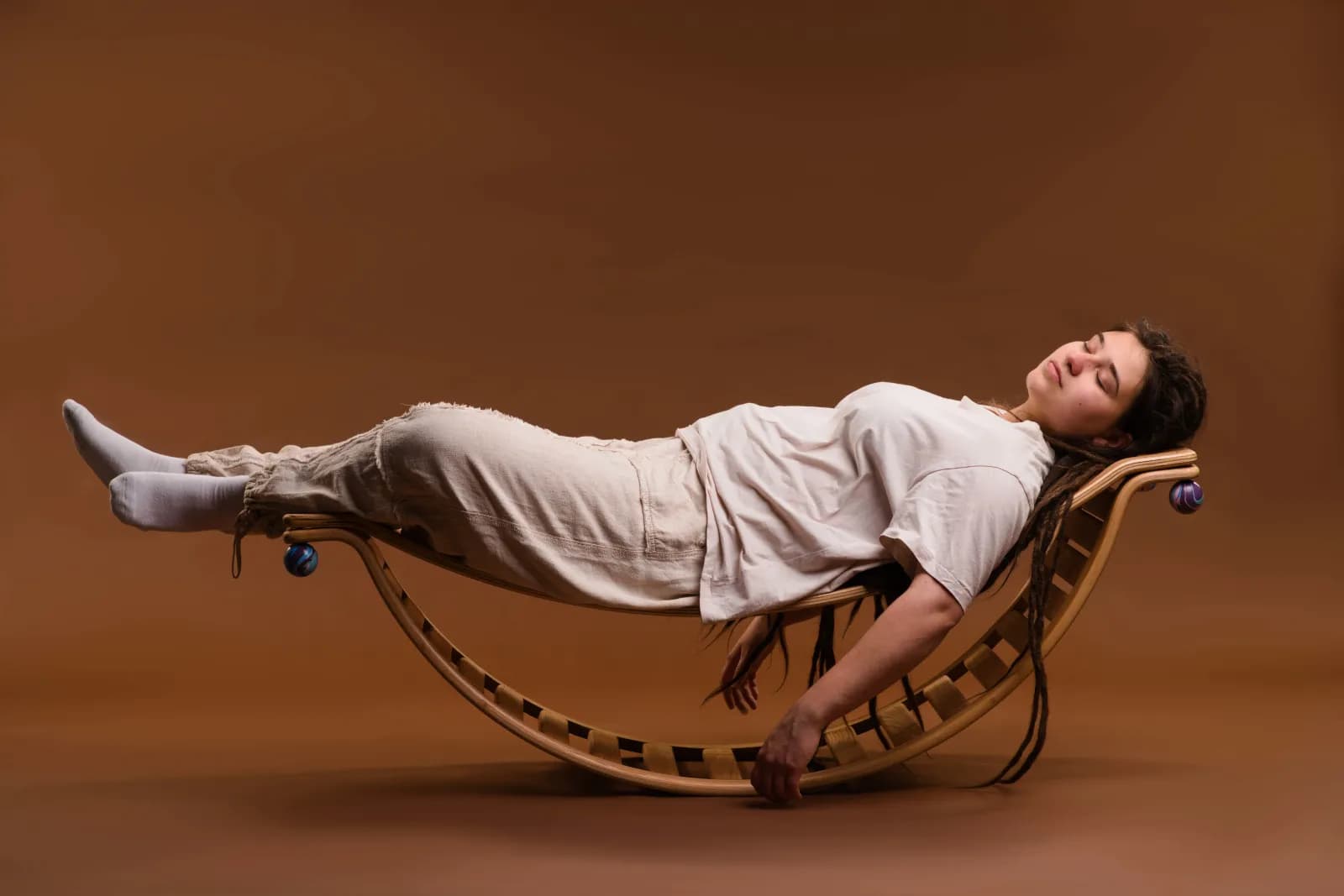
One work takes the form of an artificial heart, reflecting the technological desire to extend life and perhaps ultimately overcome mortality. Another collection of clothing draws on kintsugi, the Japanese art of repairing ceramics while deliberately highlighting the marks left by damage. Here, the idea becomes a way of thinking about the ageing body and whether signs of age need to be hidden.
There will also be a crochet kit designed to support rehabilitation and activity for people with reduced hand mobility.
Another project consists of specially designed ceramic tableware intended to make gripping, carrying and eating easier without looking like medical equipment.
Together, the projects suggest a broad definition of longevity. It is not simply about adding years to a life, but about considering how objects, buildings and public spaces can accommodate changing bodies and circumstances without making people feel that they have been placed into a separate category.
Poznań and the age-friendly city
For Poznań, this year's festival connects an international conversation with a commitment the city made a decade ago.
By joining the WHO's Global Network for Age-Friendly Cities and Communities, Poznań committed itself to improving access for its growing senior population to areas including healthcare, culture, education, information, buildings and public transport.
The festival provides a useful opportunity to revisit those ambitions from a design perspective. A bench, a bus stop, a pavement, a kitchen utensil or a neighbourhood shop may appear insignificant individually, but together they determine how easy it is to live independently and remain part of everyday city life.
For residents, that makes the programme relevant far beyond the design community. The changes being discussed are likely to affect anyone who plans to spend many years living in Poznań, regardless of their age today.
See more: A Herbarium of a Changing World: Inside ZAMEK’s New Exhibition
Source and image credit: Poznań Design Festival